I spied you threading your way up the narrow ghyll, just down there where the waters tumble over rocks on their long route down to the sea.
I watched you picking your way along the stoney path, stopping to rest awhile under the shade of that old, wizened tree.
I sensed that with each step of climb, up, up, onto the high moor, your mind opened like the land, and all of your thoughts broke free.
I was amused to observe you pause now and then, looking about to take in the sights, knowing that you had not yet seen me.
You think this land belongs to you, your thoughts confirmed by the remnant workings and heaps of spoil the miners left behind.
You see evidence all around, backed up by the words on the pages of your guide, that this remote corner of the world is here for humankind.
You sense that there are creatures here and rue the fact that they hide from view, wishing they’d show themselves, so that you can tick them off the list you carry in your mind.
You imagine how it must have been to dig into this land, with the dust, the noise, and the aching limbs, to bring out the ore enriched with the heaviest metal one can find.
And then, at last, you catch sight of me as I stand waiting patiently beside the stream. I thought you’d never notice, so deeply did you dream. You stop, and, stretching out one arm, guide your companion’s sight. You speak in hushed voices, moving slowly so as not to create fright.
I shift my weight a little, and turn my head to best present myself to you. For there have been many others who have stopped to see this profile view. And trust me, I know what to do.
Stick-like legs beneath my plump grey body, surprisingly large when seen close by. Arching neck, dagger bill, the crown of feathers that adorns my head. All of this can make you sigh. And, of course, I know only too well, that what you really want is to see me fly.
So, I rouse myself fully, unfurl my mighty wings and with three swift beats I am up and away, hammering the air as I move along the stream, until, tantalisingly out of sight, I find another spot to stay.
Twice more I lead you on our little dance. I fly upstream and you advance.
You are thinking that there must be only meagre pickings in such a small and insignificant stream as this, and that to sustain so large a body I must have to spend an age to find a useful meal from tiny fish, and that to live here as I do, must be so hard and pose a lot of risk. But there are things that you don’t realise, and sights that you have missed.
This is the miners’ land no more.
And you are only passing through.
And things are not exactly as they seem.
For the land you see around you, all the hills, the rocks, the fields, the walls, and each and every one of the countless little streams, has a mighty ruler who has chosen to be at its helm.
And you, my passing admirer?
You are welcome in my realm.
(c) Tim O’Hare, July 2023
About this poem: This poem was inspired by the sights experienced and thoughts that dropped into my head during a wonderful walk while on our summer holiday in Ilkley, Yorkshire. The route took us along the valley of the River Wharfe and then north for lunch at The Old School Tearoom [highly recommended] in the tiny village of Hebden. From there, we slowly made our way up Hebden Ghyll, a narrow valley that was once the location for extensive lead-mining activities. As the terrain opened up to the expansive higher moorland, I saw a heron standing at the side of the small stream than ran down the ghyll. We stood and watched it for a few moments, and I commented that with the stream being so narrow it must offer slim pickings, and that it must be hard for such a large bird to sustain itself there. And then, of course, the heron did what herons always do…
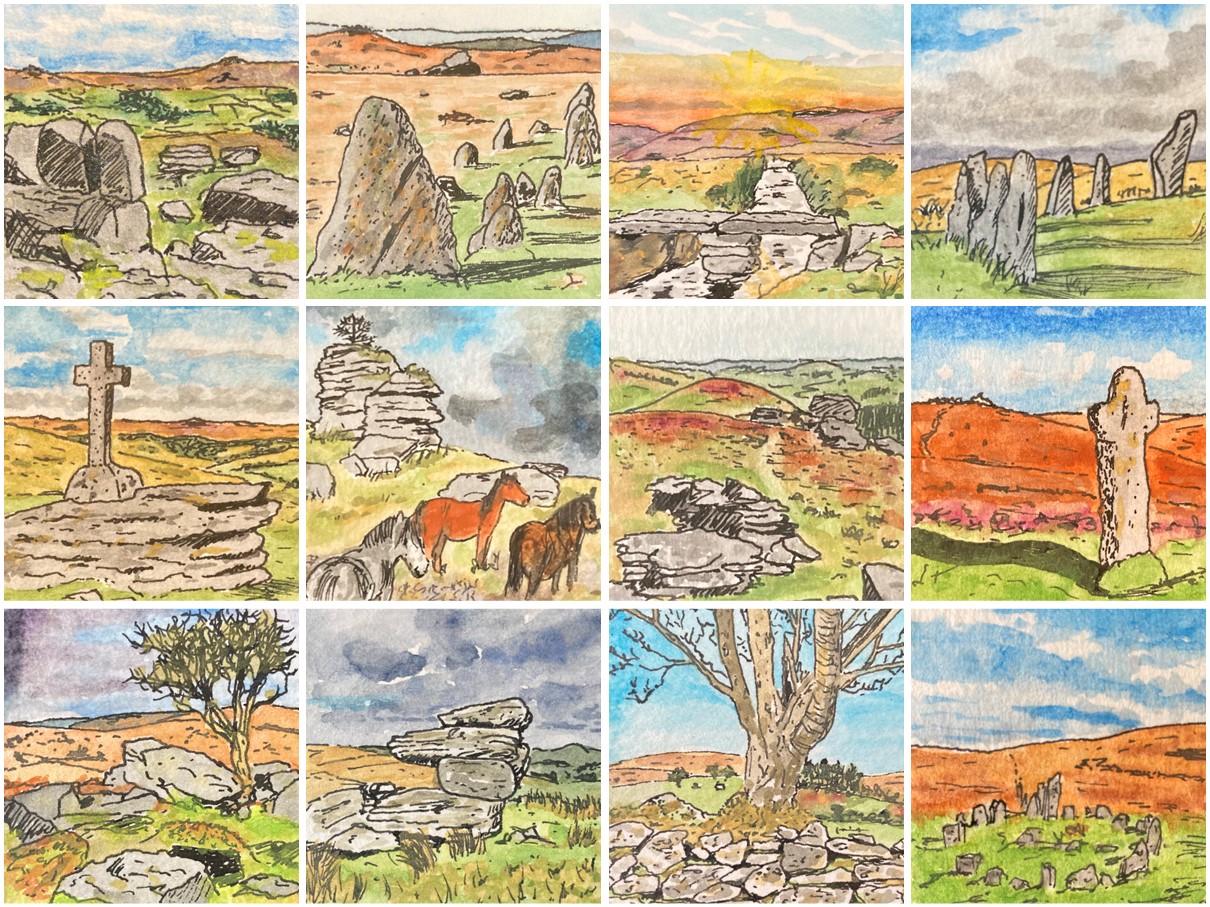
At the beginning of last month (March 2025) I decided that I wanted to try to embed a more regular art practice into my life. So, one evening, I sliced a piece of watercolour paper into a series of 5 cm squares with the intention of painting some kind of miniature picture each morning. I didn’t know what I would paint, just that I would try to paint something, as often as I could.
It was interesting, then, to wake up the next day and find myself sitting down at my painting table at 7:30 am, before I had even eaten breakfast, painting a little scene of a tor and some scattered rocks, a scene that is typical of Dartmoor, the National Park just north of Plymouth where I live. Because I was working on such a small piece of paper, and because I was trying to work quickly, before I got fully enmeshed in the day’s activities, I found myself adopting a simpler style than usual, with fewer, and bolder, colours and some use of cross-hatching to show shadows and darker areas. I liked what emerged.
After that first painting (the one at the top-left of the composite picture at the top of this post) I still didn’t know what would happen next, but at some point, perhaps after two or three days, I came to realise that I was creating a series of miniature pictures that I labelled Dartmoor Scenes. Initially, it was my intention to paint five pictures, one on each weekday, but having successfully reached that number I decided to push on to nine. This seemed to me to be a good number for a series of little square pictures, neatly forming a 3 x 3 grid.
As I approached what I thought would be the final picture, I received a comment on my Bluesky (social media) account on which where I was posting my new picture each day, suggesting that the pictures would make a nice calendar. It was an idea that I liked, a lot, but of course a calendar needs 12 pictures, one for each month… and so my miniature watercolour Dartmoor Scenes series had to become a collection of 12 pictures in total.
I really enjoyed producing these little pictures (and have since gone on to produce two more sets of 12 similarly-sized pictures on different themes – watch this space for details!). I enjoyed being forced to keep things simple and was really happy with the results (more in some cases than in others). I particularly like the stone row and stone circle pictures on the top row (second-left and top-right), and the tree and wall scene (third-left, bottom row). I also really like the way that they look when placed together.
Although it was already almost the end of March by the time I received it, I got a desk calendar printed up as a kind of test run to see how well it worked… and it worked very well indeed, the pictures coping with being expanded to almost double their original size. Subsequently, I have also had each picture printed as a 10 cm square card and had some copies of a larger card printed with a 3 x 3 composite of the nine pictures that I think are the best of the selection. At some point I hope to get more of these cards printed so that I can have a go at trying to sell some of my artwork. It will be interesting to see what happens if and when I do!
As an experiment in trying to be more regular with my artistic endeavours, this activity has worked really well, and although I have now moved on from Dartmoor Scenes, I suspect that I will return to this theme again at some point and complete another set (at least another four to get to a 4 x 4 grid, but who knows, maybe I have another 13, 24 or even 37 Dartmoor Scenes still in me!)
If you like these pictures, I’d love it if you added a quick comment to this post. It would be fun to know which one(s) you like best.
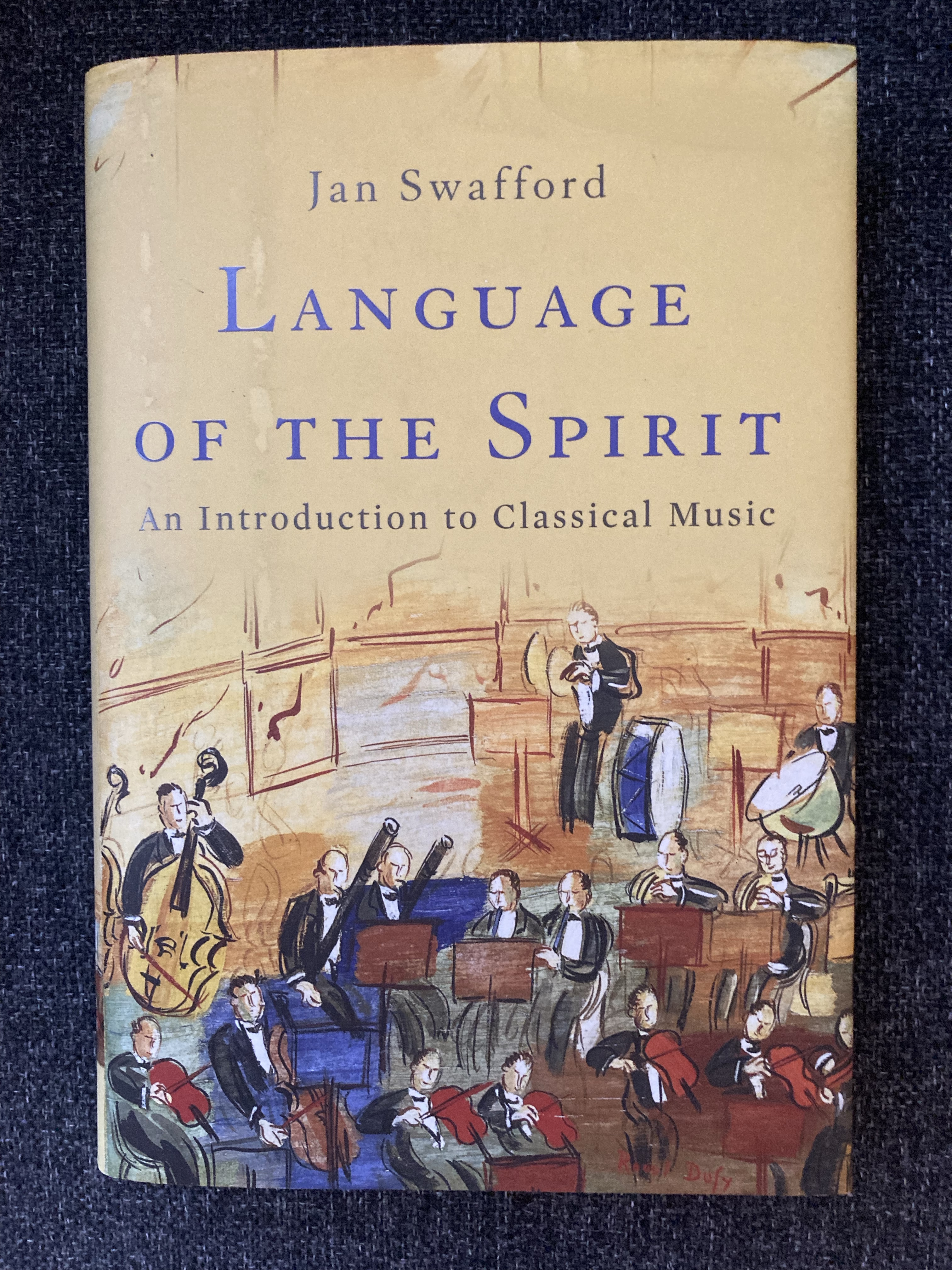
I started reading Jan Swafford’s Language of the Spirit – An Introduction to Classical Music back in June 2023 and finally completed just a fortnight ago. It would be tempting to conclude from this that it was a book that I struggled through but, in fact, nothing could be further from the truth.
I grew up in a household that was full of classical music, from the long, purpose-made shelf unit in the living room that was stuffed full of vinyl records, to the assortment of musical instruments that my father acquired and dabbled with (flute, trumpet, clarinet, mandolin, violin). Apparently, when my brother and sister and I were very young, we would be accompanied on our way to bed by our personal favourite pieces of music, presumably each one being some piece that we had reacted to positively at some point. I don’t recall what my sister’s piece was, but I do know that my (older) brother’s piece was a movement from Schubert’s ‘Trout’ Quintet and mine was the rather stirring ‘March Slav’ by Tchaikovsky (so it is probably no coincidence that Tchaikovsky later became one of my absolute favourites).
I had piano lessons from the age of about six and then at around nine years old I began to learn the ‘cello (because apparently I had shown an interest in learning it, although I can’t say that I remember that and I suspect it was more because it was an instrument that my father wished he had been able to learn). I was never that great at the piano, and stopped after passing my Grade 6 exam, but playing the ‘cello certainly became a big part of my life all the way through my teens and well into my 20s. Over the years, I played in various ensembles and orchestras, in particular leading the ‘cello section in the Somerset Youth Orchestra, the Somerset County Orchestra, Oxford Sinfonietta and Bangor University Orchestra and being on the first desk of the ‘cello section for the annual summer gatherings of the Somerset Chamber Ensemble/Orchestra. It’s fair to say that I was a pretty good ‘cellist – although better known, I think, for my expressive playing than for a robust technique (or any kind of technique at all really – practice and I have never really been comfortable bedfellows in any area of activity…).
I always enjoyed orchestral music the most, especially music composed from around 1850 through to perhaps 1930 – the romantic and late-romantic periods – music full of emotion, passion and angst. My mother used to call the kind of music I liked best ‘troubled music’, which I guess is fair: Brahms, Tchaikovsky (and assorted other Russian composers of that time), Wagner, Sibelius, Richard Strauss, Mahler – that kind of thing. Unlike a lot of musicians, I never went much for some of the classical greats like Bach and Mozart, especially the latter, whose music (am I allowed to write this?) I tend to find rather boring.
In Language of the Spirit, Jan Swafford, a US-composer and music academic, provides a wonderful journey through the classical music canon, from early single-line chants, through all of the great names, and right up to the present day and the post-modernists. The book is mostly written on a one-composer-per-chapter basis, with most chapters being perhaps six to eight pages in length. In each case, Swafford outlines what makes each composer’s work distinctive, and provides a little detail of about their life, their influences and their major works, which brings me to the reason why it has taken me the best part of two years to finish the book…
Just for fun, I decided at the outset that I would listen to every piece of music that Swafford had picked out as being important or a good example of some aspect of a composer’s works. This meant that for each chapter I created a playlist with something like 8-15 pieces requiring multiple (many in some cases) hours of listening – Spotify was my friend! In the end, I managed to listen to every single piece that was highlighted or recommended (including several full operas) except for one piece by Stockhausen that I couldn’t find (but based on the Stockhausen works that I did listen to I can’t say I am too upset about that).
I listened to lots of music that I already knew well, lots of music that I thought that I knew well, and even more music that I didn’t know at all, some of it major works by major composers. I had a few surprises, particularly enjoying the music of Schumann (who I have never paid that much attention to in the past) and Grieg (who I always thought was a bit lightweight), and despite not really enjoying most of the noise that was described as atonal and/or post-modern, there was something about the work of Philip Glass that I enjoyed more than I feel I should have done.
Having now finished reading the book, and having listened to the last piece (John Adams’ Shaker Loops), I was spurred on to re-arrange the furniture in the small bedroom that I use as a kind of home office/personal den so that I could fit in some nice wooden CD shelves that we have struggled to find a good home for recently, and I unboxed all of the CDs (not just classical) that have sat out of sight since we packed them up last summer before having our kitchen re-modeled.
If you don’t know much about classical music but want to know more then I thoroughly recommend Swafford’s book. It is written for a general reader and gives a lot of interesting background and insight into a huge range of music. Alternatively, if you are like me, and know (or think you know) a lot about classical music already, then Language of the Spirit is a great stimulus to rediscovering old favourites and discovering new ones (and also discovering ‘music’ that you will never want to hear again for that matter – but each to their own of course!). Reading Language of the Spirit didn’t convert me into a Mozart-lover – I’m still very much in the ‘troubled music’ camp – but it did broaden my knowledge and has given me a number of composers to explore further. I also discovered that rather than being the somewhat over-sentimental ‘slush-fest’, that I recalled it being from when I played it with the Somerset Youth Orchestra over 40 years ago, Rachmaninoff’s Second Piano Concerto is indeed a rather special piece of music.
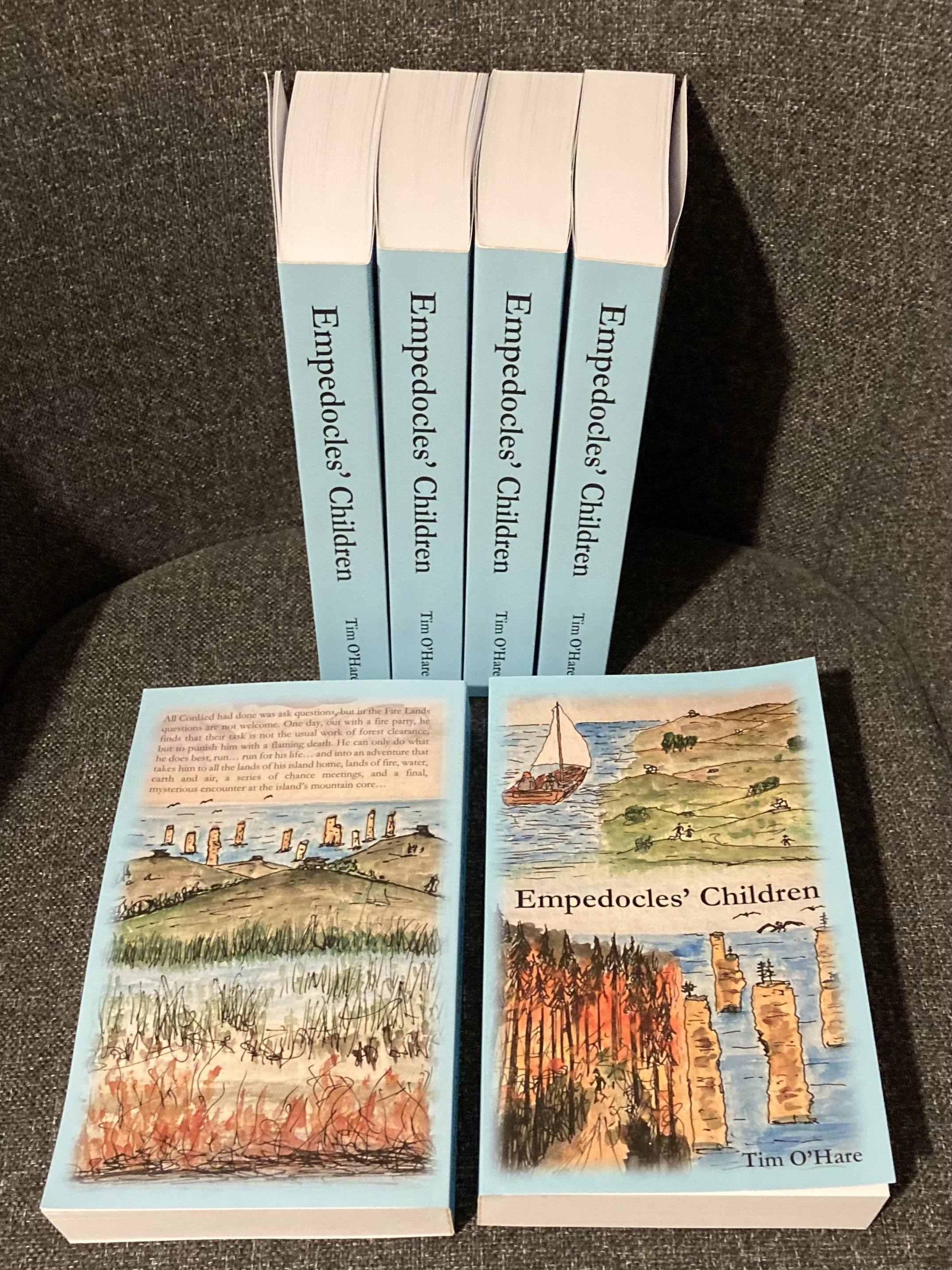
Some time ago, something like 10 years ago to be more precise, the basic idea for a children’s adventure story popped into my head. It was really just the bare bones of a story – a title (Empedocles’ Children), an underlying basis for the story, a vague idea of the way that it would conclude, and a fairly detailed visual image of the event that would launch the reader into the action. At some point, fairly early on, I wrote out a version of the first chapter, but once those words were out of me, I didn’t do much to make further progress. In the meantime, fragments and ideas for the story would pop into my head at random moments, often resulting in me excitedly exclaiming to whoever was in the vicinity that: “I have just had a great idea for my book when I write it”. I think this must have happened quite a lot and over an extended period (years) because eventually, after one such utterance, my younger daughter (who would have been in her late teens at the time) responded with the rather cutting, but entirely fair, response: “Well that will never happen.”
But, eventually, I did begin to make progress, producing several more chapters in 2021 and then, in a series of bursts of creativity that became gradually longer, more frequent and more reliable, I found myself approaching the end of the story. Along the way I found the process of writing the story an absolutely fascinating one. Whether it is the ‘right’ or ‘best’ way to approach things or not (and it is probably not), I wrote the story without any kind of outline or plan, other than knowing a little about where the main characters in the story (four children called Conlaed, Yara, Tal and Karin) had to end up, and a final climax to the story that became gradually sharper in my mind as it approached. Instead, I simply sat myself down and let the story emerge. When I talk to people about this process I usually use one of two analogies – that story writing is like find a seam of precious ore and then chipping away to follow it through the surrounding rock, or that it is like gently pulling on a thread to tease it from a knotty bundle. I also tended towards thinking that even though I didn’t know how the story would unfold, I could trust my characters to show me. In that sense, I was simply following them on their journey, and describing the events that befell them as I did so. At times, it was hard to escape the feeling that the story (stories in general) are already ‘out there’ and that the task of a writer is to find (not create) one and then reveal it to others.
A couple of months ago I reached the point where I had a full draft of the story, and I then spent some time reading it through to check for errors, omissions and inconsistencies and to make any corrections and revisions that were necessary. I spent quite a lot of time going and back and forth with the dialogue, struggling a bit to work out the best way to format this (which I found difficult because there does not seem to be a standard method for presenting dialogue, something that surprised me a lot). Then, with a final draft version completed I was left wondering what, exactly, I should do next with all of those words. And there were a lot of them, a whopping 110,000 or so in fact, because the final version came at with 48 chapters (plus a prologue, interlude and epilogue).
I’m still not quite sure what I will do next with my manuscript. I know that I can go down a self-publishing route fairly quickly and easily – I have already got the text in a ‘flowable’ format suitable for e-readers. I also know that to try to get a book published by a traditional publisher first requires gaining the interest of a Literary Agent, something that seems to be incredibly difficult – so I know that that route is both difficult and unlikely to be successful. My instinct is that I want to at least try to go down the traditional publishing route and see what happens, and so at the moment I am working my way through various materials that should help me engage with that process. At some point, I might actually get to the stage of having written a synopsis, a query letter, identified comparative titles (‘comps’), drawn-up a long-list of suitable agents to query, and a short list for a first batch of submissions. Then all it will take is a bit of bravery and a willingness to suffer rejection…
In the meantime, I decided that one of the issues with writing (certainly these days when writing on a computer) is that once you have finished your story you have nothing physical to show for your efforts. With this in mind, I spent a week or two putting my text into an attractive, ‘proper’ book format, painted some pictures to use as cover art, and then I sent it off to a printing company to get a few copies of it as a properly printed paperback book. Now, even if I make no further progress towards publishing it at all, I can, at least, glance at my bookshelf and see a nice fat paperback sitting there that I produced. Just that thought is rather satisfying and it allows me to inwardly respond to my daughter’s statement, “that will never happen”, with the words “but look, it did!”
If anyone reading this thinks that they’d like to be a test reader then please do get in touch. The story follows a group of children who are brought together as they travel through a disintegrating island realm, facing all kinds of natural challenges – fire, floods, earthquakes, volcanic eruptions and landslides – as they are gradually drawn towards the mountain that sits at the island’s core and, unknowingly to a meeting with a strange philosopher-hermit who must share the wisdom that will allow the fractured peoples of the island to come together to re-build their world. I think that the book would probably be put into the ‘middle grade’ of perhaps ‘9-12 age group’ categories but honestly, it’s a fun adventure with lots of twists and turns that adults should enjoy too – I certainly did!
Sometimes little pieces of wisdom appear in front of you out of nowhere. You see or hear something that makes you stop and think, and you then find yourself carrying it with you as time passes.
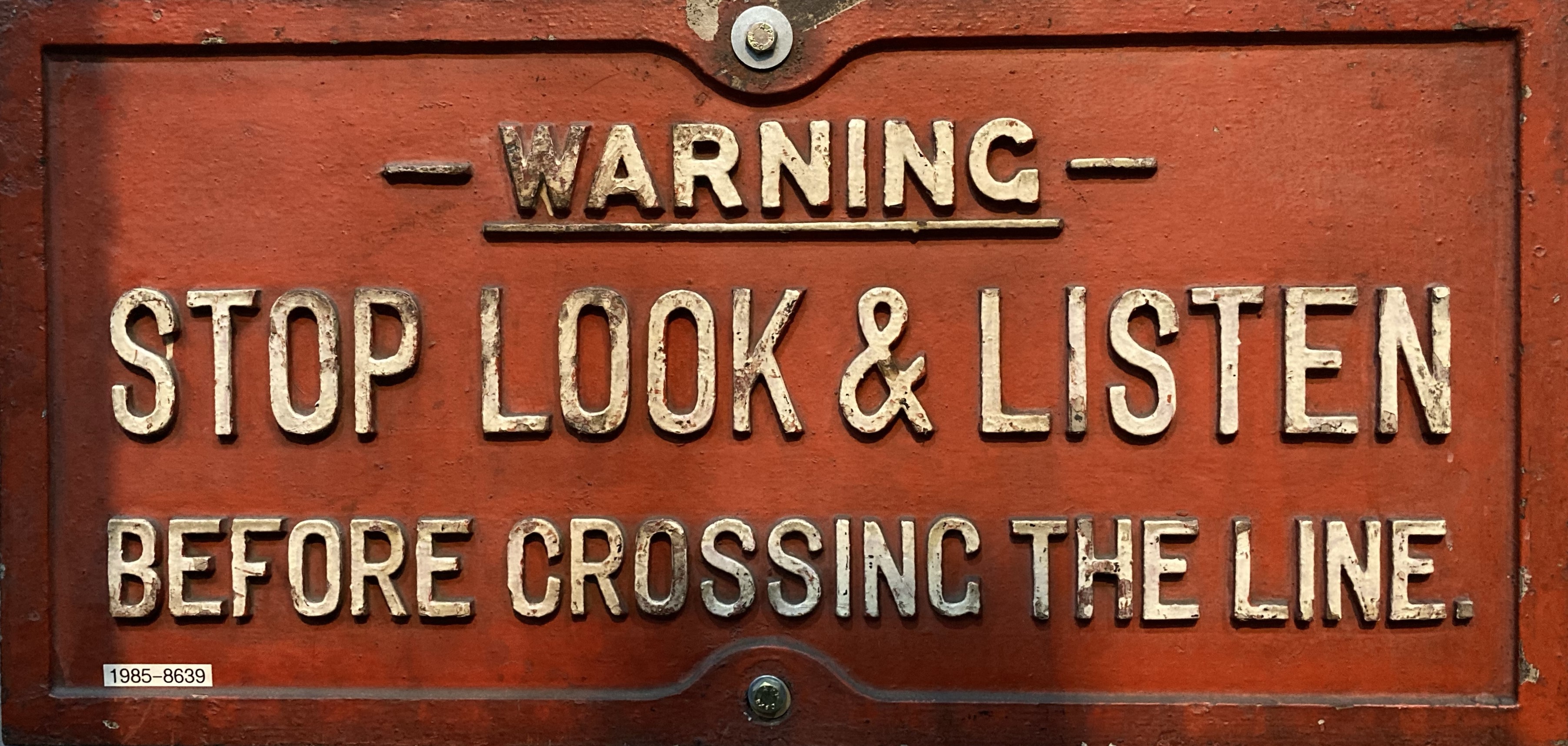
A couple of years ago we paid a visit to the National Railway Museum in York. In addition to some rather impression locomotives and rolling stock of various vintages, the museum is home to a vast range of smaller items associated with rail transport through the ages. Whilst wandering through the exhibits, I was much taken with a simple cast iron sign that was bolted to the wall (shown in the photograph above). Painted a rather satisfying and suitably alert-inducing red, its white embossed letters spell out the message: ‘WARNING – STOP LOOK & LISTEN BEFORE CROSSING THE LINE.’
There are a few things that I particularly like about this sign – its colour, the neat, bold use of capital letters, the way that the words are perfectly balanced and centralized, and the inclusion of the final full stop. Somehow, that last grammatical detail adds to the feeling that this is a sign that was serious about doing its job…
…which was obviously to warn people to take care crossing an unguarded railway line.
I guess that most people visiting the museum walk past that sign without taking much notice of it. In fact, many probably don’t even register that it is there. But as soon as I saw it, I knew that it was a sign and the message that it conveys, were something that I wanted to capture for posterity:
-WARNING- STOP LOOK & LISTEN BEFORE CROSSING THE LINE.
Isn’t that great advice, not simply in relation to navigating the obviously dangerous act of crossing a railway line, but for life in general?
A problem shared is a problem halved, or so the saying goes. But whether that is really true is debatable I suppose.
My problem had been hidden deep inside until you called it by its name. And that was like the whistle, blown to start the game.
The problem that was diagnosed affected how I lived. It stopped me getting on with things; it made my brain a sieve.
This problem that you helped me with is tricky to unpack, It means my brain keeps worrying. I never can relax.
The problem I am grappling with is not a sickness I contracted. Rather, it’s part of me, so always I’m distracted.
The problem you explored with me in many ways defies convention. It’s not that I don’t want to, I just can’t control my attention.
The problem that I shared with you for years has had me troubled. And to be honest, since you got involved its size has more than doubled.
It isn’t that you didn’t help because certainly you did. It’s just that now I’m in the game you’ve helped me lift the lid.
The problem that was inside me has now come bursting out. And now I want to dance and sing and jump and scream and even shout!
My problem shared, it hasn’t halved, or reduced in size at all. But now we’ve torn down all the bricks it’s no longer a wall.
So, although my problem may have multiplied by three or four or five. Truly, I give thanks because you’ve helped me come alive.
(c) Tim O’Hare, July 2023
About this poem: I was given a diagnosis of ADHD at the age of 56 in summer 2022 through a private provider called ‘Problem Shared’, and for about 9 months in late 2022 and the first half of 2023 I had roughly monthly online sessions with a prescribing nurse. These conversations were always very enjoyable (for both of us I think) and helped me to unpack some of the challenges I was experiencing and to express my thoughts and ideas on tackling those challenges, and on ADHD more generally. This poem was not intended to relate only to my interactions with the ‘Problem Shared’ organization, but I used the name as a starting point. It captures the idea that whilst my diagnosis, and subsequent treatment, has certainly generally the flow of my life a lot better, it has also opened up all kinds of additional issues and challenges.
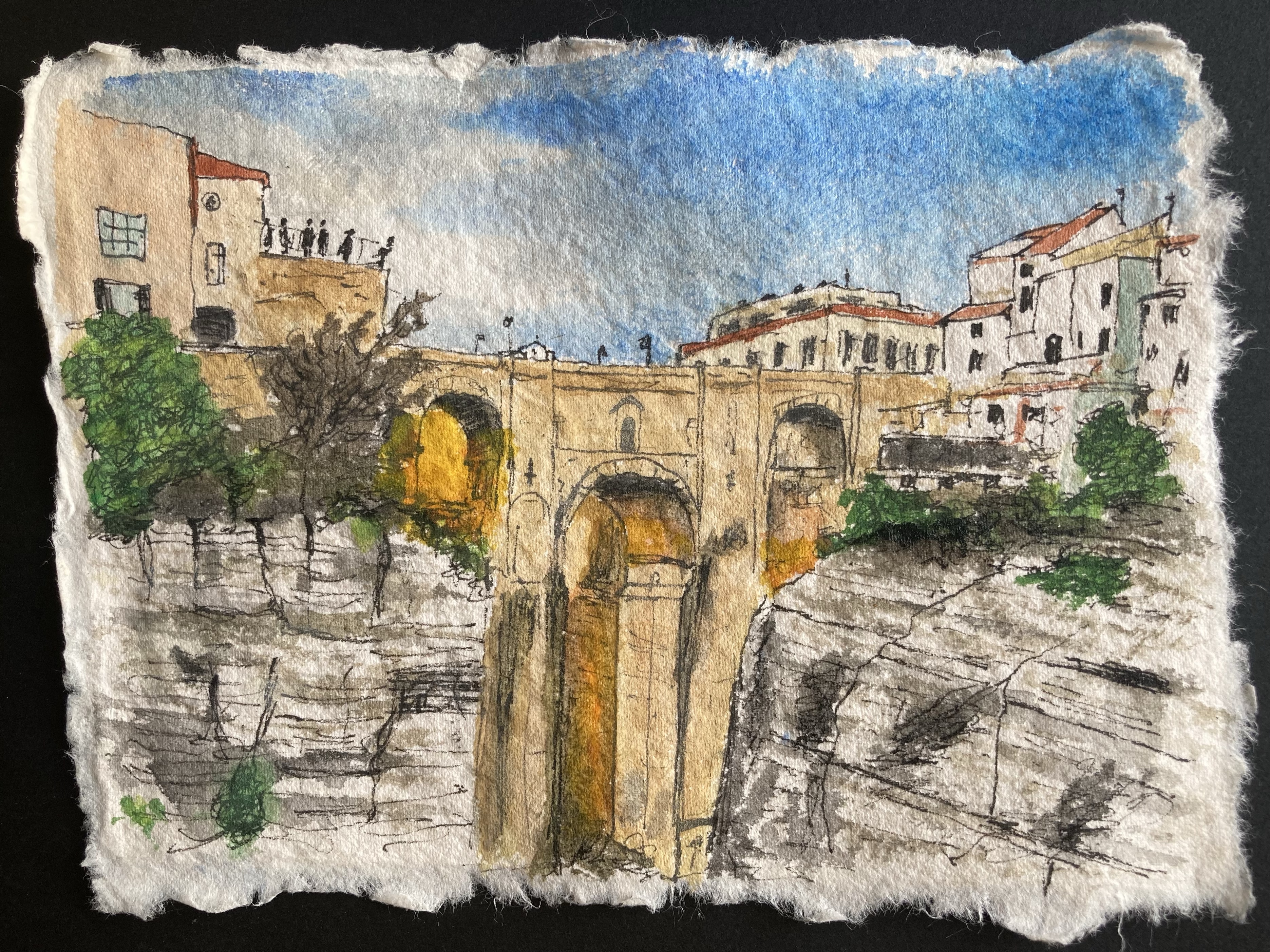
As I noted in another recent ‘art’ post (Home Park, Plymouth Argyle), it seems to have become a ‘thing’ that I create handmade cards for birthdays and special occasions associated with family and friends. For these cards, I generally paint a small watercolour picture of a scene that has a special connection to the person or event being celebrated or one that just shows a place that they really like. I usually use some small (roughly 10cm x 15cm) rough-edged raggy paper, for the painting and then I tape this to a simple brown card. This gives an interesting and attractive, rather rustic, feel to the cards which I think is appropriate given their handmade nature.
I painted the picture above, of Ronda in southern Spain, at the start of last month to use on a birthday card for my elder daughter’s husband. They travelled to Ronda to attend the wedding of one of my her workmates just a month or two before their own wedding last June and he liked it so much that my daughter was quick to suggest it as the subject for his card. To be completely honest, the other alternative was for me to try to paint a picture of Stamford Bridge, home to Chelsea F.C. (his team sadly) and apart from me not wanting to have to paint a scene that had lots of people in it, it was quite difficult to find a suitable picture to base a painting on. So, Ronda it was…
Funnily enough, despite being an incredibly scenic and much photographed location, with its deep gorge and steep cliff faces, Ronda was also a difficult subject to find a suitable picture to recreate as a painting. Most of the photographs of the town that I could find online were either taken from a distant vantage point designed to show the full majesty of the cliff-top location (which then made all of the interesting details of the buildings etc. shrink to an unworkable size) or were focused on a single ornate building or just the bridge that spans the gorge (and so did not really capture anything about the setting). In the end I opted for this shot of the bridge with a decent chunk of the cliff faces visible and some suitably Spanish-looking buildings. I tried to capture some of the drama in the scene as the setting sun creates its own lightshow between the pillars of the bridge. The picture/card was certainly appreciated, so I can’t have done too bad of job!
Meditations is essentially a collection of journal entries written by Marcus Aurelius, Roman Emperor (161-180) and well-known adherent to the principles of Stoic philosophy. Most of the entries are short notes, written by Marcus as he unpacked his thoughts on the events of a day just passed or noted down some reminder to himself about the way that he wanted to live his life. These entries were never set down with a view to them being read by anyone other than the author, but they now constitute one of the most commonly cited sources of Stoic wisdom, to the extent that Marcus Aurelius is now generally regarded as one of the big three Stoic philosophers (along with Seneca and Epictetus).
I have read and listened to multiple books on Stoic philosophy and the Stoic approach to live that draw heavily on Meditations, most notably the works of Ryan Holiday – in particular The Daily Stoic and the first three books in his series on the four Stoic virtues: Courage is Calling (Courage), Discipline is Destiny (Temperance) and Right Thing, Right Now (Justice) [the fourth and final book in the series: Wisdom Takes Work (Wisdom) is scheduled for publication later in 2025] – and I have dipped into Meditations on and off over the years. But I had not actually read Meditations in its entirety for myself. With that in mind, at the start of this year, I decided to include Meditations as a component of my ‘morning reading’ sequence.
My initial plan was to read one entry of Meditations each morning, but I soon found that the entries are so variable that this approach was frequently not particularly satisfying, and so I switched to reading 5 or 10 entries at a time (depending on how they fell on the page). This meant that it ended up taking me 2.5 months to complete the whole volume.
I had quite high hopes for my reading of Meditations – I was familiar with it as a source of many great quotes – but, in fact, I found it something of a slog to get through. Every now and again a sentence would leap out at me and I would rush to note it down, but around those golden nuggets there was quite a lot of dull rock. I think that most readers would get a lot more out of reading material that draws from Meditations, such as the aforementioned works by Ryan Holiday, than working their way through the original source material. It can obviously be argued that the former approach is lazy and relinquishes control over what wisdom one might gain from the material, but my feeling is that in this case, the ‘tour’ is much enhanced by the commentary provided by a skillful guide.
I guess the real issue with Meditations is that, as already noted, it is not a book that was written by the author to be read. It’s much more suitable for the ‘open at a random page and read an entry whenever the mood takes you’ approach than a cover-to-cover examination (unless your intention is to actually study it). But either way, the little nuggets of wisdom should emerge, and can serve as useful reminders. Here are a few that stood out for me…
Be like the rocky headland on which the waves constantly break. It stands firm, and round it the seething waters are laid to rest.
Just as drifting sands constantly overlay the previous sand, so in our lives what we once did is very quickly covered over by subsequent layers.
Perfection of character is this – to live each day as if it were your last, without frenzy, without apathy, without pretence.
When you have done good and another has benefited, why do you still look, as fools do, for a third thing besides – credit for good works, or a return.
Universal nature delights in change, and all that flows from nature happens for the good.
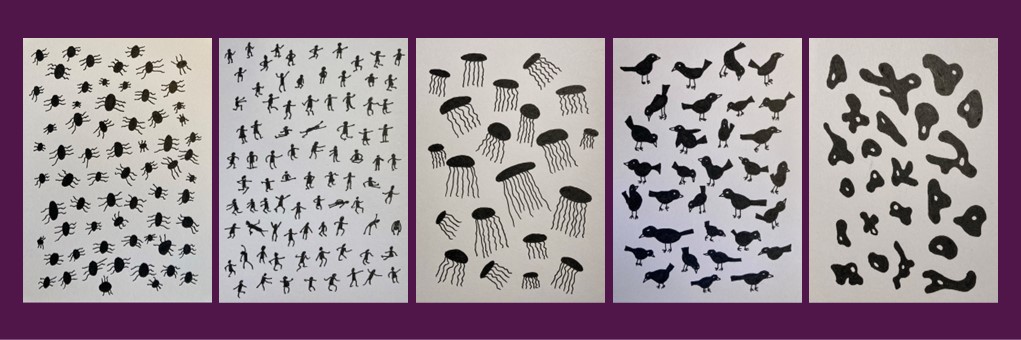
A few weeks ago I started a new practice of spending a few minutes each morning producing a quick piece of artwork.
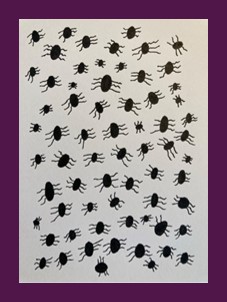
Without really thinking about what I was doing I grabbed a small sketchpad and in ink pen and starting doodling little bugs, eventually covering the page with an assortment of bugs all slightly different sizes, with different leg lengths and scurrying in different directions.
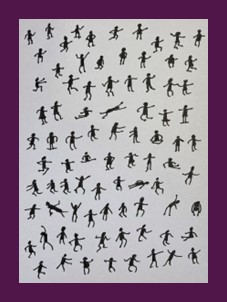
The next day, faced with another blank sheet of paper, I found that it was little people, in various poses that flowed from my pen. After posting these on my Bluesky social media account and asking which of the little people was a viewer’s favourite it was fun to see the various comments coming in.
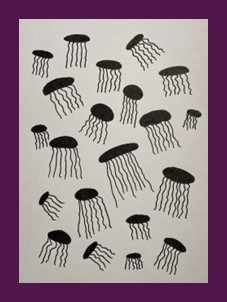
It was hard to follow the little people, and on the third day I went marine with a host of (sort of) jellyfish.
For the fourth day, having done a few trial sketches, I set about drawing small blackbirds. It was amusing to have it pointed out later that one of these was legless…
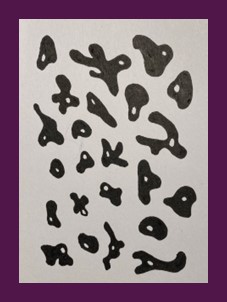
Finally, with my imagination failing me I completed my Miniature Creatures series with a page of amoeba (or is it amoebas?). Well, I call them amoeba, but really they are just weirdly-shaped black blobs with a white spot somewhere inside their ‘body’. Whatever they are, they look kind of alive…
It was interesting to produce some artwork that is quite unlike most of my drawings and paintings, much more abstract and in the case of the bugs, people and birds at least, a little cartoony. They are quite trivial pieces, but fun to do and judging by some of the feedback I got, fun to look at too!
I wrote this piece back in 2021 – one of three that I wrote under the working title: ‘Glances and Glimpses’. Each of the pieces captures some thoughts on an activity or incident that connects different periods of my life and/or opens a window on some aspect of my character, thereby providing a glance or a glimpse inside my head and into my life. I used to think, rather grandly I suppose, that I might write enough of these to produce a full-blown autobiography/memoir of sorts, and who knows, that may still be the case. For now I will be content to post this one here, with the others to follow. Perhaps doing this will spur me on to have go at writing some more ‘Glances and Glimpses’ to join them in the not too distant future.
+++++
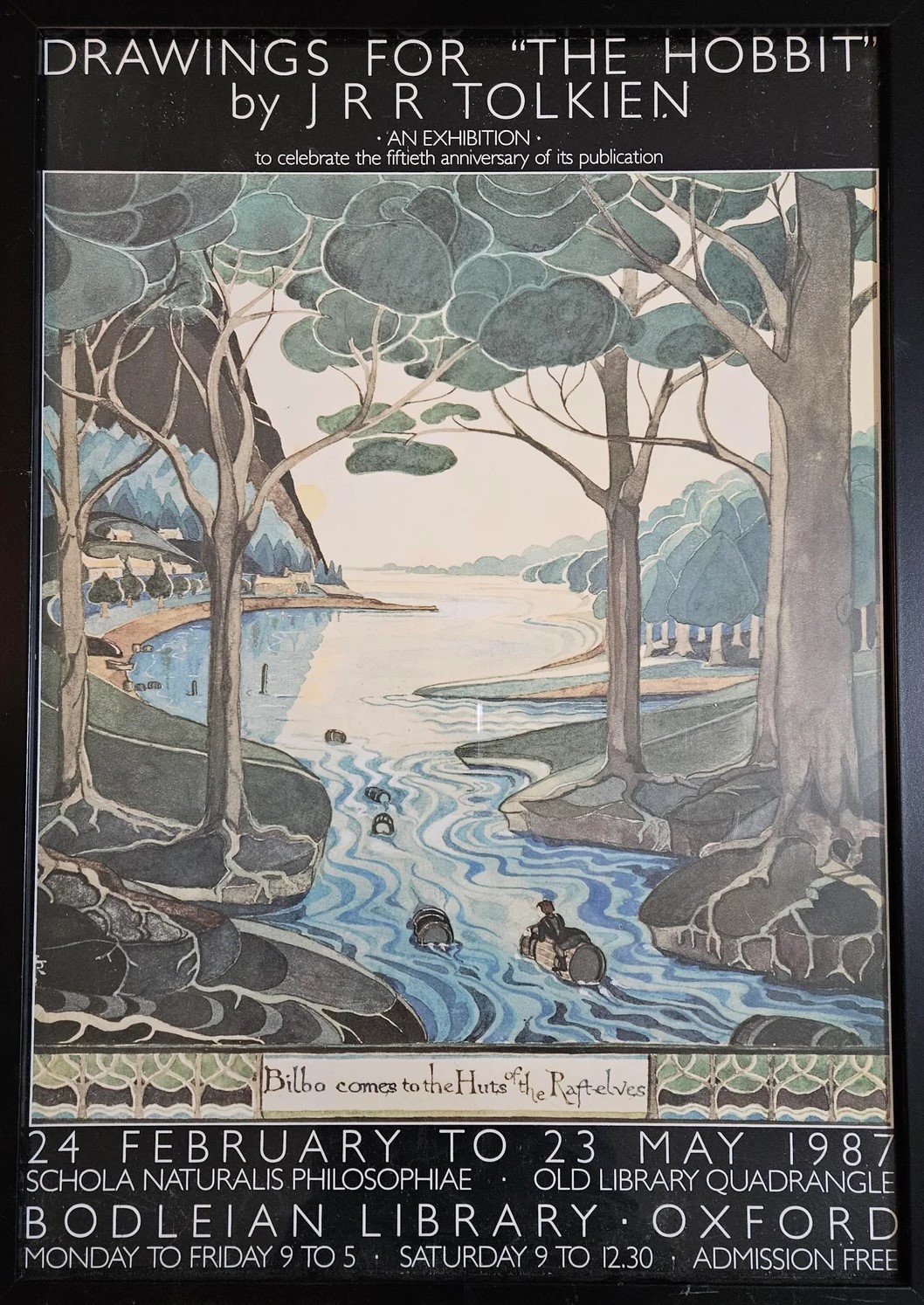
In the downstairs toilet of our house, which is just a small room off the hallway tucked underneath the stairs, hangs a poster. It’s mounted in a simple clip-frame. Every time I go into that space I look at that poster. Every time I see that poster I smile inwardly, and rapidly tell myself the story of when I first saw it, how I first obtained it, how I lost it, and how I got it back again. Ultimately, it’s a story of a thoughtful act of kindness, a simple act of love, a gift-giving from someone who deeply cares about me. It’s also a story that serves as a bridge to my past, and to many moments of happiness some years before the gift-giver even came into my life. There’s more. The theme of the poster is one of adventure and bravery, fear and danger, and leaping (plunging might be better) into the unknown. Those words – adventure, bravery – are not really me. Plunging into the unknown is NOT what I do. Fear stalks me constantly. So the poster is a reminder that it is okay to be brave, to be adventurous, to take risks and to plunge into the unknown, regardless of your fears, and without clear sight of the dangers. In fact, it’s more than okay, it’s a positively good idea!
The poster at the heart of this story advertised an exhibition of drawings that the author J.R.R. Tolkien made to accompany his book ‘The Hobbit’. The exhibition took place at the Bodleian Library, Oxford, between 24th February and 23rd May 1987 and was a celebration of the fiftieth anniversary of the publication of the book in 1937. It is a beautiful poster, mostly because apart from a title and the vital information about the exhibition in white letters on a black background at the top and bottom, it is almost entirely made up of one of Tolkien’s best works of art. The picture is titled ‘Bilbo comes to the Huts of the Raft-Elves’ and captures the moment in the story when, having strayed into the territory of the Wood-Elves and been imprisoned in their dungeons, the hobbit Bilbo manages to obtain a set of keys, free his band of dwarf companions and escape by floating them all off down the river in empty wine barrels. The picture shows the river after it has leveled out through rapids and waterfalls, meandering onward towards a small settlement through woods that come right down to the water’s edge, all gnarly roots and hummocky promontories. In the distance there are buildings – the huts of the Raft-Elves – alongside a small beach-like area on a broad right-sweeping bend in the river. In the mid-ground, in the centre of the channel, are a number of barrels floating smoothly down towards the beach, and bringing up the rear is one barrel with the small figure of Bilbo clinging tightly to the top of it as it floats along, since, having himself sealed the last dwarf-laden barrel, there was no-one left to seal in Bilbo… The lighting of the picture is beautiful, rays of sunlight stretching down through the canopy of trees, illuminating the middle distance, drawing the eye ever onward. The colours are soft greens, soft blues, greys and browns. It is a delicious palette that perfectly captures the deep woods, the swirling waters and the hope that lies ahead. The poster was designed by Trilokesh Mukherjee and whilst it is the picture that is the real thing of beauty, credit must be given for a design that blends the outer information and the inner artwork to such wonderful effect. Trilokesh Mukherjee will probably never know just how much pleasure his piece of design work has given me over the last 34 years.
As you will gather, I love this poster. I loved it from the moment I first saw it pinned to a noticeboard in the long corridor of Lady Margaret Hall, Oxford, that I wandered down several times each day to get from my room in college to the dining hall and food. I loved it so much that one day, on my way back from dinner, I stopped at the poster, pulled out the drawing pins that held it fast to the wall, and grabbed it. From that moment, that poster was mine. I could place it on my own wall and gaze at it whenever I wanted to, as much as I wanted to. My precious!
Looking back, it is hugely ironic that whilst I gained possession of the poster, I did not set foot in the exhibition. It was open for 8 hours every weekday and 3.5 hours every Saturday during the entire period of the exhibition. It was perhaps a 15 minute walk from my room and in a building that I frequently passed. There was no admission fee. Yet still I did not go to see the actual work of art itself. At that time in my life, going to an art exhibition just wasn’t really the kind of thing I did. Tragic really.
I had, of course, read The Hobbit – just once at that time, perhaps 10 years previously. I remember the circumstances fairly well. I was off school with a cold – the sort of 3 day ‘snuffler’ that was bad enough to lay a child low but not bad enough to prevent all kinds of activity… So, I could read. Over those few days I took the small hardback copy of The Hobbit down from our family bookshelves – I remember there was no dust jacket, just the soft, almost olive green board covers – and I followed Bilbo and his companions as they made their way from The Shire to The Lonely Mountain, defeated the dragon Smaug and gathered up the golden treasure hoard. Along the way of course, Bilbo gains The Ring, that bringer of so much trouble and strife, that metaphor for the weight that we all carry with us through life. But that is another tale. The one abiding memory that I have from my first reading of The Hobbit was from towards the end of the story when one of Bilbo’s dwarf companions, I think I was the effervescent Killi, dies of wounds received in a fight. I think perhaps he was protecting Bilbo at the time. I remember how I cried; oh how I cried.
1987 was the year that I finished my time studying in Oxford, and so that summer the poster was rolled up and carried away from its spiritual home. Bilbo had come to the huts of the Raft-Elves, now he was coming with me… and he stayed with me for some years, probably stuck to a wall on display at times, perhaps not at others. I know that he was still with me some years later – certainly four or five years later – because after I had met my wife Karen we must have had the poster on display at home. During that time I must have spoken fondly of the poster, so strongly in fact, that my words burned an impression in her memory. Dragon fire words!
The problem with posters of course is that they are not made to last. My poster had a job to do for perhaps a few months at most. So, as the years passed and the poster was moved here and moved there, pinned and unpinned, rolled and unrolled, blutacked and unblutacked, its edges died a slow death, its corners fractured, its heart creased. At some point, probably at one of our early house moves, the decision must have been made that my precious poster should end its journey; and so it was lost and essentially forgotten about, by me at least.
We come forward many years – around 30 years from when I first saw the poster on the noticeboard in Oxford and perhaps 20 from when it slipped away from me. My elder daughter was at university in Reading and with my younger daughter in tow I took myself off to Oxford to watch Plymouth Argyle play Oxford United down towards the south-eastern fringe of the city. My wife came along too to share a little time with our elder daughter who had popped up on the train for the afternoon. I can’t be sure of the score of the match, but it might have been 0-0 for there has certainly been one such goalless draw between those two teams at that location that I have seen, the most mind-numbingly dull 0-0 draw that you could possibly imagine, bereft of goals, bereft of excitement, bereft of anything remotely resembling entertainment.
We drove home to Plymouth immediately after the game. I was probably tired and almost certainly not in a good mood. Travelling halfway across the country for that sort of game is not the best way to spend a Saturday. I am sure that doom and gloom would have been the order of things, for me at least. And then:
“Guess what I’ve got you?”
There it was. My poster. Well, not exactly my poster but a flat, undamaged, shiny copy of the exact same poster – not a reproduction, not a different poster of the same picture… the same poster – ‘designed by Trilokesh Mukerjee’. Perfection.
It turned out that wife and daughter had been browsing in Blackwell’s – the famous Oxford bookshop – and there, nestled hidden in a rack was the ‘Drawings for “The Hobbit” by J.R.R. Tolkien’ exhibition poster – just one copy, presumably sitting there for 30 or so years, costing just a few pounds, waiting for its moment.
That poster, my second copy, did not get pinned, rolled or blutacked, it got loved. As soon as possible it went straight into a frame and onto the wall, the wall where it has remained ever since, and where I now see it several times most days. It reminds me of happy times in Oxford – friends, places, events. It makes me laugh that I didn’t even make it to the exhibition. It causes me to retell its story in my mind. And it reminds me how things that are lost can be found. Most importantly, every day it reminds me that someone listens, someone watches, someone remembers and someone loves.
A couple of years later, I noticed that there was an exhibition of artwork and artefacts of Tolkien in the Bodleian Library, Oxford. It was the only such public exhibition of these items for many years and it included the small number of paintings that Tolkien painted for The Hobbit. Of course we went. The pictures, the maps, the draft chapters were all wonderful. The picture was wonderful. But my poster is better.
Bilbo and the dwarves escape from the dungeons of the Wood-Elves and down the river in the only way that is possible. It is an uncomfortable mode of transport, it is an uncertain path to take – being caught whilst loading the barrels, drowning, suffocating, being dashed against rocks are all possible outcomes – but they take it nonetheless. Quite literally, they throw themselves into life and life carries them forward. That is a lesson that I need to be reminded of every single day. The road goes ever on, but it requires bravery to keep moving forwards.
(c) Tim O’Hare, March 2025 (originally written in 2021)