Plymouth Postcards #art

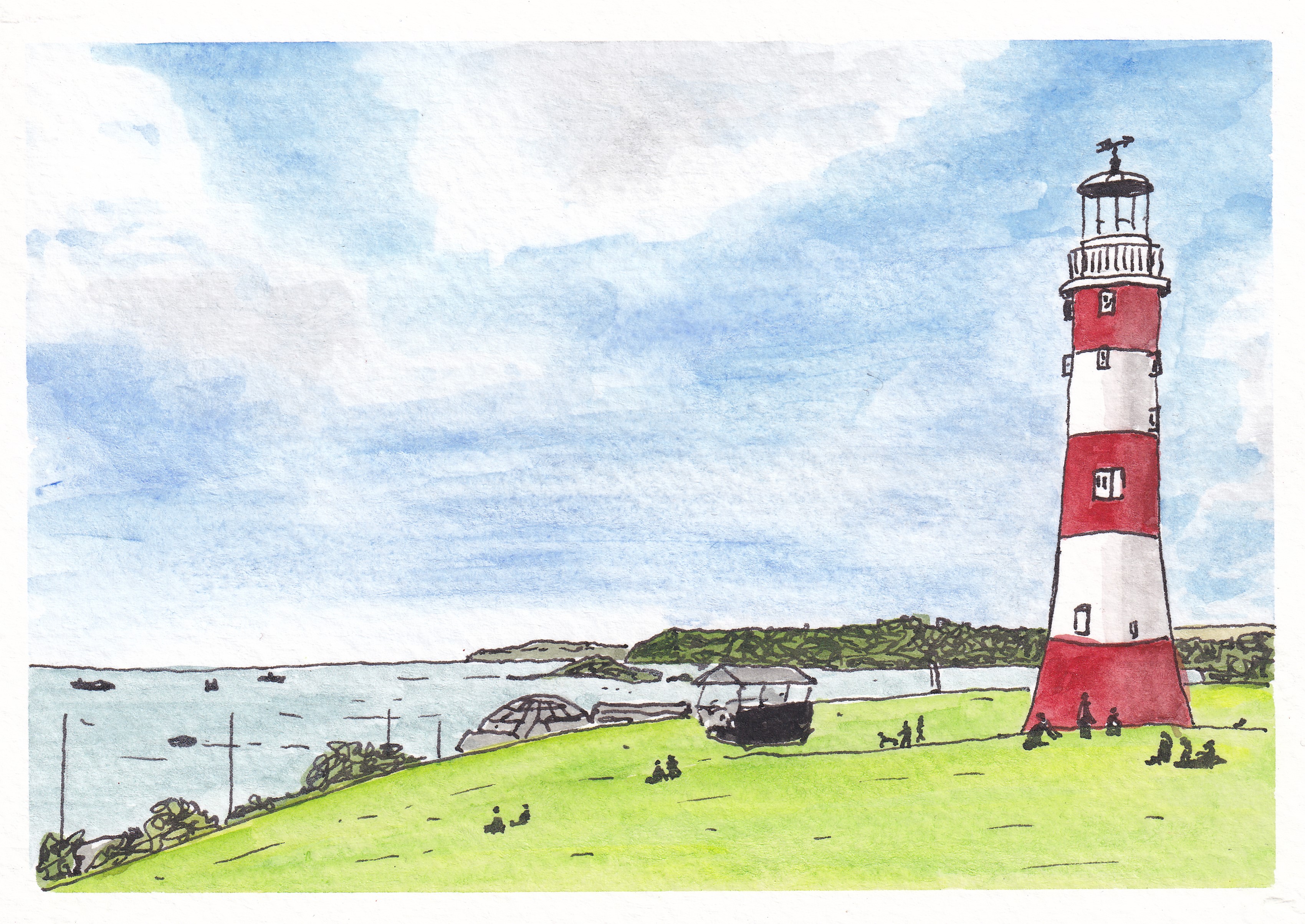
Smeaton’s Tower Lighthouse, Plymouth Hoe

Back in April, after completing four series on miniature watercolour pictures (Dartmoor Scenes, House Plants, Capital City Landmarks and Mysterious Britain), I decided that I would give myself a new challenge by scaling up my paintings a bit and keep my subject matter close to home with a set of pictures that I described with the working title ‘Plymouth Postcards’. I wanted to try to keep the same kind of fairly loose style but I thought it would be good to be able to capture a bit more detail of each scene. My miniature watercolours had been just 5cm square (or 5cm x 7cm in the case of the Mysterious Britain series) but this new series was, naturally, postcard sized (roughly 10cm x 15cm). That’s an increase in area of up to six times, and so it gave me quite lot more sketching, drawing and painting to complete!

My first picture (above) focused on what is probably the most iconic view associated with Plymouth, the red-and-white striped form of Smeaton’s Tower – one-time lighthouse on the Eddystone Rock which was moved to Plymouth Hoe when it was replaced in the 1880s.

Next up, I remained close to the waterfront with a view across the inner basin of Sutton Harbour towards the old customs house and the Three Crowns pub. I am not sure that the colour of the water there is ever quite as blue as my picture suggests, but I like the bright and cheery feel of this painting…

Sutton Harbour, Plymouth

Third came a view of one of Plymouth’s most distinctive new buildings, the Roland Levinsky Building, home of the Arts Faculty at my workplace, the University of Plymouth. Again, the sky is perhaps a little too bright, but I like the three-way competition between the blue sky, the green of the grassy area in the foreground, and the coppery-orange cladding of the building itself…
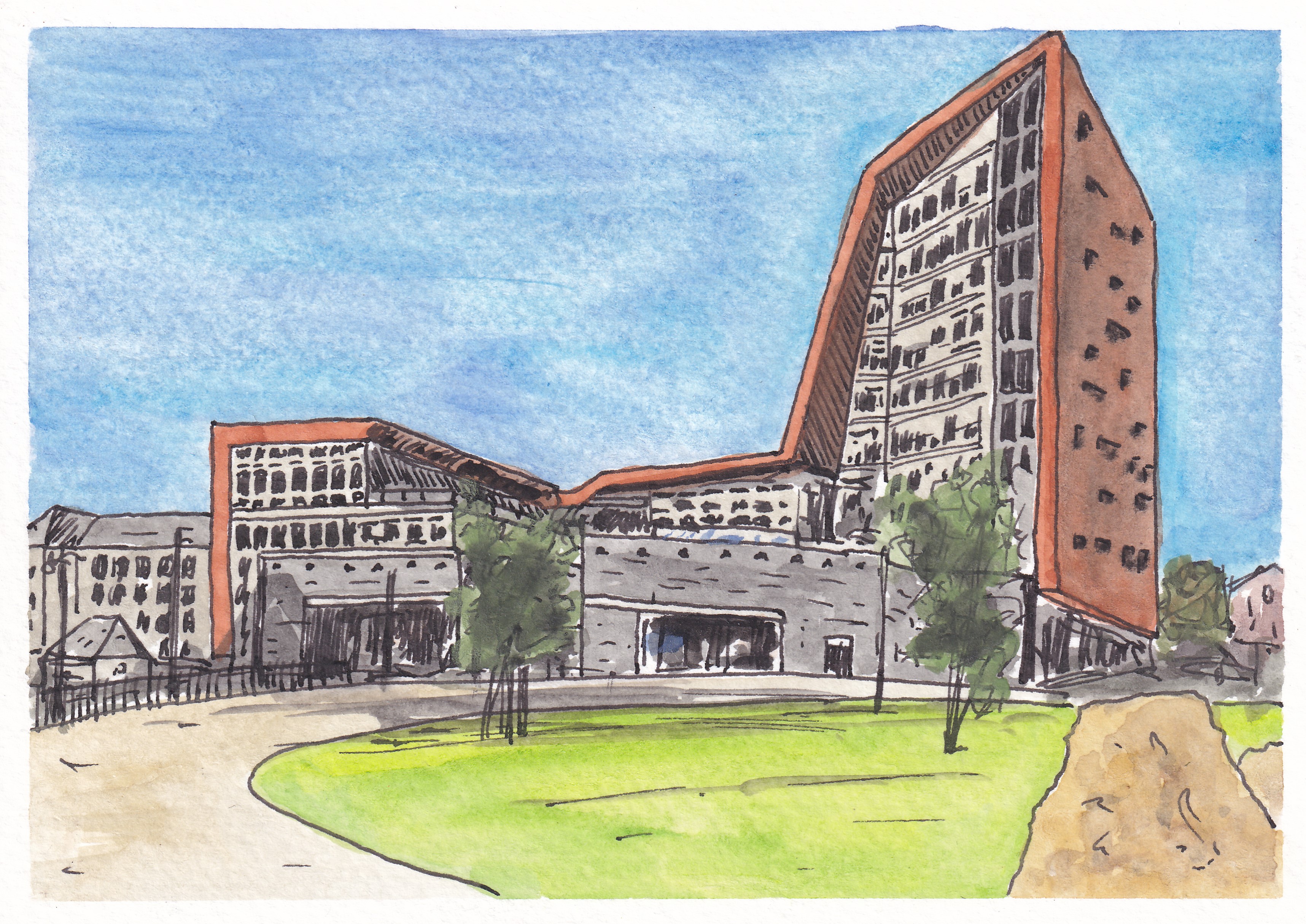
The Roland Levinsky Building, University of Plymouth

After painting a fairly new building, it was time to visit a much older one with a ffront-on view of one of the main buildings at the Royal William Yard, formerly the victualling yard for the Royal Navy but now a home for swanky apartments, restaurants, various studios and art spaces, and a cinema. I think this is one of my favourites from the series…
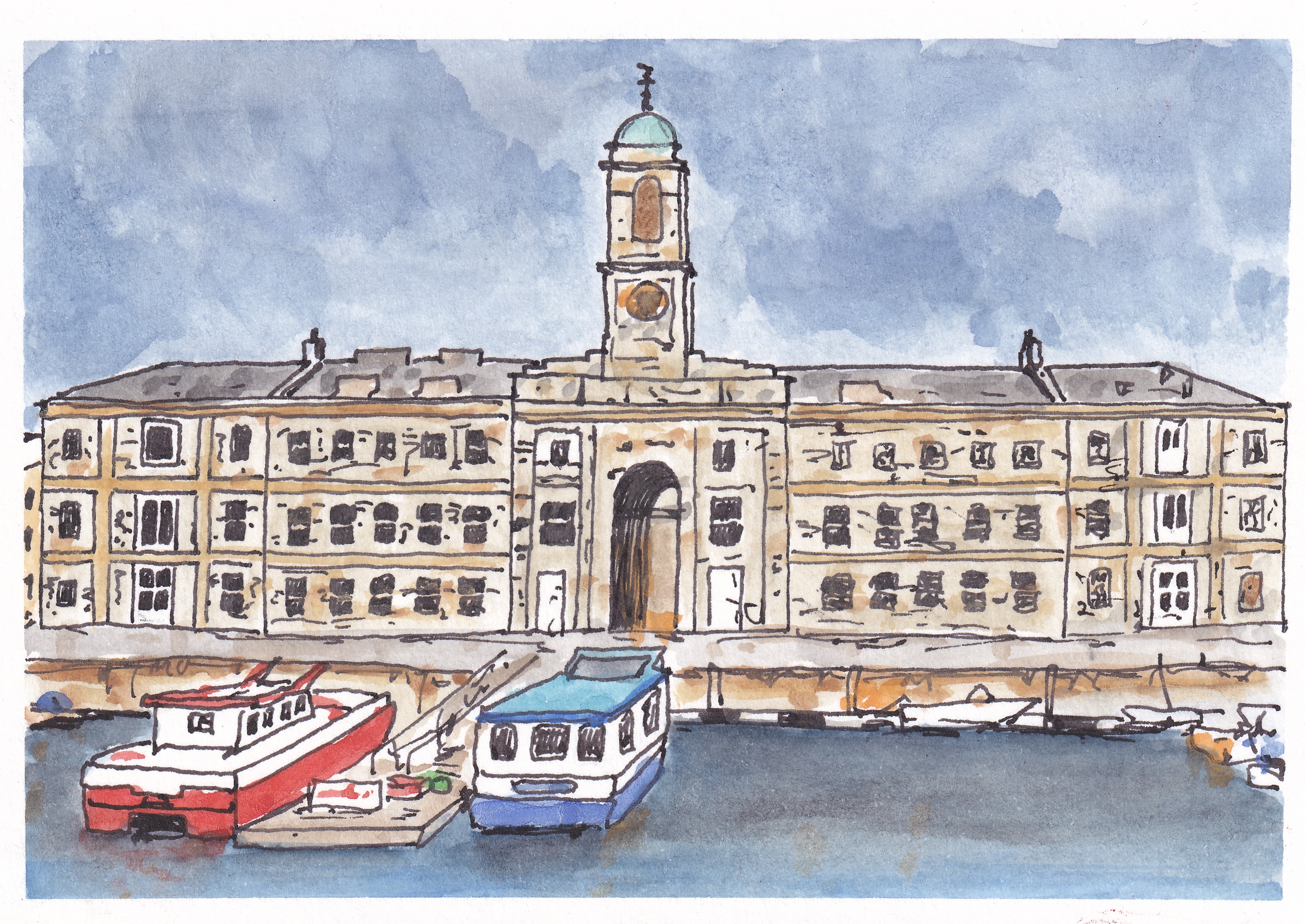
Royal William Yard, Plymouth

Then, it was back to the city centre for a picture showing the Charles Church, bombed in the Second World War and left in its broken state as a memorial to lives lost. Behind it, the angular exterior of the eastern end of the Drake Circus Shopping Centre forms an interesting backdrop which was surprisingly challenging to paint…

Charles Church and Drake Circus Shopping Centre, Plymouth

For my sixth Plymouth Postcard, I took a trip down to the Barbican area of the city for a view of the Plymouth Gin Distillery on Southside Street. It was difficult to get the perspective of the curved road right but I think I have just about managed it…

Plymouth Gin Distillery, Southside Street

It was time to get a bit ‘arty’, so my next picture was of the interestingly illuminated Theatre Royal, with the imposing form of the statue ‘Messenger’ in front of it. I think that I did pretty well with the theatre itself, and the shape of the statue isn’t too bad, but my initial attempts to shade its dark form resulted in it looking like a hairy gorilla, and so I coloured it black with a permanent marker to try to salvage the picture. Unfortunately, this was only partially successful and I think I would have to describe this one as something of a ‘fail’…
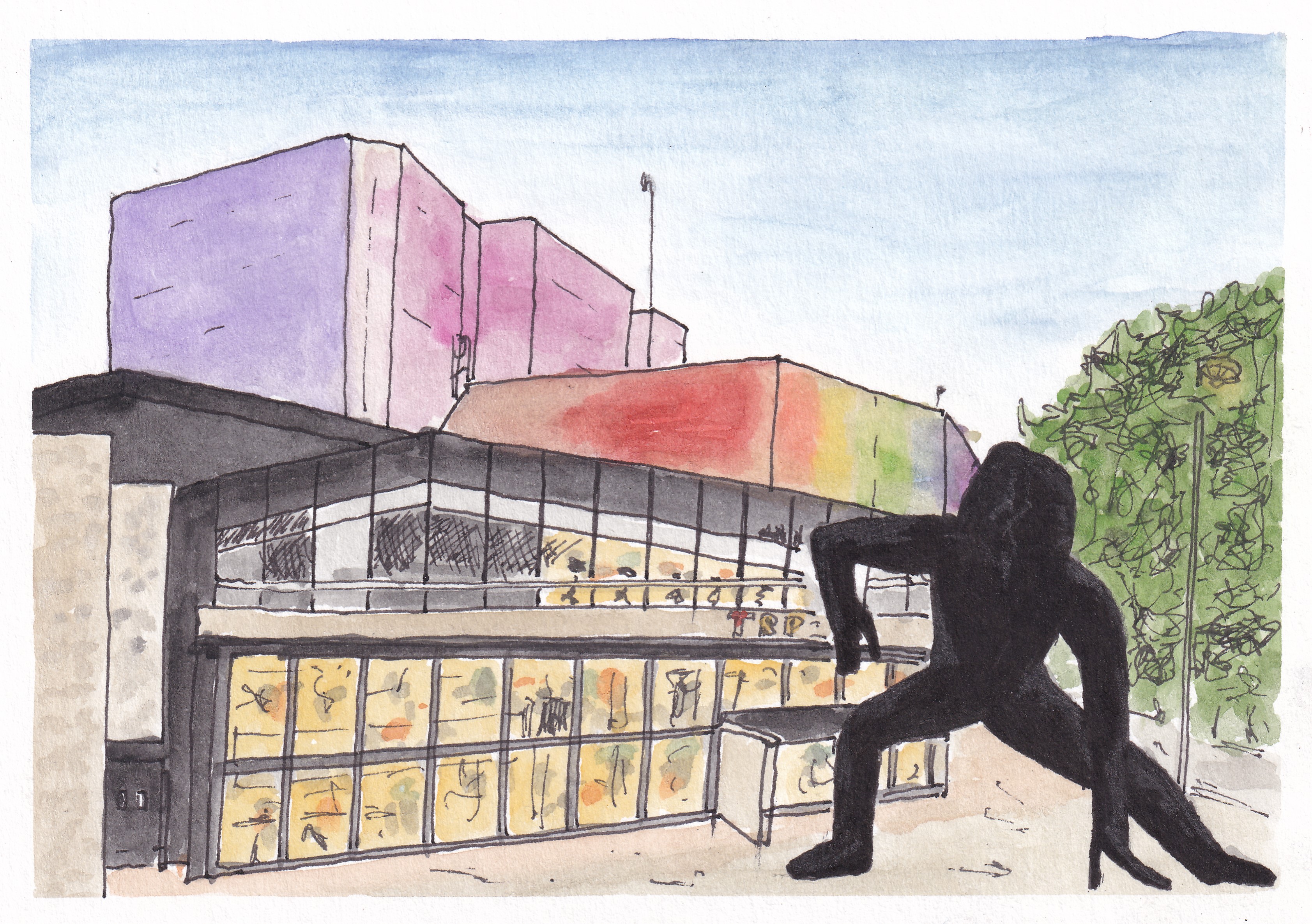
Theatre Royal and ‘Messenger’, Plymouth

Painting number eight took me back to Sutton Harbour, this time looking across the swing bridge towards the Fish Market on the far left and the National Marine Aquarium, with its wavy roof in the centre. I’m please with the way I captured the blue colour of the windows and the advertising poster on the left of the building, and I like the foreground detail of the boat and bridge. Sadly, my attempt at a Union Jack flag was not quite so successful and the flag of the USA seems to have lost its stars…
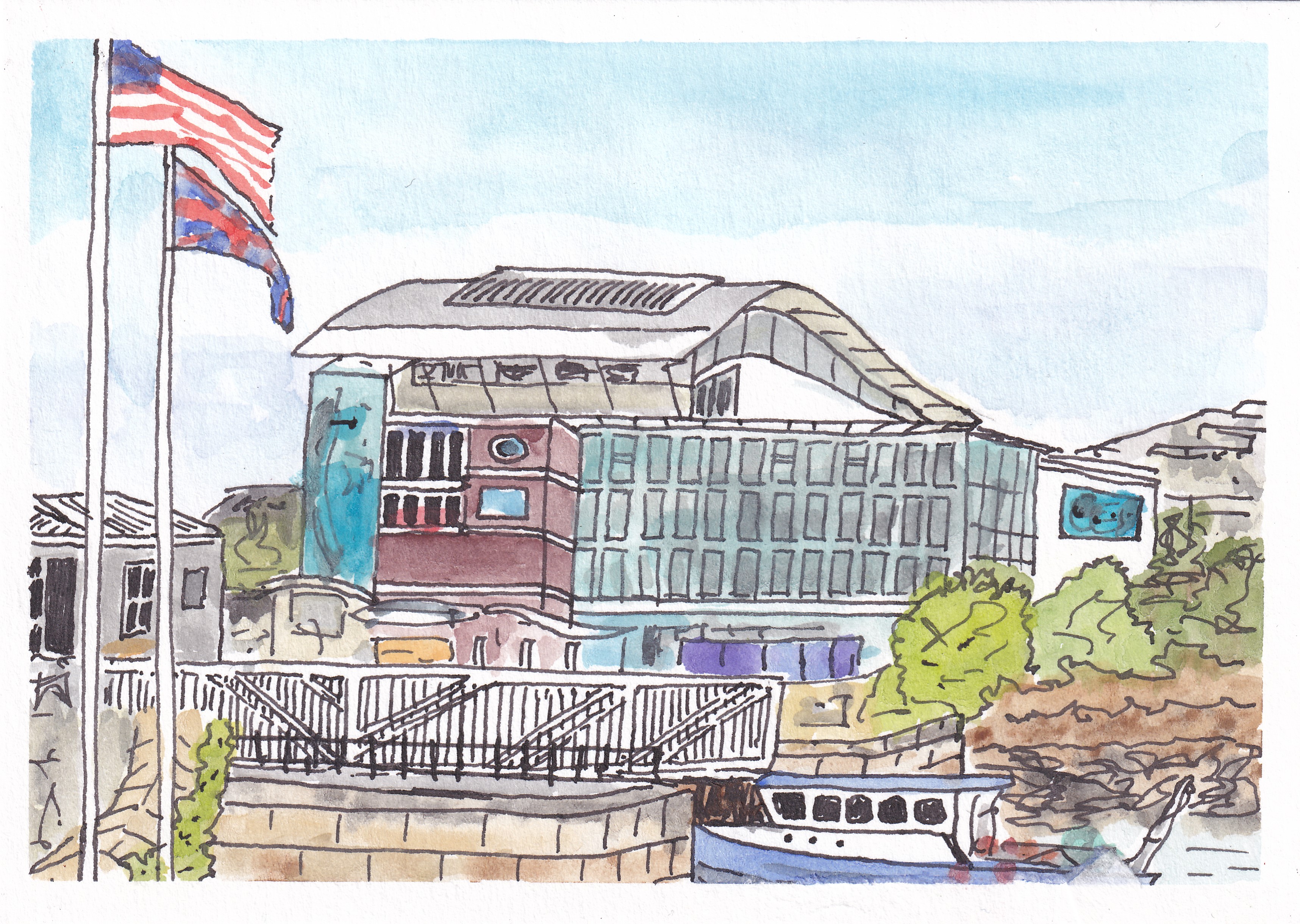
The National Marine Aquarium, Plymouth

My ninth picture took me to very familiar territory, with a view of the old turnstiles at Home Park, home of Plymouth Argyle Football Club…

Home Park, Plymouth Argyle Football Club

… and then it was back to the waterfront with a view of the art deco Tinside Lido with part of Plymouth Hoe, Smeaton’s Tower and the war memorial in the background…
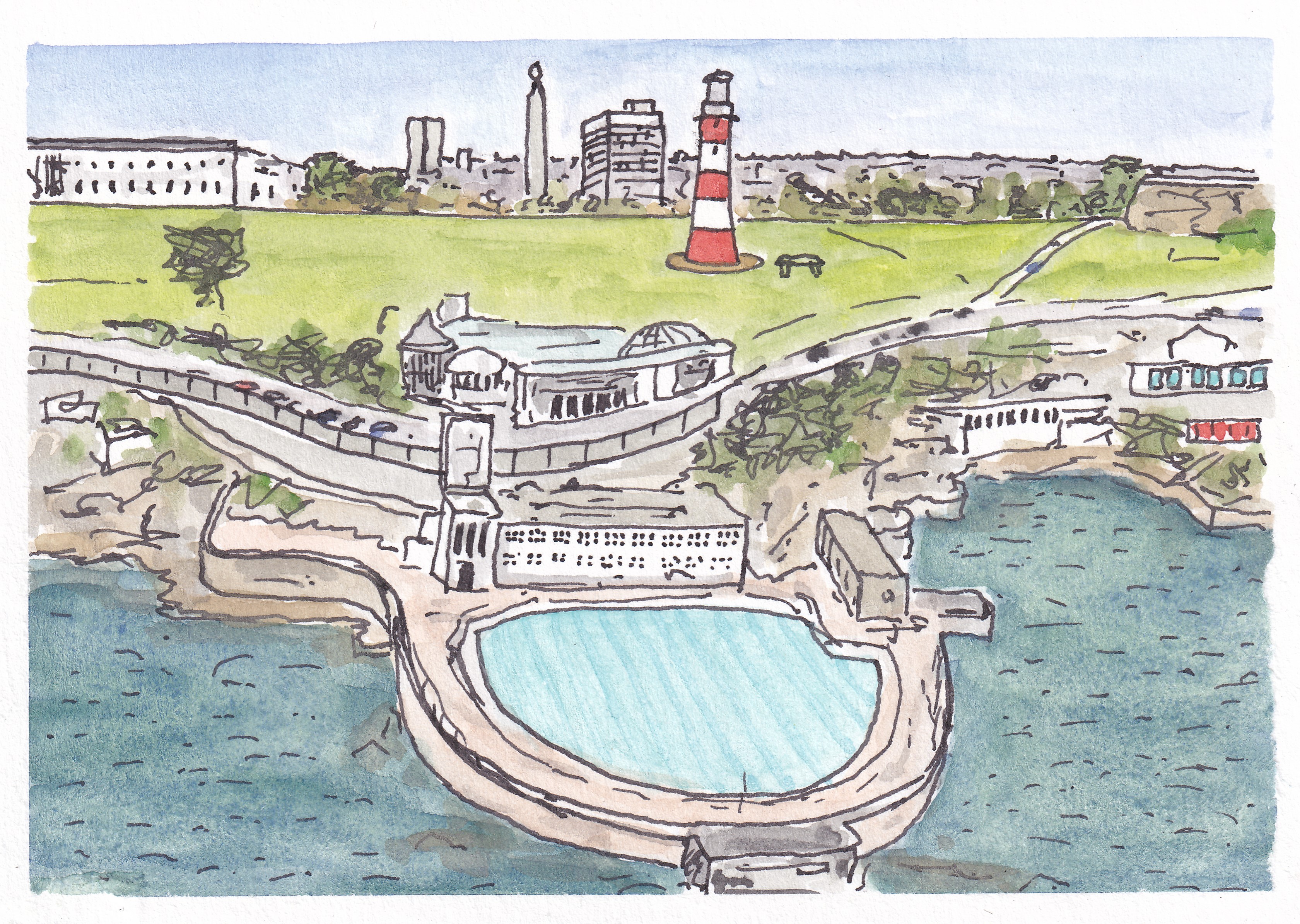
Tinside Lido and Plymouth Hoe

I finished my series with two pictures of contrasting buildings. First up was the Devonport Town Hall and Column, with the oddly coloured and spectacularly fronted (and named) Odd Fellows Hall on the right. Finally, my subject was the sharply-topped, and so highly appropriately named, Beckley Point (a Hall of Residence for students in the city). This is, apparently, the tallest building in the southwest of England (although I don’t know what is being counted as the southwest in this case)…

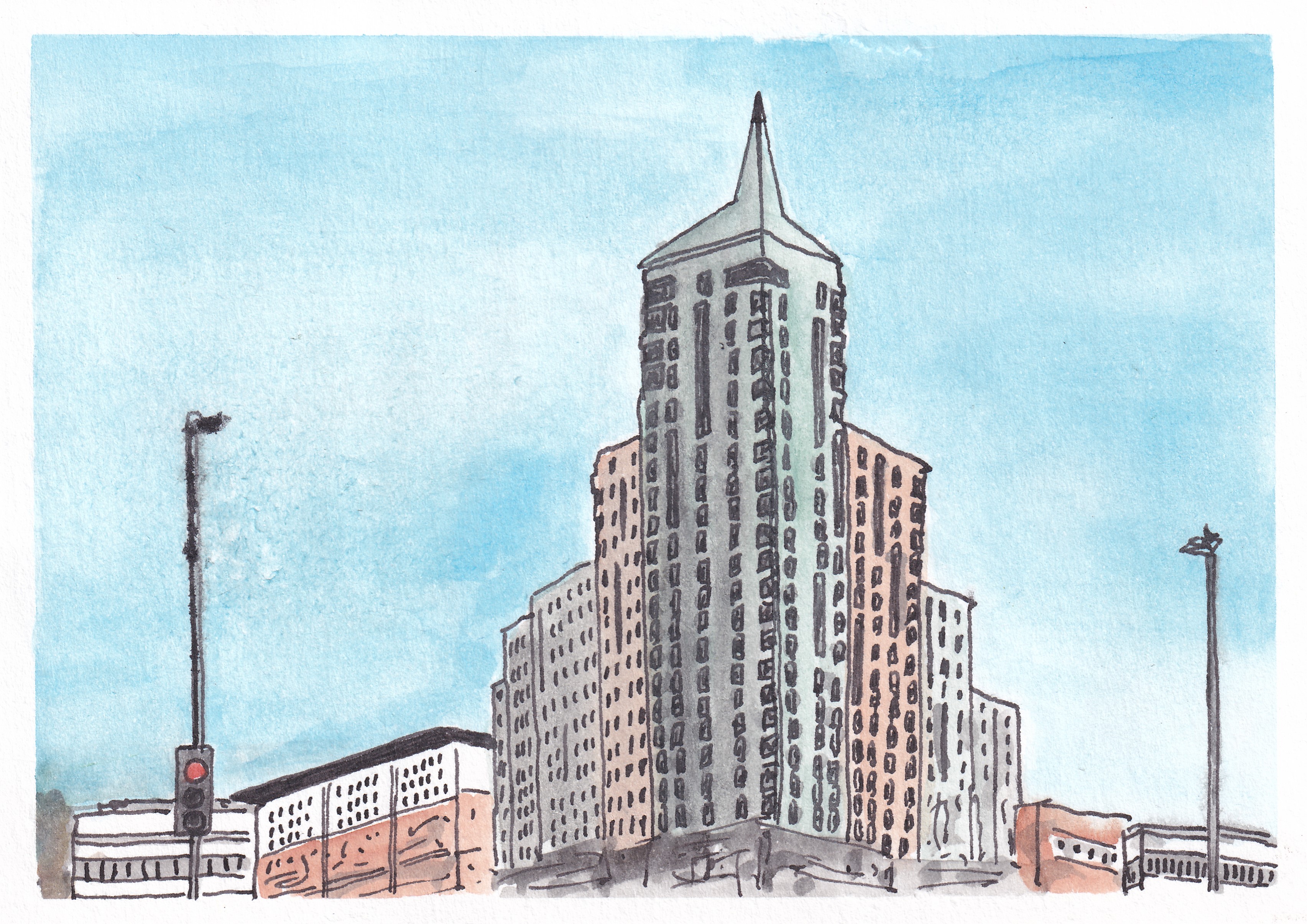
Devonport Town Hall and Column and the Odd Fellows Hall
Beckley Point Hall of Residence, Plymouth

This was a fun series to do, taking 17 days to complete, and overall I was pleased with the results of my efforts. It was interesting to try to capture some of the more striking buildings and views that Plymouth has to offer, particularly as it is generally regarded as an architecturally bland and unexciting place (largely as a result of the fact that much of the city centre was flattened by bombing raids in the Second World War).

I am sure that I will do plenty more paintings of Plymouth views in the future, but I think this set forms a good initial collection, showcasing some of the different areas and places of interest in the city nicely.
Rock Giant #poem

You have used me as you wish to have your fun,
scrabbling roughly on the pockmarked surface of my skin,
climbing high to turn your face towards the sun.
You scrape your boots across me to remove accumulated soil,
and carving your initials in my surface,
give little thought to what you spoil.
You have taken from me what you need
using iron picks to gouge out fragments,
thinking that you caused no pain because you saw no sign I bleed.
You turn your eyes towards me and see only solid rock,
looking down upon my dumbness,
laughing as you mock.

By day, as you approach from the grassy slope below,
you start to notice many shapes of things you know.
You see an outline that reminds you of a faithful hound,
you watch it shift as you move forwards,
then it’s gone without a sound.
You turn to view a castle, but no soldiers move for they have fled.
You move your head to shape a profile –
only then you see the witch’s head.
You trace out furrowed brow, hooked nose and jutting chin;
you feel grey eyes look through you,
and you shiver as an evil spell takes hold within.

At night, in your imagination, led by an unheard call,
you see me rise up from my station as I yawn and stretch so tall.
You hear the distant thunder of my steps
as I march the slowest beat.
You sense vibrations deep below,
the trembling ground beneath my feet.
You are frightened of my power, as I tear the earth apart.
You are petrified, turned solid, as the terror grips your heart.
You are fearful that I come at last to take what I am due.
You sense that it is time.
And you are terrified that I am hunting, hunting now for you.

But none of this is true,
for all that you see, and everything that you imagine,
has been shaped by the stories you were told,
and what they let you do.
Those imagined forms, the wild thoughts,
and all the feelings they produce may seem fantastic
when compared with what is in your normal view.
So, what is the truth?
If only you knew…

I was formed from countless tiny pieces that began as dust,
mixed together in her bowl,
baked by her heat to form a crust.
I was once pressed tight together as I found my solid form,
extruded by her shuddering contractions,
melded in her womb so warm.
I have rested for so long as if I have no task,
snuggled by her mossy blanket,
wrapped protectively within her grasp.
I have waited patiently for several million years,
cooled by her gentle whispers,
washed clean by her falling tears.

For your time is not all time.
Your whole existence is the smallest fraction of my life.
This place was mine so long before you came,
and will remain my home for even longer once you die.

And your space is not all space.
Your whole world is like a single speck of the quartz that shines
within the substance of my form,
just one of countless millions of specks, all of which are mine.

And your thoughts are not all thoughts.
Your thoughts are small and they are fleeting, and so they rarely bend.
You are constrained by what they choose to tell you.
There is so much you cannot comprehend.

And your life is not all life.
Your life is short, and it is fast, and so it limits what you try to claim.
You cannot grasp the unfamiliar.
You are bound by the rules that shape your game.

Believe me, I do not lie.
I do not speak to garner fame.
For beyond all that you can see, and everything that you imagine,
are stories to be told and things to see that far expand your frame.
You may think you are the only one who holds within a spark,
but that is falsehood as we share that conscious flame.
I too am alive,
and Rock Giant is my name.

(c) Tim O’Hare, August 2023


ROCK GIANT: The last few walks that we have done have been on the familiar territory of Dartmoor, taking in one or more of the rocky tors that sit atop many of the hill summits. These enormous piles of granite slabs are the remnants of old volcanoes, material pushed upwards from the upper mantle almost 300 million years ago. I find it impossible to visit a tor without seeing the profiles of faces in the shapes made by the great piles of rocks, or imagining that the rocks are the tip of a toe, an elbow or some other part of a huge stone giant asleep beneath the ground. And then, in a natural progression of my thoughts, those rock giants begin to stir. I am not at all sure why, in the poem, I imagined the rock giant as a threat. My instinct is that they are, in fact, very gentle and friendly creatures. But, of course, I will never really know, because they still have much sleeping to do before they awaken.

The Time Crackers – progress update #writing

Some time ago (by which I mean years, not weeks or even months), well before I had finished writing the final draft of my children’s adventure story Empedocles’ Children, I had the idea for another children’s book – The Time Crackers. Empedocles’ Children ended up as a fairly weighty tome, coming in at around 110,000 words and (probably) best suiting readers towards the upper end of what is termed ‘middle grade’ (ages 8-12). I hadn’t particularly aimed it at that reading level, it just turned out that way, but for The Time Crackers, I felt that the story would connect best with slightly younger children, and decided that I would make a conscious effort to keep the chapters short and ensure that the story was snappy and moved along at a good pace.

Without giving too much away, the basic premise of The Time Crackers centres around two children who discover a portal through which they shift to the same location but at a specific time at which an important (real) historical event takes place there. They are able to move back and forth between the historic and modern time periods (as long as they keep hold of the ‘key’ of course, which is tricky when they don’t even know that one exists…). Then, while they are in the historical setting, they get caught up in an adventure that requires them to solve a coded puzzle which then leads them to take action to ensure that the history unfolds as it should do.

At the outset I had the basic premise of the story, the location and its associated historical setting and event, and an idea for the initial incident that brings the two children to discover the time-crossing portal (the setting is Plymouth and the historical setting is the late 16th century so you can probably guess the historical event!). I also had the idea for a second location, and an association with a completely different historical period, and so I can quite imagine that by the time I have finished it, The Time Crackers will have become The Time Crackers 1:….., the first story in The Time Crackers series.

I started writing the first chapter of The Time Crackers (‘Flashback’) at least a year ago (probably more) and managed to add two more chapters (‘The New Girl’ and ‘Target Practice’), reaching the point in the story where the two children, Jim and Mols, have been introduced (to the reader and to each other), we have got to know a little bit about Jim, his character and his home set-up, and things were nicely set up ready for the trigger incident that leads Jim and Mols to discover the time portal. But then, as is often the way with me, things ground to a halt as I got busy, diverted my attention towards other creative projects (such as my discovery of painting 14 months ago), or just succumbed to the chronic procrastination that is the bane of my life. Whatever the reason, the ability to sit down and write new words eluded me…

… until yesterday, when, without too much effort, I finally opened and re-read Chapter 3, decided that it was essentially complete and then found that sentences were emerging in my brain and flowing smoothly to my fingers and then onwards onto the screen as I launched myself into Chapter 4 (‘Noises In The Dark’). The result was that after about 30-40 minutes I had harvested the next 800 or so words of the story, and in the process, advanced the story almost to its pivotal moment, the accidental discovery of the time portal. That moment deserves to be the focus of Chapter 5, but before I can find out exactly how events unfold, I need to go back into Chapter 4 and flesh it out with another an additional few hundred words so that it balances the length of the previous chapters a bit better. I had been hoping to do that today, but alas, I managed to divert my attention into other projects instead. I am not sure whether this was a piece of deliberate self-sabotage, my brain opting not to even try to write just in case the well had run dry, or whether it was just the way of things. What I do know is that I really would like to press on with writing this story, because I am excited to see how it unfolds and to discover what thrills and scrapes Jim and Mols get themselves into as they try to solve The Mystery of Drake’s Drum.

Alvor – oh no it’s not – oh yes it is #art

I have probably mentioned in a previous post that over the last year it has become fairly standard practice that each time we are approaching the birthday of a friend or family member I rustle up a painting showing a scene or location that has a special association for the recipient. I paint these pictures on a piece of very rough-edged, handmade paper that I have a stack of, and then fix the painting onto a 5 x 7 inch recycled card blank. The result is a specially created, uniquely-designed, hand-made card*. These are always well received, and it is funny how often the recipient doesn’t twig that I did the painting, despite me usually putting my initials in the bottom-right corner. I guess I have only been painting for 14 months and so a lot of people aren’t even aware that the picture on their card is a piece of my handiwork.

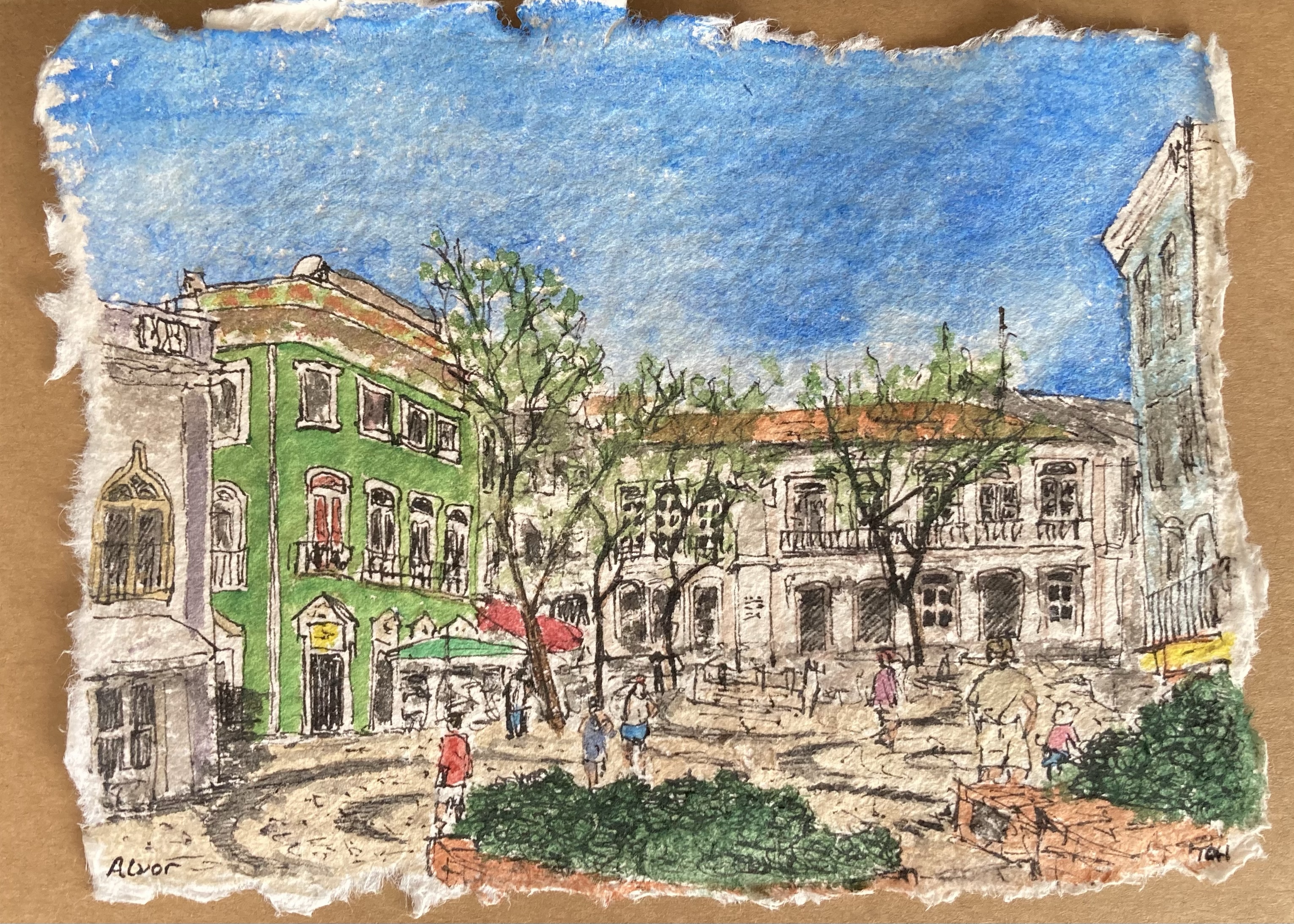
Back in April, I set out to create one such card, this time for Ann, the wife of my wife’s father. For some years, Ann and Keith greatly enjoyed holidays at the resort of Alvor on the Algarve coast of Portugal, but health issues and reduced mobility have meant that these trips have not been possible for quite a while now. Consequently, we decided that it would be fitting for me to paint a scene of Alvor to use for Ann’s card. I took a look online, googling images of Alvor, but couldn’t find anything that grabbed me until I came across what I thought was a suitable picture on a tourist site that was promoting the merits of Alvor. It showed an attractive open square, with people going about their business, a few trees and plants, and some interesting patterns in the paving, surrounded by some fairly grand, old buildings, including one that was a striking bright green – perfect to add an interesting splash of colour to the scene. I duly set to work and perhaps 45-60 minutes later, and as I usually do, I posted the finished picture to my social media accounts on Bluesky and Instagram.

After I had finished making the card itself, and it was safely on its way in the post, a work colleague commented on my instagram post along the lines that ‘there is a green-painted building exactly like the one in my picture just a little way along the coast from Alvor in Lagos‘. The first time I read the comment I simply thought ‘well that’s a coincidence‘… but then it dawned on me that they were perhaps just being polite, or maybe subtle, with their wording. Some more image searching soon revealed that no, the square I had painted was not actually in Alvor, and yes, the square I had painted was actually in Lagos… In fact, as I searched further I found that practically every picture I found online of Lagos seemed to feature that same square with its beautiful, old, bright green building. Doh… I had been duped – the website I had originally found the picture on had obviously (how shall I put this?) been developed by a ‘Creative Geographer’.

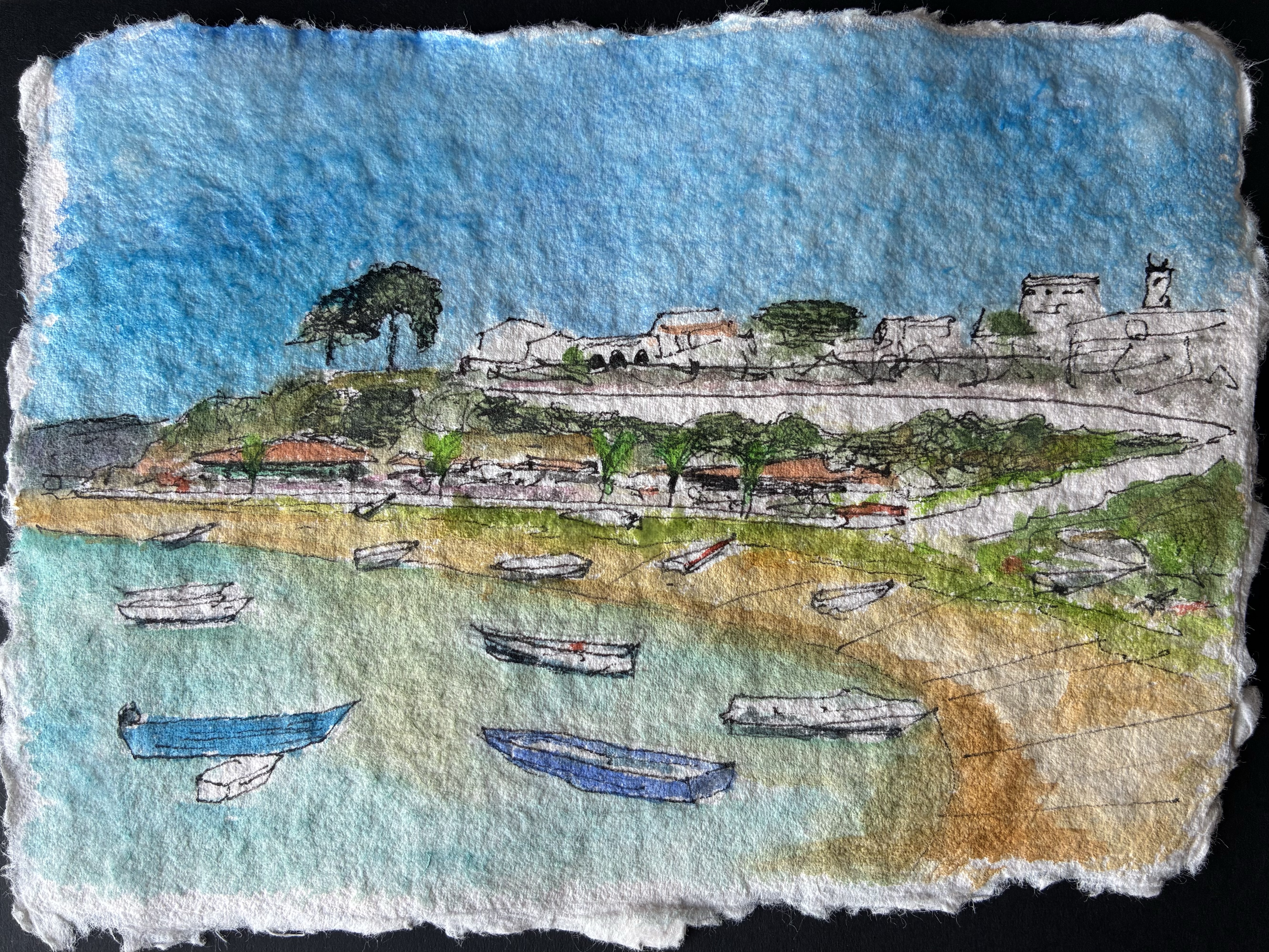
Ann’s birthday came and went. I had already confessed to my error, and the card was much appreciated nevertheless, but, quite obviously, I was left feeling that I had not quite struck the target. So, a few weeks later, when some spare minutes arrived, I did a new, and more careful, search for pictures of Alvor, plumped for a nice beach/waterfront scene, and set to work again. The result of my efforts is shown below.

I learned (or was reminded of) a good lesson here, namely that you cannot believe everything (much?) that you read on the internet, and Ann was thrilled to receive two birthday cards including the second bonus birthday card with a picture that really did bring back happy memories. So, in the end, we both came out as winners!

* If there is a special place that you would like me to paint, for a birthday card or otherwise, feel free to get in touch. I’m on the point of opening my art activity for business and would be happy to take commissions. I think it would be fun, and interesting, to paint some new and different special places.

The Stories of Ray Bradbury #reading

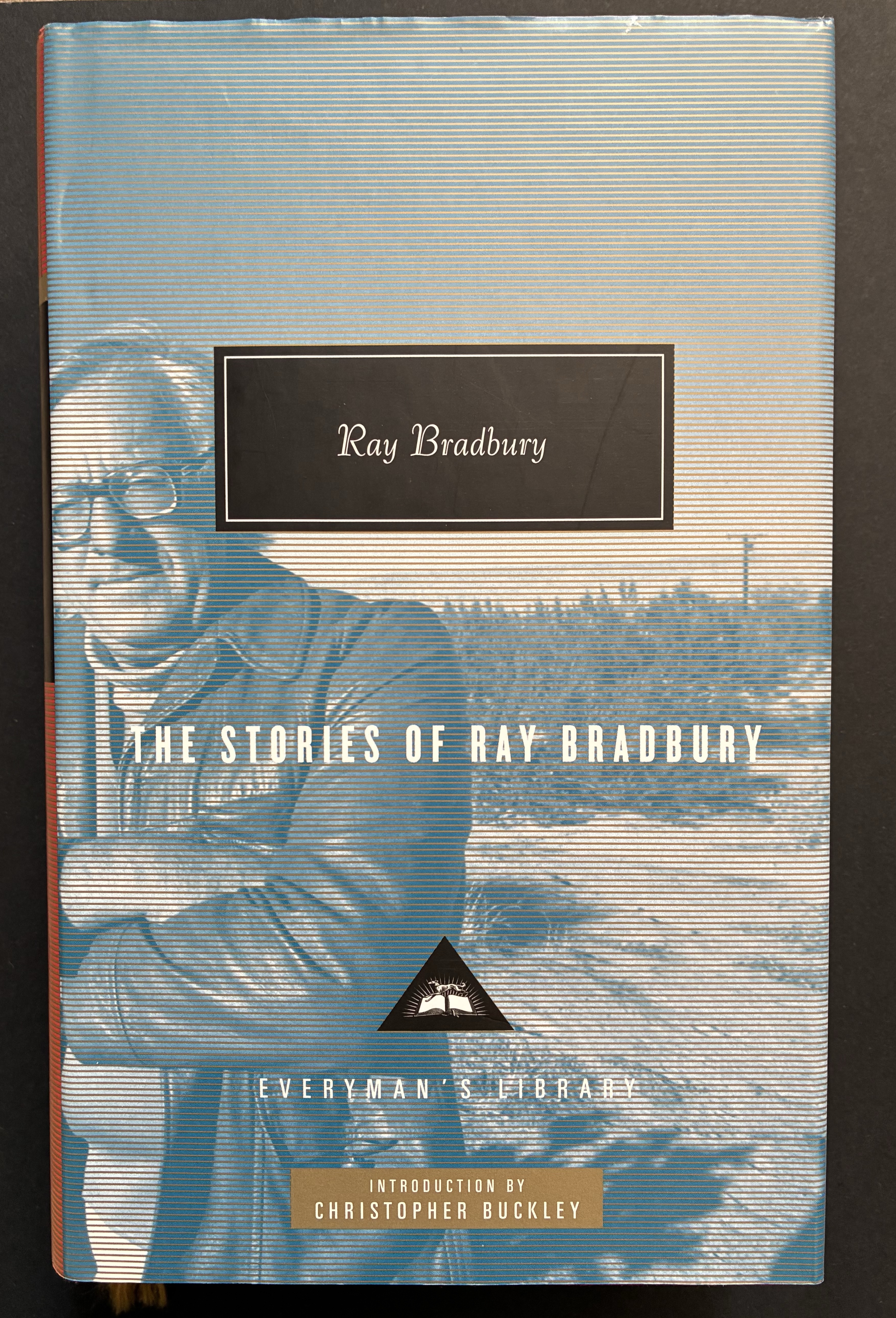
Between August 2023 and April 2024 I worked my way through a wonderful anthology of short stories called That Glimpse of Truth, selected by David Miller. I had never really paid much attention to short stories prior to that but I found that I really enjoyed the experience and greatly appreciated the skill of some of the writers who were able to pack so much into such short works. As a follow up, and inspired partly by a childhood memory of watching a television adaptation of The Martian Chronicles, I decided to return to the genre with a big fat volume of The Stories of Ray Bradbury.

I had a bit of a false start with Bradbury’s work, reading just a two or three of his earlier stories and not quite getting the measure of them, but I returned to the task and started afresh towards the end of last November (2024). Whenever my schedule allowed, I read one story as part of my morning reading each day, and so it took me until April complete all 100 of the stories that were included in the compendium.

Reading Bradbury’s short stories turned out to be a really wonderful experience. They fall under several themes – stories centred on an outwardly normal family of vampires, stories that chronicle Bradbury’s imagined colonization of Mars, and probably my favourites, the stories set in small towns in the backwaters of America. All were written in the period 1940-1970ish and often focus on the impact that new or imagined technologies have on fairly ordinary people. Often the stories are very much of their time, reflecting moral positions and biases that we have (mostly) replaced since the words were sent down onto the page. It was notable how often Bradbury’s stories revolved around a somewhat unhappy married couple and, alarmingly, how many times such stories ended with the death of one or other partner, often in quite shocking circumstances. The story in which a husband removes his wife from his life by getting her to turn herself inside out is really quite something…

Unfortunately, I didn’t keep a list of my favourite stories, but I did keep track of some of the passages that particularly caught my attention or resonated with me for some reason and so, in no particular order, I will include these below. I am quite sure that I will re-read this compendium again at some point and I am also quite sure that when I do I will add many more examples to my list!


It was a day to be out of bed, to pull curtains and fling open windows. It was a day to make your heart bigger with warm mountain air.

(Opening lines of The Great Wide World Over There, 1952)


“How do you rest?”
She stopped. It sounded very bad. It sounded so much like an accusation, but it was not, really.

“Why didn’t I ever catch it from you?” she said at last.
He laughed a little bit softly. “Catch what?”
“I caught everything else. You shook me up and down in other ways. I didn’t know anything but what you taught me.”

(from Powerhouse, 1948)


And she decided, as sleep assumed the dreaming for her, that yes, yes indeed, very much so, irrevocably, this was as it had always been and would forever continue to be.

(from The Wilderness, 1952)


There was a long pause, full of stars and time, a waiting pause not unlike the last three years for all of them. And now the moment had arrived, it was Janice’s turn…

(from The Wilderness, 1952)


“So be careful. Stay on the Path. Never step off!”

(from A Sound of Thunder, 1952)


“Do we deserve this?” she said.
“It’s not a matter of deserving; it’s just that things didn’t work out.”


(from The Last Night of the World, 1951)

“Let me finish; not to make money, no. Not to see the sights, no. Those are the lies men tell, the fancy reasons they give themselves. Get rich, get famous, they say. Have fun, jump around, they say. But all the while, inside, something else is ticking along the way it ticks in salmon and whales, the way it ticks, by God, in the smallest microbe you want to name. And that little clock that ticks in everything living, you know what it says? It says get away, spread out, move along, keep swimming.”

(from The Strawberry Window, 1954)


Nor did they ponder the fact that if man dares dip into that stream he grabs a wonder in each hand…

(from The Picasso Summer , 1957)


Ah, those last two. What lines… such vast nuggets of wisdom hidden away in such unassuming stories; little gems, that reward the reader with their sparkling form and serve as beacons to light a path through life. Magic words…

get away, spread out, move along, keep swimming

nor did they ponder the fact that if man dares dip into that stream he grabs a wonder in each hand

Mysterious Britain #art

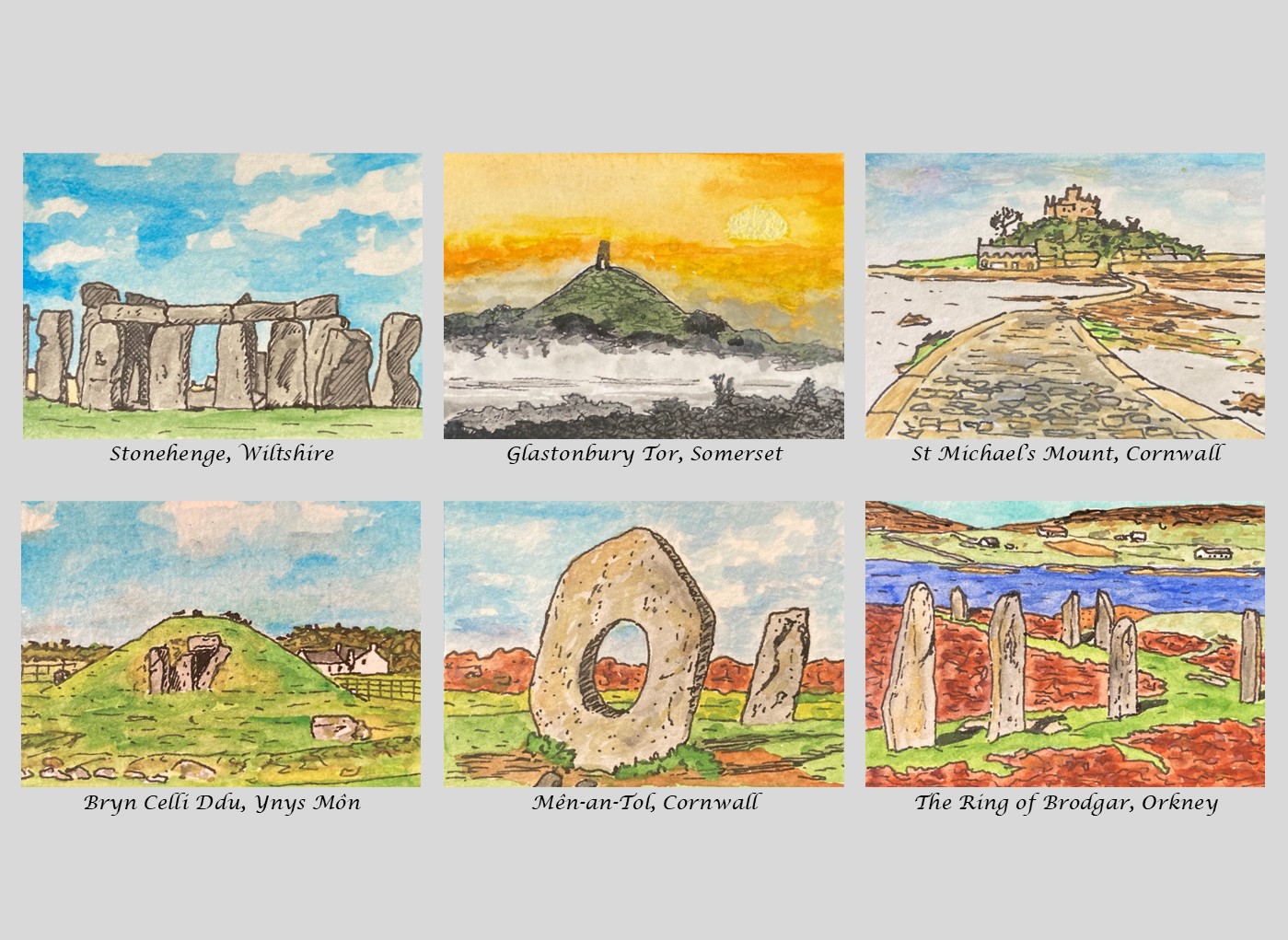
Hot on the heels of my other miniature watercolour series (see: Dartmoor Scenes, House Plants, Capital City Landmarks), the next group of pictures that I painted were slightly larger, rectangular, and given the working title of Mysterious Britain. My idea was to select various ancient landmarks from around the United Kingdom that have some aura of mystery, largely a result of their age.

I started off with a fairly obvious subject for the first picture, the prehistoric megalithic structure known as Stonehenge in Wiltshire, much feared by those who travel along the A303 knowing that there is a very high chance that they will be held up by traffic in its vicinity. I remained in the southwest of England for the next two pictures, to Somerset for a mist-shrouded Glastonbury Tor at sunset (with its much debated history and reputed links to the legend of King Arthur) and St Michael’s Mount in Cornwall (for which there is evidence of population between 4000 and 2500 BCE). But perhaps I should write not describe the latter site as being in England at all and refer to its location as Kernow…

Next, I popped up to northwest Wales (Cymru) for a picture of the prehistoric burial chamber Bryn Celli Ddu (‘the mound in the dark grove’) in Ynys Mon (Anglesey), before returning to the southwest for the later Neolithic or early Bronze Age group of standing stones known as Men-an-Tol (‘stone with a hole’).

Finally, my painting activity for this series took me to the far north, almost as far as it is possible to get in the United Kingdom, to The Ring of Brodgar, a neolithic henge and stone circle on Mainland, the largest island in Orkney.

I enjoyed painting this series and was pleased that for the most part I managed to keep the pictures simple, not putting in too much detail and using a fairly limited colour palette. I’ve tried to pick a favourite, but there are aspects of almost all of the pictures that I particularly like so I’ve not been successful – the simplicity of Stonehenge, the mystery of Glastonbury Tor, the causeway stones of St Michael’s Mount and the little white house behind Bryn Celli Ddu. But like a lot of things, I like the way that these pictures work as a set – taking the viewer on a whistle-stop tour of just a few of the many wonderful locations of Mysterious Britain.

Do you have a favourite? Add a comment to let me know if you do!

The Hollow Man #poem

He does not signal his arrival with a knock upon the door.
I am not warned of his entry by footsteps sounding on the floor.
He is not accompanied by wraith-like wisps of mist.
Nor does he lean in close to give my cheeks a loving kiss.
There is no movement as he slides into the room.
I only realise he is present when overcome by gloom.

For he is a master of disguise,
sidling up to me, out of sight of prying eyes
until he has taken up his place,
occupying every single atom of my space,
matching every feature, to cast a shadow on my face.
He reshapes my breath to turn each exhalation into a sigh,
and cries tears upon my heart to dowse the flames
and cause the fire to die.

If I am sitting reading in a chair,
he squeezes in to look upon the words,
and twists their meanings
so that they transform, grotesquely and absurd.
If I am gazing from the window to catch sight of nature’s green,
he draws a veil across my eyes to wipe away life’s vibrant sheen.
If I am setting out upon a chosen path,
he conjures fog so thick and heavy that I cannot find the start.
If I have hopes to pursue a long-awaited plan,
he shows me every obstacle and challenge that he can.
He breaks the bridges of my imagination
so that they have insufficient span.
He was with me yesterday.
He is The Hollow Man.

He does not ask if it is convenient for him to share my time.
I have no say in this, the choice is his, not mine.
He does not consider for one moment
whether I would like him near,
for if he needs my space he takes it with no fear.
He gives no thought to any impact that he makes.
It’s up to him to choose the one he takes.

For he is a master of deceit,
and if he needs to feed then he will eat
until he has taken all he grips,
draining arteries with a thousand sips,
sucking out the marrow through his lips.
He gnaws away until my bones are stripped of meat,
and leaves the empty carcass in a heap.

When he is with me all I feel is rank despair.
I try to look ahead but only find a vacant stare.
When he is with me I can see no hope,
I cannot move as I would like, my walk becomes a slope.
When he is with me there is only cloud,
and I would even welcome then a deathly shroud.
When he is with me there is nothing you can say,
for I am empty till he moves away.
There is no weapon you can use to end his stay.
He is The Hollow Man,
and he will have his day.

Yet, he will tire, and then as softly as he came,
I find that he has slipped away to leave me with my fragile frame,
and if I search with care for what lies buried in the depths,
I find that he has not quite stripped me as I slept.
For there are embers that still burn though feebly bright,
that, tended gently, provide new warmth that brings a light.

For he is a master who will make his mark,
and from those tiny flames out jumps a spark,
until it catches on the dried-out skin,
taking hold to make new flames begin,
exploding with the hidden energy within,
then bursting outwards as a firework on its arc,
until the world no longer seems so dark.

There is no fanfare as he leaves his host,
he simply slips into the ether to become another haunting ghost.
There is no note to say farewell,
no threat that he’ll return to cast his spell.
But I expect that he’ll be back,
that he will claw his way inside once more
to turn my soul to black.
And strangely, though his visits cause much strain,
the gift he brings is worth the pain,
and even though I shudder at his name,
I know with certainty that he will come again.

He is the slaughterer –
the one who feeds upon the lamb.
He is the emptier –
the one who draws out all the poison
that has spread across the land.
He is The Hollow Man,
and I must welcome his arrival,
for he is part of who I am.

(c) Tim O’Hare, August 2023


THE HOLLOW MAN: I would say that I am usually in a fairly positive frame of mind, but every so often, and always without any real warning, I find that I have slipped into a deep state in which I have absolutely zero motivation and can see no point whatsoever in doing anything at all. I become uncommunicative, I mutter, I trudge. I know that I am in this state, but I am powerless to change things; in fact, in the moment, I don’t want to. The best way that I can describe how I feel is empty, or hollow. Over time, I have learned that this down phase passes, and usually I wake the next morning feeling back to normal, better even, than I did before the dip. My energy levels shoot back up, and I feel more inspired. ‘The Hollow Man’ was written on such a morning. After a terrible dip the previous day I had spent an hour or so reading, gone for a short run, and emerged from the shower with the first two lines of the poem in my head. As soon as I could I stood at my whiteboard, wrote out those two lines and then followed the seam to chip out the whole of the first verse. At that point I was thinking that I should stop, but I soon found myself at the computer typing in the first verse and then, over the next couple of hours, all of the rest of the poem tumbled out. At the outset, I had no idea that the poem would ultimately become uplifting (well I think it is uplifting!) and perhaps even a little profound.

The Call of the Wild – Jack London #reading

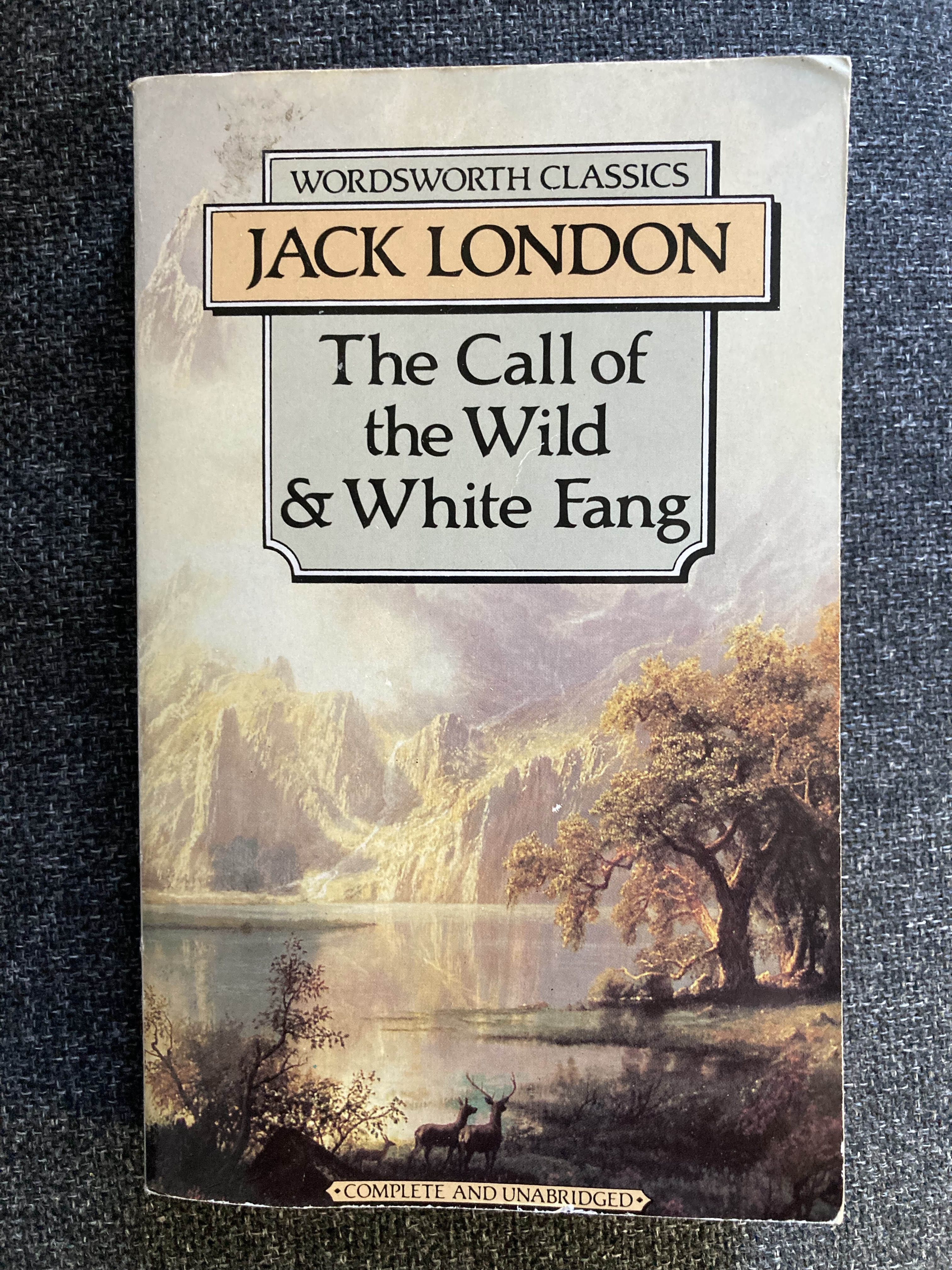
A few years ago I discovered the wonderful book 1000 Books To Read Before You Die by James Mustich. Looking through it made me think about the range of books that I read, and in an attempt to make myself explore titles that I might not otherwise look at, I decided that I would work my way through the letters of the alphabet, picking a title written by an author whose surname started with each letter in turn. On my first trip through the alphabet back in 2020 my L title was The Wizard of Earthsea by Ursula Le Guin and then on a second, much slower, alphabetical loop that began in mid-2022 and has only fairly recently reached R, I chose The Spy Who Came In From The Cold by John Le Carre. However, on both of these occasions I came very, very close to selecting one of Jack London’s adventure stories… and so after picking up a combined volume of The Call of the Wild and White Fang in a charity shop, I decided I would finally give one of them a go, plumping for The Call of the Wild, partly because it was the first stories that London wrote, but primarily (I will admit) because it was the shorter of the two!

I enjoyed the story, which is written entirely from the perspective of Buck, a pampered St Bernard-Scotch Shepherd dog who is stolen from a California ranch and sold into service as a sled dog in Alaska. Buck soon has to get wise to the demands of his new environment, being beaten by his first owner and learning to fight with the other dogs to ensure his place in the pecking order. Over time Buck passes between several owners, and makes the long journey into the Klondike region of Canada and across the Yukon Trail. Buck soon establishes himself as the lead dog, having to brutally respond to challenges from rivals. Eventually, Buck is found in a poor state by an experienced traveller John Thornton who nurses him back to health, and the two form a strong bond. Thornton becomes rich after finding gold, and with little work for his dog team to do, Buck, now thoroughly attuned to life in the wild northlands, hears the howling of wolves and wanders off into the wilderness. Buck locates a wolf pack and then makes regular trips to socialise with a lone wolf from it. One day, Buck returns to camp to find that Thornton, his companions, and their dogs, have all been killed by native Americans, and so he sets off in search of his wild brother. Buck encounters a wolf pack and has to fight with them for survival, before discovering that his lone wolf friend is a member of the pack. The story ends with Buck answering the ‘call of the wild’ as he goes off to join with the pack.

It was interesting to read a story in which the human characters are secondary and all of the events are seen through a dog’s eyes. Buck’s journey from domesticated animal to a fearsome creature capable of matching a pack of wild wolves is fascinating to follow, and along the way there are lots of poignant moments as Buck and his human owners come to know and love each other. There are also some sickening scenes in which some of the humans show a complete lack of respect for their animal companions, and for the environment through which they are travelling.

The overarching theme of the book, at least from my perspective, centres on the harshness of the environment and the need to show it, and those traveling through it (human or canine), the utmost respect. Buck instinctively learns first to survive, and then to thrive in the wild, but most of his human owners, underestimating the power of the natural world, do not fare so well.

Call of the Wild was an enjoyable, fairly light read, and it certainly didn’t put me off indulging in another dose of canine adventure, in the form of White Fang, at some point in the future.

A Walk Around Peek Hill #other

We are blessed by the fact that although we live towards the centre of a fairly large and busy city (Plymouth), we are just 10-15 miles drive from the open moorland and wonderful walking landscapes of Dartmoor National Park. I know that some people love the really bleak, wilderness sections of Dartmoor, but my own preference is for what I think of as the ‘edgelands’, where the rougher terrain gives way to wooded valleys and the surrounding farmland. I have always liked landscapes that mix wildness with areas where humans have worked with the land over a long period of time in a relatively unchanging manner. The edgelands of Dartmoor certainly fit this description.

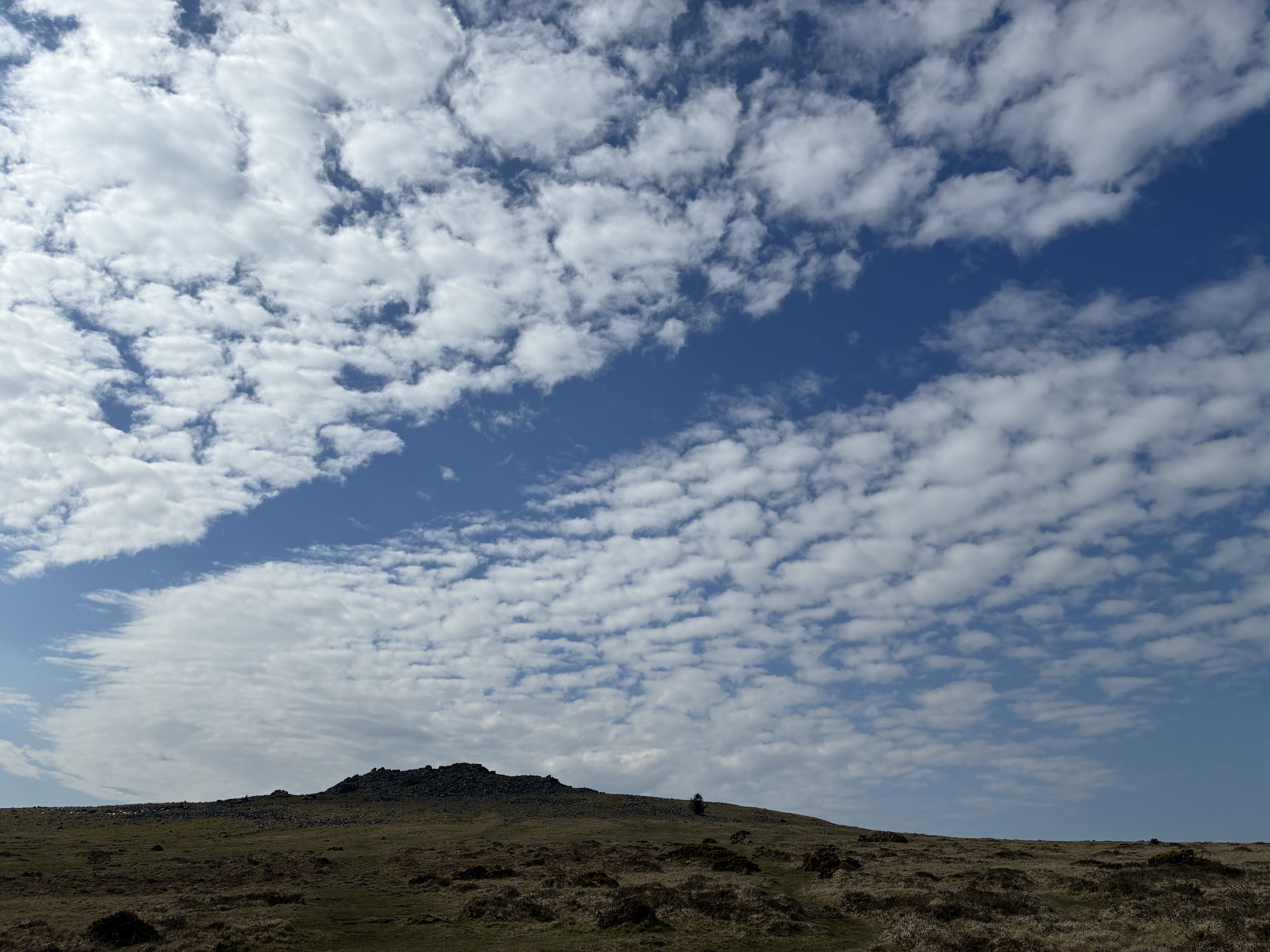
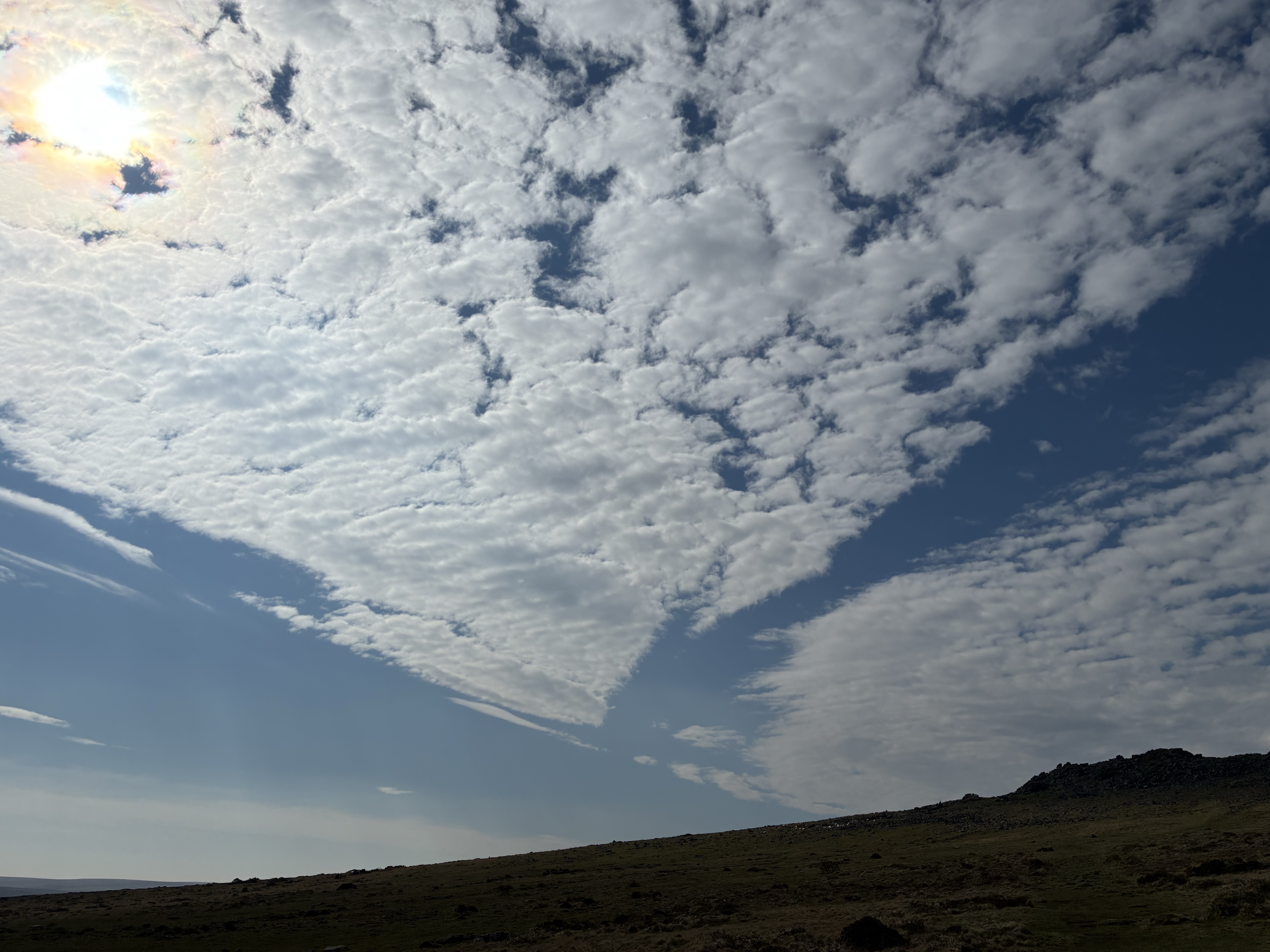
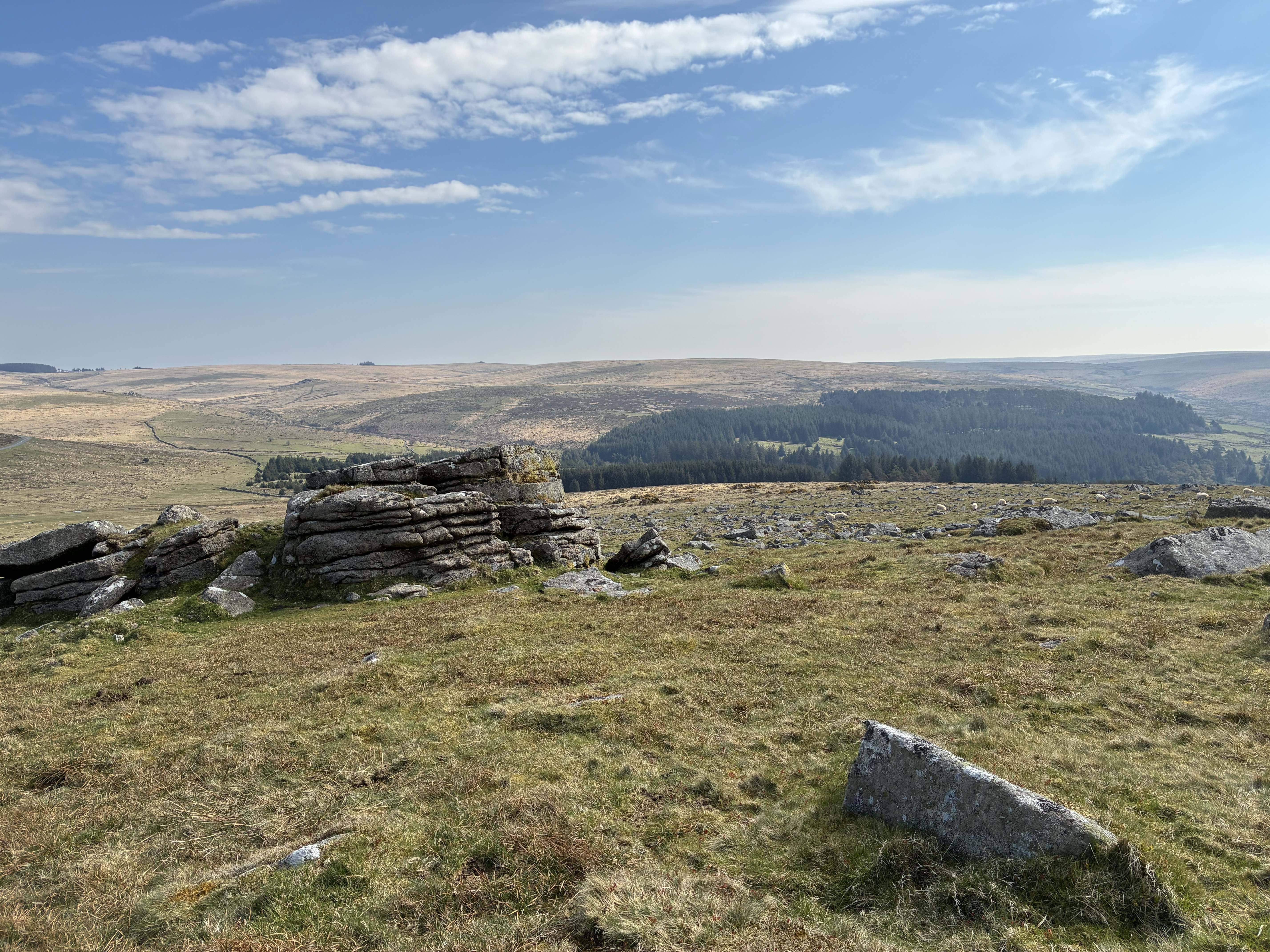
A couple of months ago we drove up towards Princetown and parked a little way from the rocky mass of Sharpitor (above and immediately below). It was a fine day, but one with plenty of interesting cloud formations that arguably made our view of the sky as interesting as the views of the hills and valleys around us…

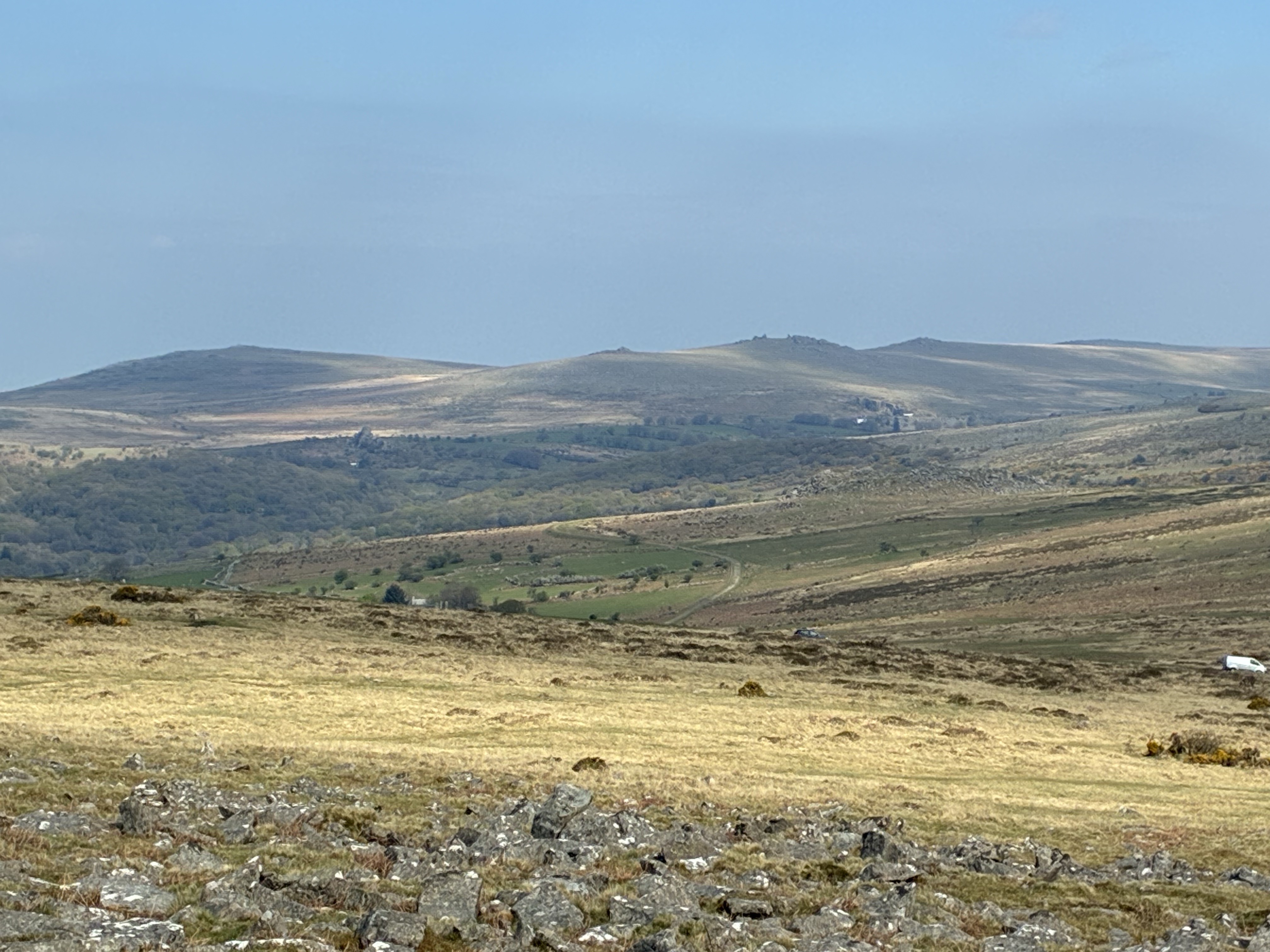
Our walk took us just north of Sharpitor, from where we were welcomed with expansive views to the northeast of classic Dartmoor moorland:

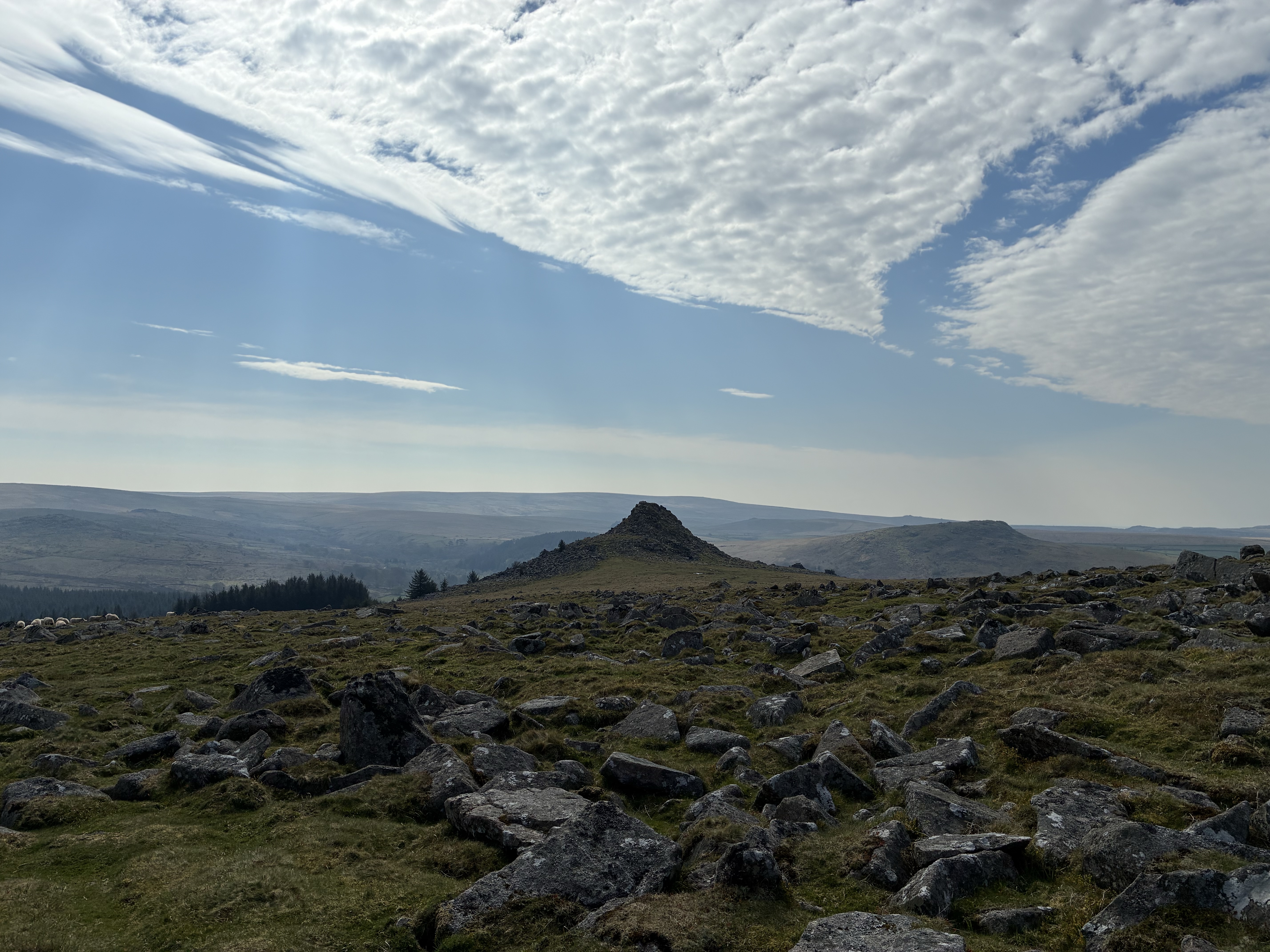
After rounding Sharpitor, the prominent, rather pointed, conical peak of Leather Tor came into view…

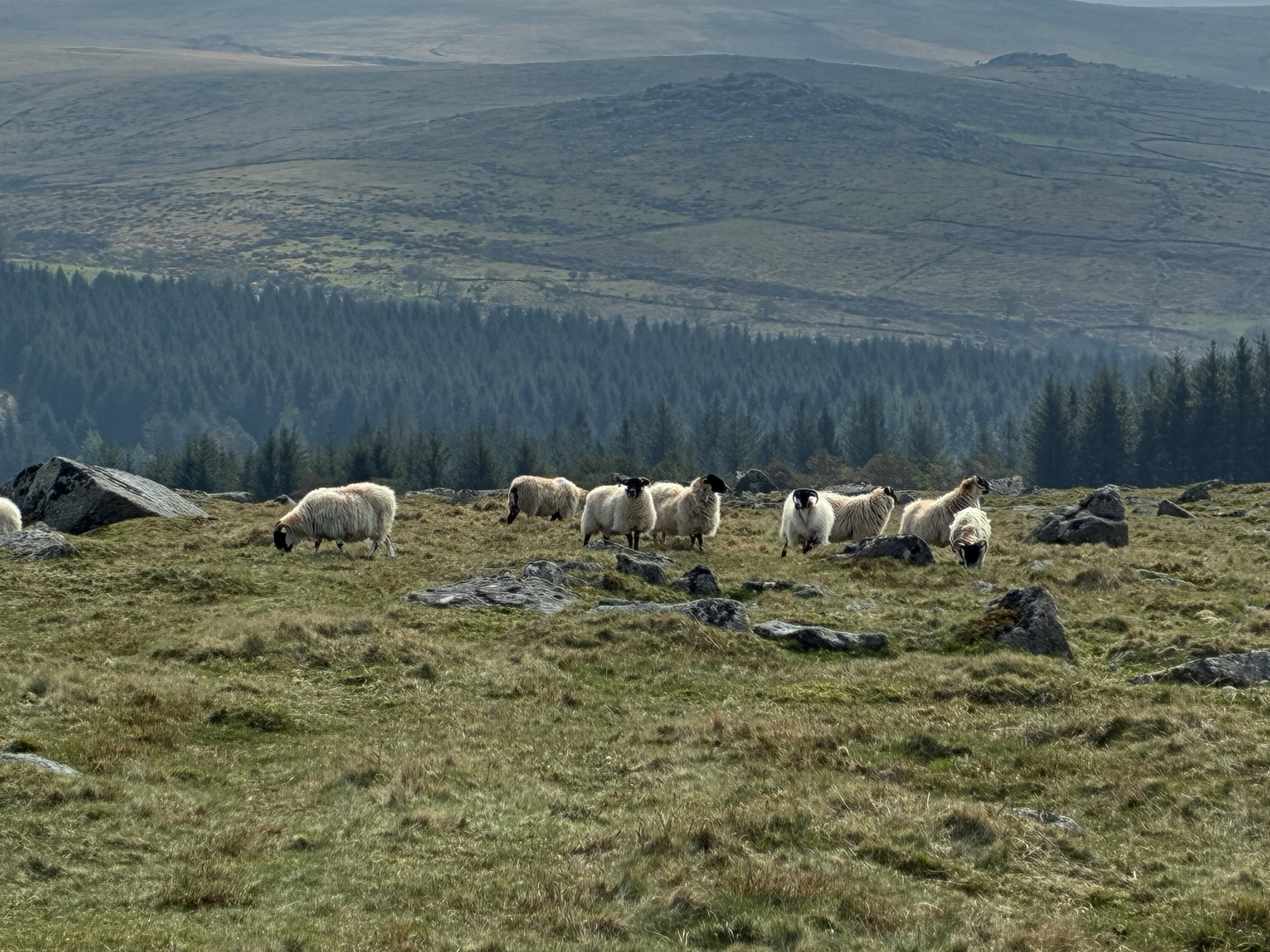
… and we were greeted by a typical group of Dartmoor’s sheep, grazing on the rough hillside…

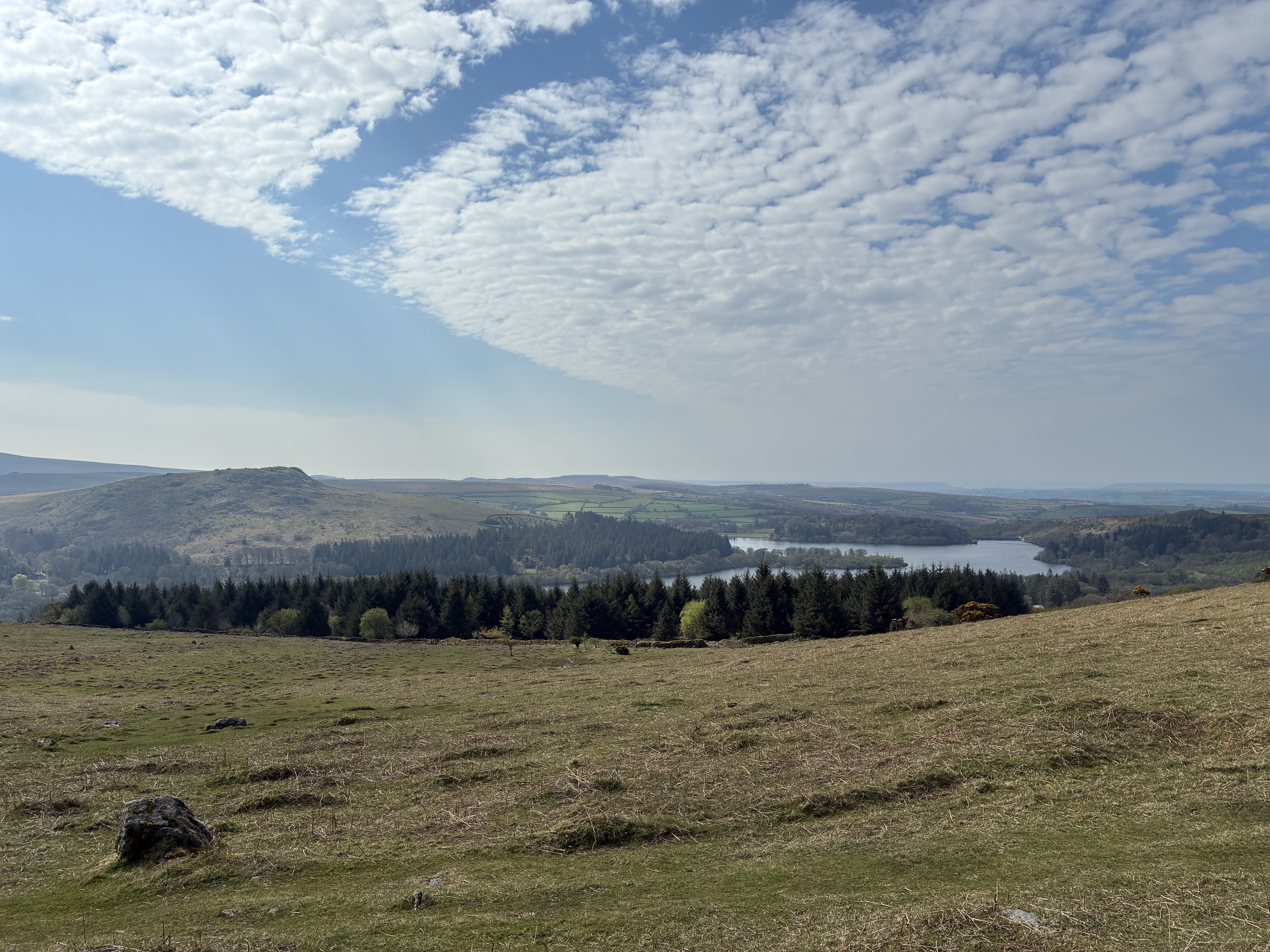
Having passed midway between Sharpitor and Leather Tor, we turned southwest towards Peek Hill, and from here the view opened out to reveal the waters of Burrator Reservoir, with Plymouth visible towards the horizon…

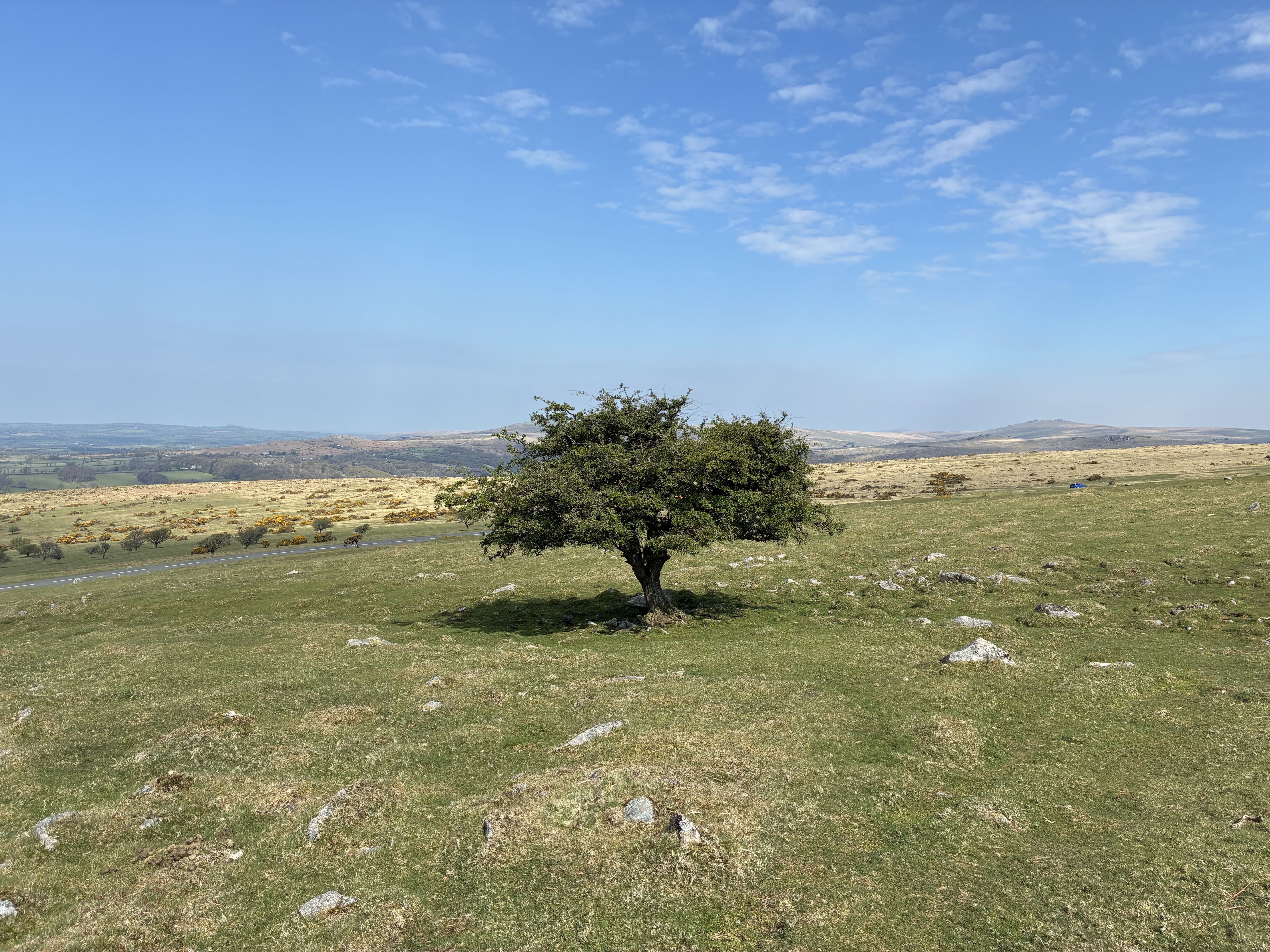
Our route took took us northwest, down the slope from Peek Hill towards the Plymouth-to-Princetown road, and along the way we passed one of my favourite sights, a lone tree of a type that I like to refer to as a symmetree…

Then, just across the road stood this wonderful row of Beech(?) trees, planted into the old stone wall, their dark, essentially leafless, forms making beautiful patterns when viewed against the bright colours of the fields, sky and clouds beyond…

This row of trees – in fact any row of trees like these – are really one of my favourite sights of all, and although there was still a little more walking to do, down towards an ancient stone row that we then followed back towards the car, I think that they are a fitting place for me to end this little photo-tour of our April walk around Peek Hill. I often think that I ought to have a go at painting this row of trees one day… but there are so many branches, so many, many branches… I am not sure that I have the patience for that!

Capital City Landmarks #art

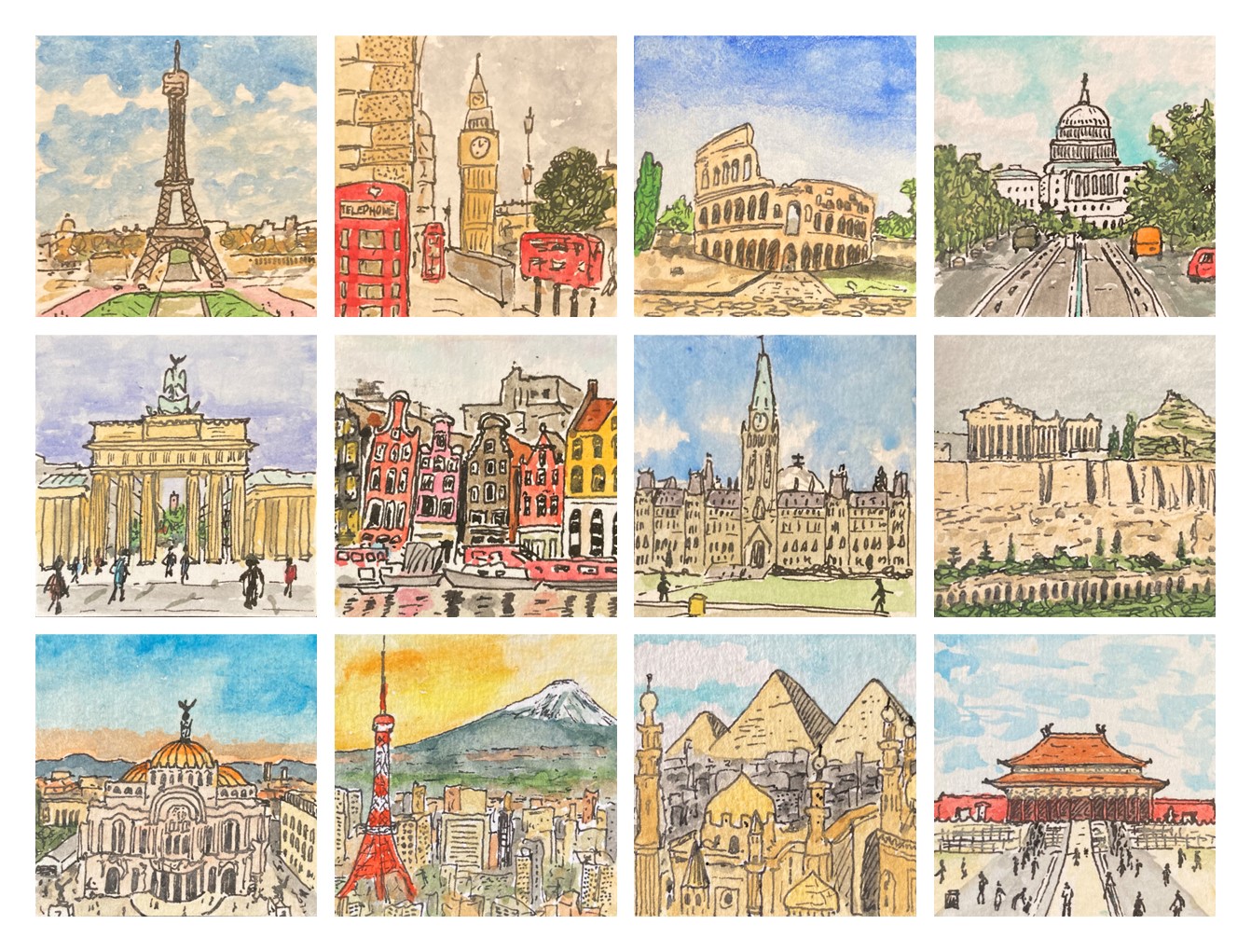
Back in March, I was in a great rhythm with my art, painting a miniature watercolour picture first thing in the morning on most days. Without really thinking about it I found that I slipped into a routine of painting a small (5cm x 5cm) picture on some chosen theme. Each one took me about 30 minutes to do – it was a kind of morning meditation! My first theme was of Dartmoor Scenes and this was followed by a series of House Plant pictures, but for my third set of these pictures I decided to go further afield, and chose Capital City Landmarks.

The first couple of pictures I produced were easy choices – Big Ben in London and The Eiffel Tower in Paris, but then I found myself having to scratch around a bit, wondering where to head next, as I realised that many of the most recognisable landmarks that popped into my head were not located in capital cities. Any sane person would surely have just accepted that fact and switched the theme to City Landmarks, but if you think that’s the kind of thing that I would allow myself to do then you would be sorely mistaken…

In the end, I did manage to find enough subjects to complete a series of twelve pictures and the results are shown in the composite image at the top of this post. It ended up that half of my landmarks were in Europe (London, Paris, Rome, Berlin, Amsterdam and Athens) and the other half where further afield (Washington D.C., Toronto, Mexico City, Tokyo, Cairo and Beijing).

I’m really please with this set of pictures and plan to produce some greetings cards with them.

Do you have a favourite?
Are there any other (not necessarily capital) city landmarks that you’d like to see me turn my hand to?