
Back in April 2025 we spent a week in rural Suffolk, our third visit to the county in three years. Our first trip there, in summer 2023, was something of an accident. We had booked accommodation for a week in Horning in the Norfolk Broads, but almost instantly recognised that it wasn’t a place we wanted to spend a week (too many ‘Private’ signs, too little access to the edges of the waterways, too many noisy ‘party’ boats cruising around, and so many people boozing their time away). As a result, after two less-than-great days, we decided to look online for somewhere different that we could stay that was not too expensive and not too far away for the rest of the week. After a bit of deliberation about the sunk cost of an aborted trip, we headed south to the small village of Redgrave, just on the Suffolk side of the Suffolk-Norfolk border. At the time, Suffolk was a county I had never visited before, and of which I had no great expectations, but within minutes of arriving there I felt settled and relaxed, able to enjoy walks and runs from the doorstep in the marvellous farmland countryside of the surrounding area. We enjoyed our stay so much that we returned to the same accommodation for an Easter holiday break the following year, but for our third visit, in 2025, we were forced to move to a different location. [I should note here that trips all the way over to East Anglia from our home in Plymouth were partly linked to visits to elderly family members in Norwich].
Consequently, in August 2025 we found ourselves staying in another small village, a little to the east of Redgrave and a little deeper into Suffolk. Once again, we enjoyed our stay, although the location wasn’t quite as good, with less options for walks in the immediate vicinity, and no cafe or pub within walking distance. We occupied ourselves with visits to Norwich, and the nearby village of Eye, and walks from Hoxne and Walsham-le-Willows, and we were able to meet up with an old university-friend and his wife for a quick circuit of Framingham Castle. We relaxed, we read, and, of course, I painted…
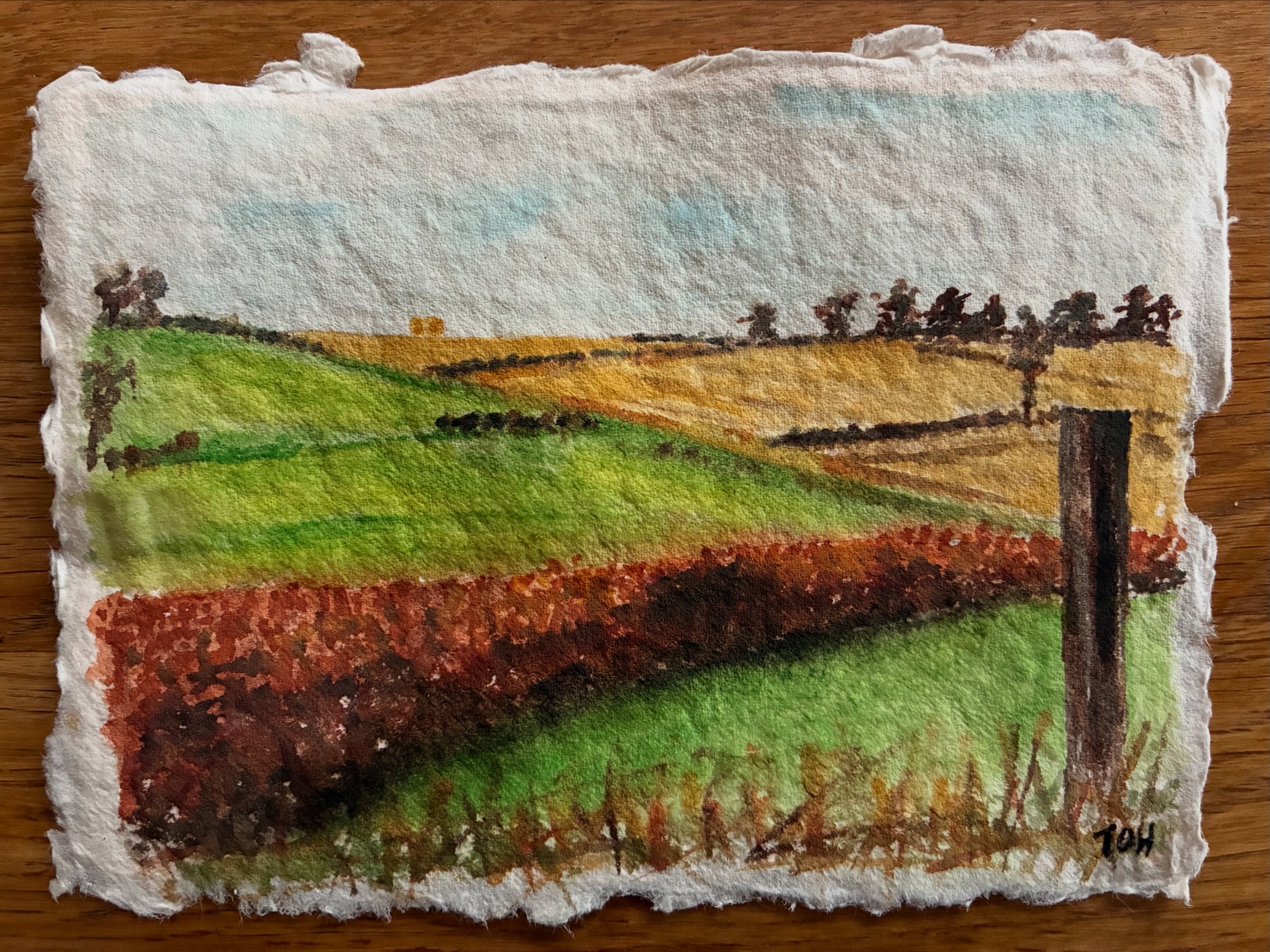
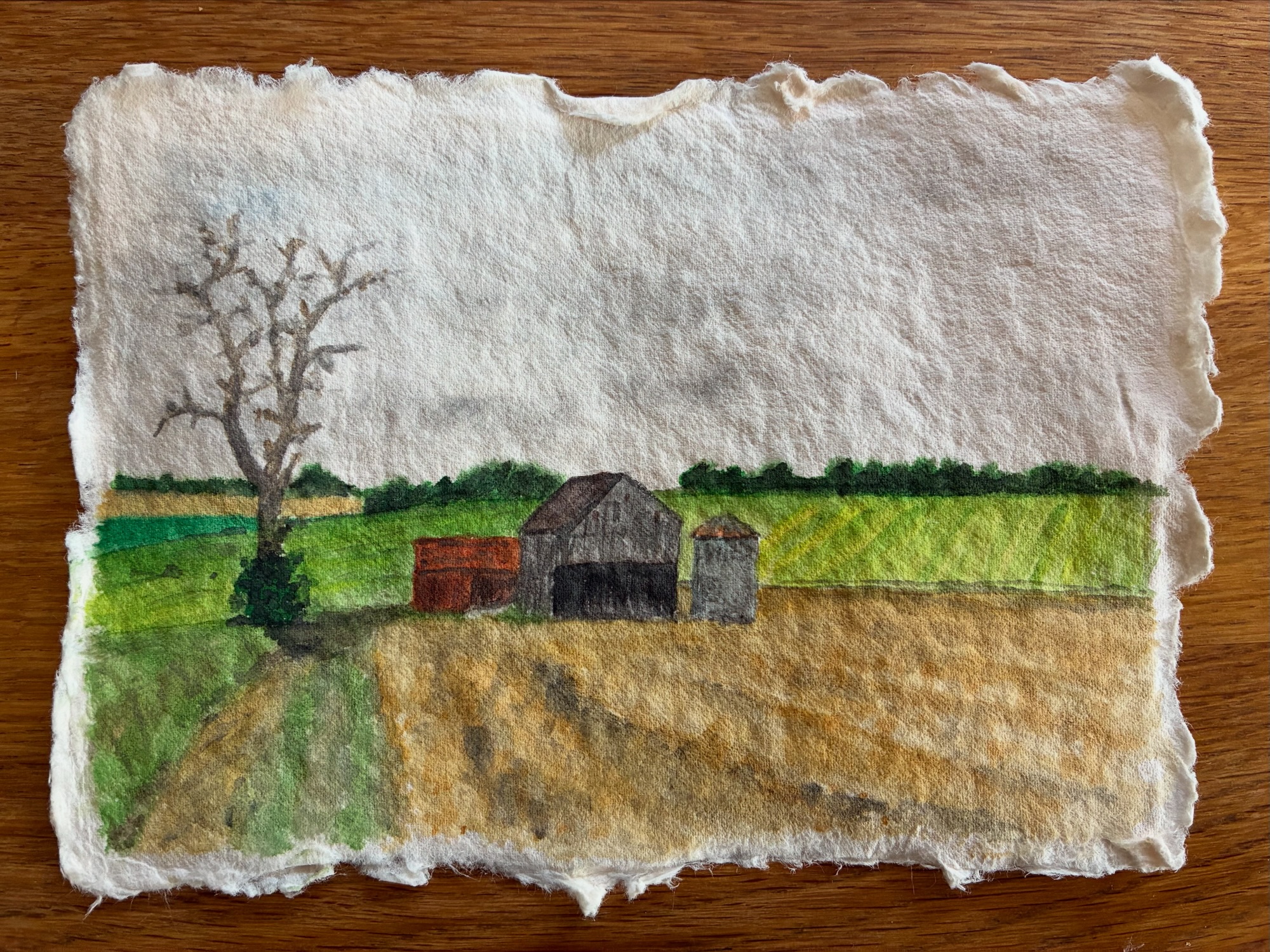
The picture at the top of this post shows a quick, and with hindsight slightly abstract, picture that I painted from a photo I took while walking from Hoxne, showing a typical view of Suffolk fields. The same walk provided the subject for my second painting (below), depicting more fields, a group of farm buildings, and some sharply lined fields. I find that the photos I take quite often feature fields with patterns of lines from ploughing or grass cutting, so it seems that I have a bit of a thing for parallel lines and angles!
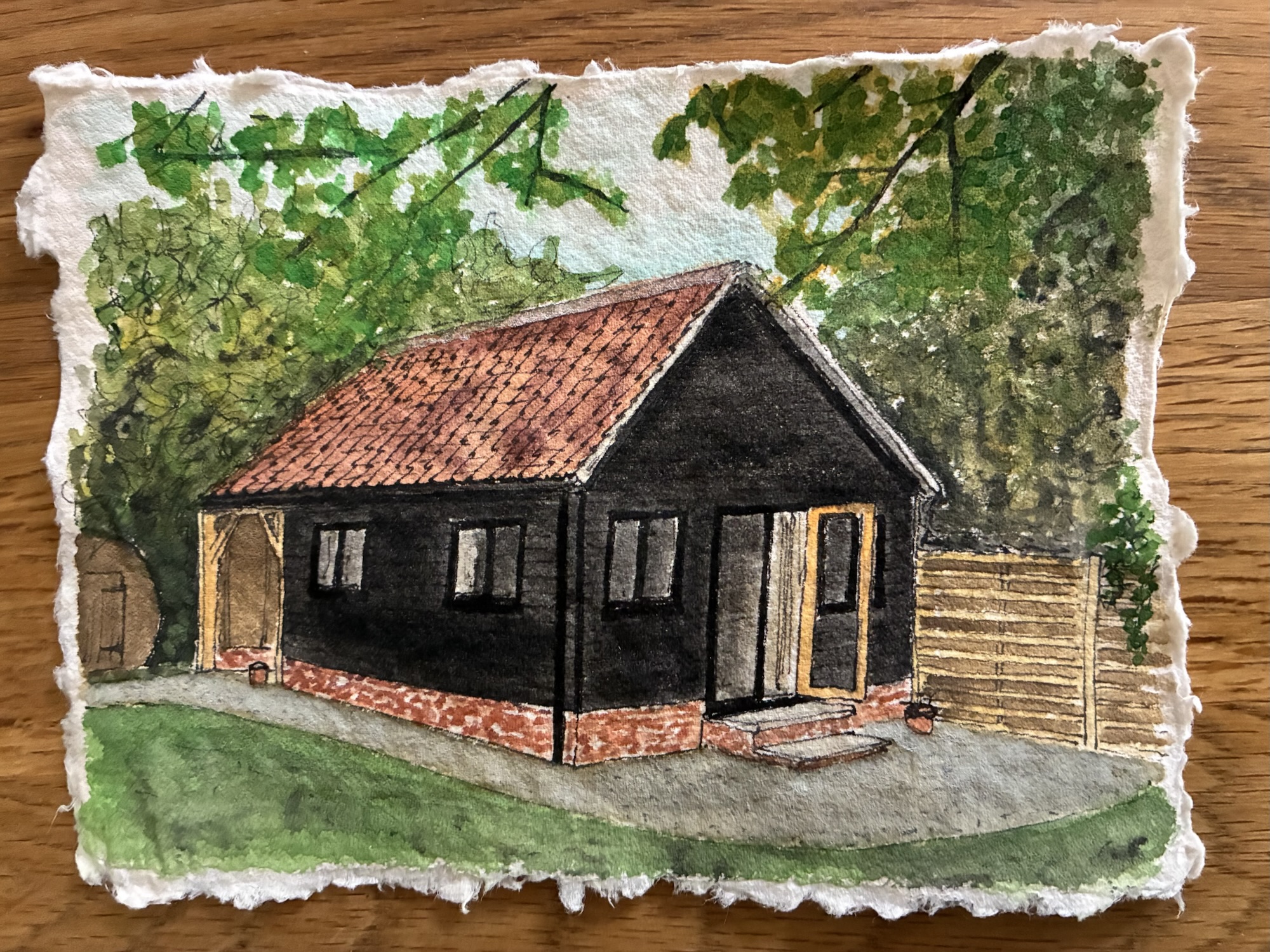
The final picture (below) is of the holiday accommodation that we were staying in. I painted this one to leave behind as a thank you to the owners – a practice that has now become something of a tradition whenever we go away.
We didn’t make it back to Suffolk this year, but we did end up making two trips to Norfolk in April and May. Hopefully, at some point in the not-too-distant future, I’ll share some thoughts about those trips and some of the pictures that I painted on them, as I work my way forwards in time to bring my blog-posting-writing up to the present day.

