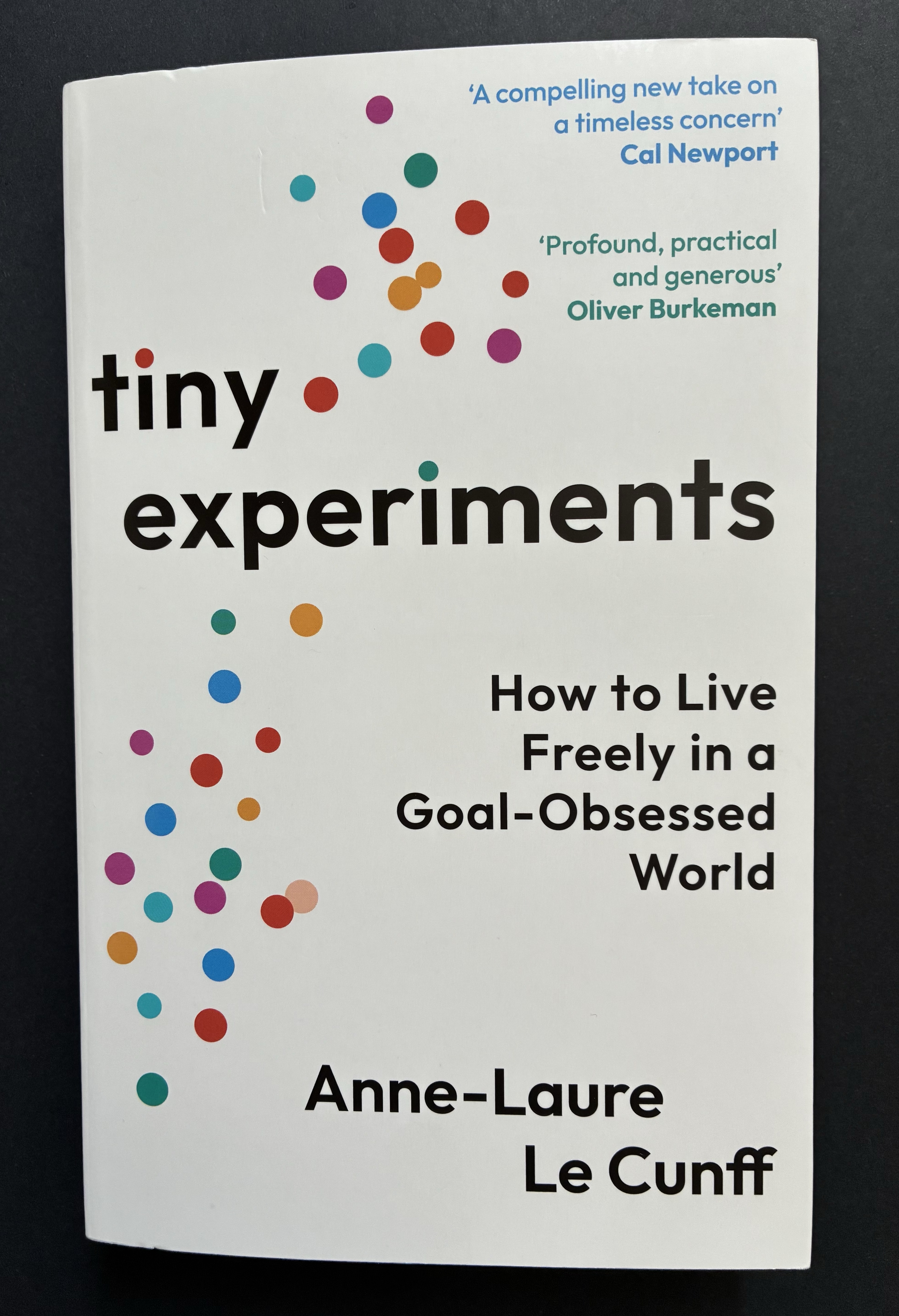
Tiny Experiments – Anne-Laure Le Cunff #reading

I read Anne-Laure Le Cunff’s debut book, Tiny Experiments, just a month after it was released in March 2025. However, this was not my first sight of the key ideas that the book contains, because I was lucky enough to be chosen as one of 300 people participating in a series of four, weekly online workshops, led by Le Cunff, that took place in February, in the lead up to the book’s publication. These workshops and the online community that accompanied them was called The Curiosity Collective, the name giving prominence to what is perhaps the key theme running Le Cunff’s work – the exhortation to live life in ‘curious mode‘, always willing to explore and experiment with your approach to life, and how you operate in the world. My experience attending those online workshops, showed me that Le Cunff is a highly skilled communicator and excellent teacher, and so I approached reading Tiny Experiments with high expectations. As an added bonus, the book had been chosen as the April pick for The TimeCrafting Trust Book Club.

As noted above, curiosity lies at the heart of Le Cunff’s ideas, and this is most obviously seen in her simple, four-part model for exploring and implementing change in your life. This model is rather neatly captured by the word sequence: PACT > ACT > REACT > IMPACT. At the start of the book, Le Cunff encourages the reader to adopt the mindset of a ‘self-anthropologist’, observing how they act in the world and the outcomes of these results, and then asking questions in relation to these observations. Le Cunff then structures the bulk of the text around her four-step model, stressing the importance of moving away from a Linear Mindset (X leads to Y leads to Z – end of story) towards the adoption of an Experimental Mindset based on the implementation of continuous experimental loops. My own feeling is that the key message here is not really about the distinction between linear v looping but, rather, one of ongoing adaptation and experimentation. The experiments one conducts don’t need to be thought of as loops (in fact they probably won’t bring you back to near your starting point) but they should take you somewhere, and in the process provide valuable evidence to help you work out what you might experiment with and where you might go next.

In the PACT phase of her model, Le Cunff presents a really neat (because it is simple) template for setting up what she refers to as a Tiny Experiment (an exploration of what happens when you make some small, realistic and manageable shift in the way that you operate). This template – a PACT – takes the following form:

“I will [action] for [duration]”

The key here is make sure that the action is purposeful, actionable (something that you can reliably perform), continuous (i.e. repeatable and not changing from day-to-day) and trackable. It is also important to be specific about the duration of the experiment (or else the number of repetitions). This ensures that the experiment is set up so that it provides a large enough dataset for meaningful conclusions to be drawn, but does not continue for so long that the action becomes tedious, or redundant or of little continued value. Essentially, the whole point of the PACT is to provide information that can then be used to adapt future behaviour and experiments, and not as a means to try to establish new habits.

In the ACT phase, you set about completing the activity specified in the PACT. This section of the book has some interesting material exploring the powerful forces of procrastination and, associated with this, perfectionism, that can so easily derail progress towards a goal.

The third phase of the model, REACT, occurs once the action described in the PACT has been completed for the specified duration. At this point, the goal is to look for, and then consider, evidence of the results of the action. Le Cunff highlights that it is important to look for evidence from within/internally (reflection) and externally (feedback from others, evaluation of results). Here, she presents what I suspect will become the most significant legacy of Tiny Experiments, namely her simple PLUS- MINUS-NEXT framework for reflection: what went well, felt good – what challenges or obstacles you faced, what was difficult, what negative feelings emerged – and then how the insights gained can shape future actions. [But whilst this framework is neat and seems to be catching on in the productivity community it might be noted that it is not so very different from the well-established ‘plus-minus-interesting’ framework.]

Because the whole point of Tiny Experiments is to encourage the adoption of an Experimental Mindset towards life, the REACT reflection should lead to a decision being made in relation to the area being investigated by the PACT. Le Cunff suggests that there are three possibilities: PERSIST – prolong the pact, or PAUSE – quit the pact or put it on hold, or PIVOT – modify the pact or shift the focus of a subsequent pact.

The final section of Le Cunff’s framework, IMPACT, focuses on the idea that it is helpful to be open/public about what you are setting out to achieve with your PACT and/or to work with others when pursuing it. This is largely a matter of gaining a useful chunk of external accountability, and also valuable feedback, but having seen many ‘public’ statements of Tiny Experiments PACTs in Le Cunff’s online community Ness Labs and on social media more generally, it is clear that it also serves as a powerful tool to market and promote Le Cunff’s ideas.

I enjoyed reading Tiny Experiments, and I feel pretty sure that it will be the kind of book that continues to have presence in the market for some time. It is well written and nicely structured, and the core ideas are simple (which is a good thing) and neatly presented, such that they have every chance of ‘sticking’. I think the phrase ‘Tiny Experiments‘ will likely become part of the productivity lexicon in similar fashion to James Clear’s ‘Atomic Habits‘. I also think that the “I will [action] for [duration]” statement for a PACT, the ‘PACT-ACT-REACT-IMPACT‘ model (or at least the ‘PACT–ACT–REACT‘ part of it) and, in particular, the ‘PLUS-MINUS-NEXT‘ framework for reflection, will all end up having a healthy existence outside the printed pages of the Tiny Experiments book…

… but in the end, my enthusiasm for Tiny Experiments waned. I had several goes at defining pacts and conducting experiments, but I wasn’t able to make myself see any of them through to a satisfactory conclusion. Life got in the way, and I found myself ignoring my pacts and carrying on with my usual scattergun approach to trying things out. This, of course, probably says more about me than it does about the potential efficacy of Le Cunff’s ideas, but my experience was that despite the simplicity and neatness of the Tiny Experiments model, it did not possess enough power to persuade me to go all in with it. I have also felt that most of the Tiny Experiments that I have seen others setting out to pursue would really be much better described as ‘tiny habits’ (a phrase already coined by the author B.J. Fogg and, of course, rather similar to James Clear’s ‘atomic habits’), rather than tiny experiments, and to put it bluntly, many of them read like tiny morsels of misty-eyed, wishful thinking…

So, in the end I congratulate Anne-Laure Le Cunff for writing a really nice book that captures some neat ideas and makes some good general points, but despite the fact that I am still indulging in some daily ‘plus-minus-next’ reflection, I can’t say that it has turned me into a Tiny Experimentalist.
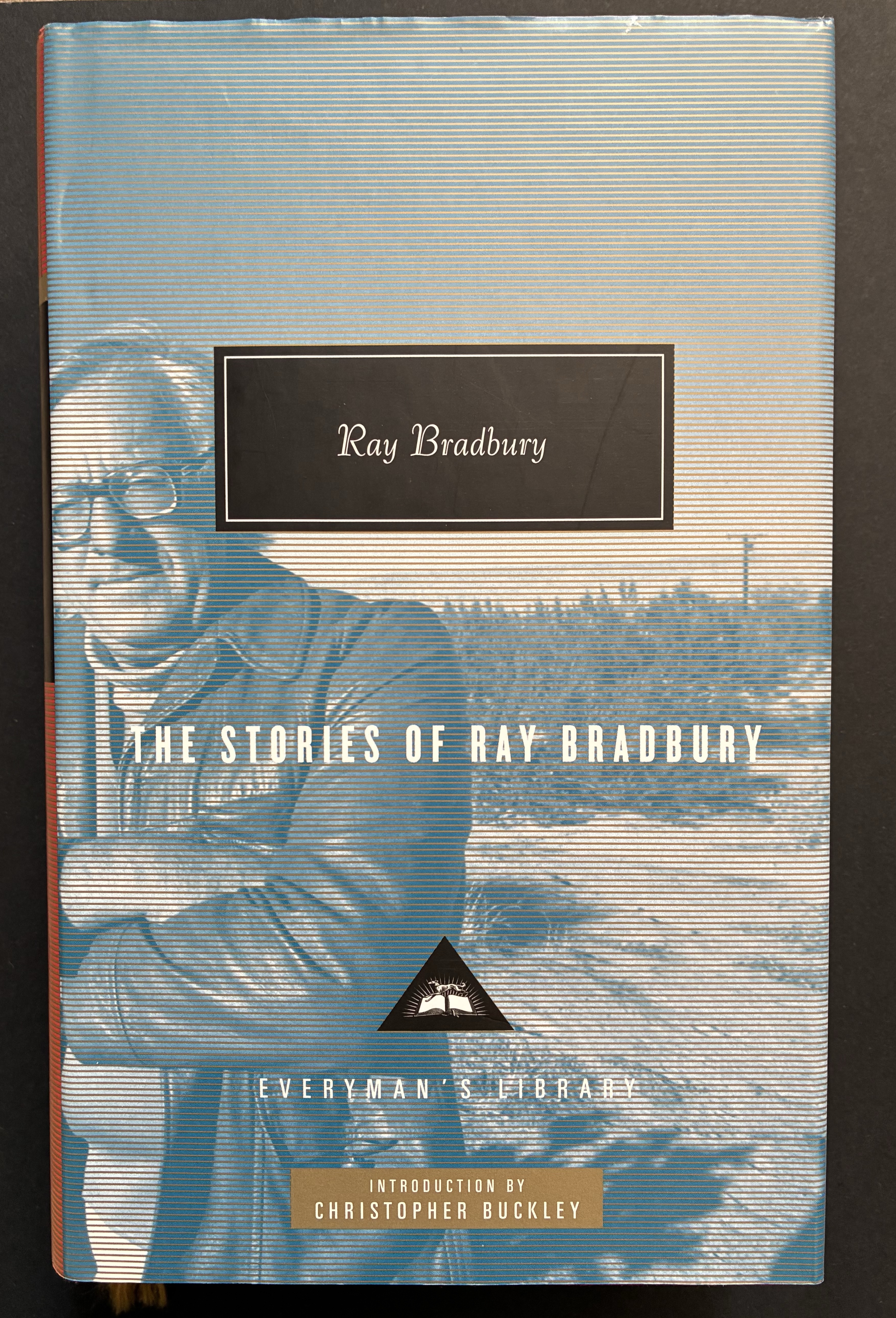
The Stories of Ray Bradbury #reading

Between August 2023 and April 2024 I worked my way through a wonderful anthology of short stories called That Glimpse of Truth, selected by David Miller. I had never really paid much attention to short stories prior to that but I found that I really enjoyed the experience and greatly appreciated the skill of some of the writers who were able to pack so much into such short works. As a follow up, and inspired partly by a childhood memory of watching a television adaptation of The Martian Chronicles, I decided to return to the genre with a big fat volume of The Stories of Ray Bradbury.

I had a bit of a false start with Bradbury’s work, reading just a two or three of his earlier stories and not quite getting the measure of them, but I returned to the task and started afresh towards the end of last November (2024). Whenever my schedule allowed, I read one story as part of my morning reading each day, and so it took me until April complete all 100 of the stories that were included in the compendium.

Reading Bradbury’s short stories turned out to be a really wonderful experience. They fall under several themes – stories centred on an outwardly normal family of vampires, stories that chronicle Bradbury’s imagined colonization of Mars, and probably my favourites, the stories set in small towns in the backwaters of America. All were written in the period 1940-1970ish and often focus on the impact that new or imagined technologies have on fairly ordinary people. Often the stories are very much of their time, reflecting moral positions and biases that we have (mostly) replaced since the words were sent down onto the page. It was notable how often Bradbury’s stories revolved around a somewhat unhappy married couple and, alarmingly, how many times such stories ended with the death of one or other partner, often in quite shocking circumstances. The story in which a husband removes his wife from his life by getting her to turn herself inside out is really quite something…

Unfortunately, I didn’t keep a list of my favourite stories, but I did keep track of some of the passages that particularly caught my attention or resonated with me for some reason and so, in no particular order, I will include these below. I am quite sure that I will re-read this compendium again at some point and I am also quite sure that when I do I will add many more examples to my list!


‘It was a day to be out of bed, to pull curtains and fling open windows. It was a day to make your heart bigger with warm mountain air.‘

(Opening lines of The Great Wide World Over There, 1952)


‘“How do you rest?”
She stopped. It sounded very bad. It sounded so much like an accusation, but it was not, really.
…
“Why didn’t I ever catch it from you?” she said at last.
He laughed a little bit softly. “Catch what?”
“I caught everything else. You shook me up and down in other ways. I didn’t know anything but what you taught me.”
‘

(from Powerhouse, 1948)


‘And she decided, as sleep assumed the dreaming for her, that yes, yes indeed, very much so, irrevocably, this was as it had always been and would forever continue to be.‘

(from The Wilderness, 1952)


‘There was a long pause, full of stars and time, a waiting pause not unlike the last three years for all of them. And now the moment had arrived, it was Janice’s turn…‘

(from The Wilderness, 1952)


‘“So be careful. Stay on the Path. Never step off!”‘

(from A Sound of Thunder, 1952)


‘“Do we deserve this?” she said.
“It’s not a matter of deserving; it’s just that things didn’t work out.”
‘


(from The Last Night of the World, 1951)

‘“Let me finish; not to make money, no. Not to see the sights, no. Those are the lies men tell, the fancy reasons they give themselves. Get rich, get famous, they say. Have fun, jump around, they say. But all the while, inside, something else is ticking along the way it ticks in salmon and whales, the way it ticks, by God, in the smallest microbe you want to name. And that little clock that ticks in everything living, you know what it says? It says get away, spread out, move along, keep swimming.”‘

(from The Strawberry Window, 1954)


‘Nor did they ponder the fact that if man dares dip into that stream he grabs a wonder in each hand…‘

(from The Picasso Summer , 1957)


Ah, those last two. What lines… such vast nuggets of wisdom hidden away in such unassuming stories; little gems, that reward the reader with their sparkling form and serve as beacons to light a path through life. Magic words…

…get away, spread out, move along, keep swimming…

…nor did they ponder the fact that if man dares dip into that stream he grabs a wonder in each hand…

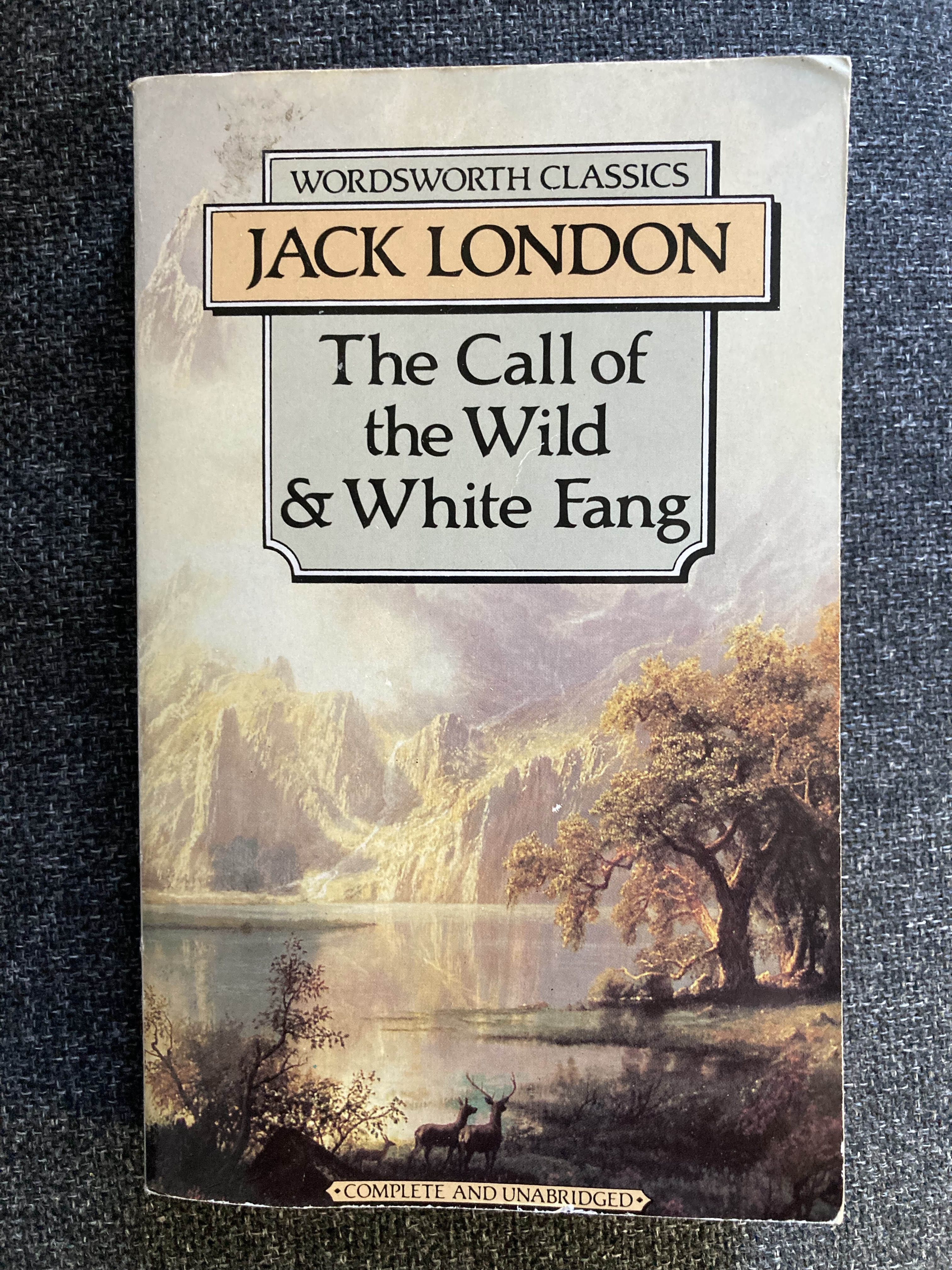
The Call of the Wild – Jack London #reading

A few years ago I discovered the wonderful book 1000 Books To Read Before You Die by James Mustich. Looking through it made me think about the range of books that I read, and in an attempt to make myself explore titles that I might not otherwise look at, I decided that I would work my way through the letters of the alphabet, picking a title written by an author whose surname started with each letter in turn. On my first trip through the alphabet back in 2020 my L title was The Wizard of Earthsea by Ursula Le Guin and then on a second, much slower, alphabetical loop that began in mid-2022 and has only fairly recently reached R, I chose The Spy Who Came In From The Cold by John Le Carre. However, on both of these occasions I came very, very close to selecting one of Jack London’s adventure stories… and so after picking up a combined volume of The Call of the Wild and White Fang in a charity shop, I decided I would finally give one of them a go, plumping for The Call of the Wild, partly because it was the first stories that London wrote, but primarily (I will admit) because it was the shorter of the two!

I enjoyed the story, which is written entirely from the perspective of Buck, a pampered St Bernard-Scotch Shepherd dog who is stolen from a California ranch and sold into service as a sled dog in Alaska. Buck soon has to get wise to the demands of his new environment, being beaten by his first owner and learning to fight with the other dogs to ensure his place in the pecking order. Over time Buck passes between several owners, and makes the long journey into the Klondike region of Canada and across the Yukon Trail. Buck soon establishes himself as the lead dog, having to brutally respond to challenges from rivals. Eventually, Buck is found in a poor state by an experienced traveller John Thornton who nurses him back to health, and the two form a strong bond. Thornton becomes rich after finding gold, and with little work for his dog team to do, Buck, now thoroughly attuned to life in the wild northlands, hears the howling of wolves and wanders off into the wilderness. Buck locates a wolf pack and then makes regular trips to socialise with a lone wolf from it. One day, Buck returns to camp to find that Thornton, his companions, and their dogs, have all been killed by native Americans, and so he sets off in search of his wild brother. Buck encounters a wolf pack and has to fight with them for survival, before discovering that his lone wolf friend is a member of the pack. The story ends with Buck answering the ‘call of the wild’ as he goes off to join with the pack.

It was interesting to read a story in which the human characters are secondary and all of the events are seen through a dog’s eyes. Buck’s journey from domesticated animal to a fearsome creature capable of matching a pack of wild wolves is fascinating to follow, and along the way there are lots of poignant moments as Buck and his human owners come to know and love each other. There are also some sickening scenes in which some of the humans show a complete lack of respect for their animal companions, and for the environment through which they are travelling.

The overarching theme of the book, at least from my perspective, centres on the harshness of the environment and the need to show it, and those traveling through it (human or canine), the utmost respect. Buck instinctively learns first to survive, and then to thrive in the wild, but most of his human owners, underestimating the power of the natural world, do not fare so well.

Call of the Wild was an enjoyable, fairly light read, and it certainly didn’t put me off indulging in another dose of canine adventure, in the form of White Fang, at some point in the future.

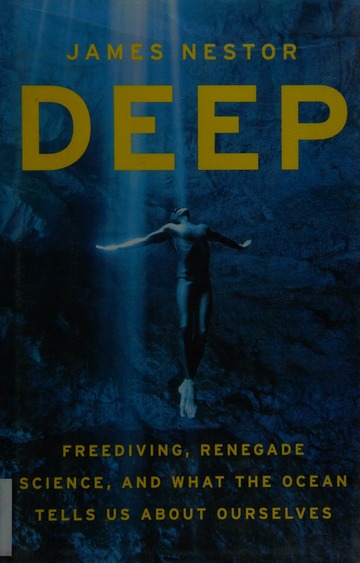
Deep – James Nestor #reading

I read James Nestor’s book Deep back in February/March, but I am a bit behind with my efforts to write blog entries and so I am only just getting round to writing something about it now. You could say that I have been submerged to such an extent that I have not been able to see even a glimmer of light to guide me in the right direction to get back on track…

Deep was not a book that I had ever noticed and thought I wanted to read, but one morning, at the back-end of last year, one of the students I teach in my first-year introductory oceanography module (there are almost 300 of them, although they are rarely [never?] all to be seen in the same place) came to see me during the break in one of my lectures and passed their copy of the book to me suggesting that I might like to read it. I think that my students generally assume that I am fascinated by the subjects that I teach and will love finding out more about any topic relating to them. This is actually not the case – it was a fairly random and somewhat inexplicable sequence of events that ended with me studying for an MSc and then a PhD relating to oceanography, and from there it was just a case of me continuing to follow what seemed to be the simplest path (i.e. the one that involved me making the minimum number of decisions) into my career as a Marine Science lecturer. Inexplicable it may have been (to me at least), but it’s a path that stuck, such that here I am, some 33 years later, still following it (maybe some would call it a rut!). So, in fact, I am not that interested in the undersea world, marine life and topics such as diving, I just somehow create the impression that I am fascinated by the oceans when I am teaching students about the various processes that occur within and on them.

Nevertheless, I thanked the student for passing the book to me and set it aside to read at some point. I had previously read his later book ‘Breath: The New Science of a Lost Art’, I knew that Nestor wrote well and would almost certainly have some interesting points to make, so it wasn’t really a difficult decision.

Deep is mostly about the pursuits of the very strange (to me at least) group of humans who strive to head as far as possible downwards into the ocean depths. It is nearly structured as a series of chapters titled by a depth in feet (e.g. -650, -2500, -35,850) and containing stories of human exploration towards that depth. Initially, at shallower depths, Nestor describes the pursuits of free divers, including the absolutely insane group of people that risk death competing to dive deeper and longer than their rivals. Some of the events that Nestor recounts, in which competitors emerge from the water with blood streaming from their faces, or in a semi or fully unconscious state were pretty horrific and I find it surprising that i) the ‘sport’ is allowed to continue, ii) anyone wants to participate in it and iii) Nestor still went ahead and learned to free dive so that he could join in with various activities.

In the latter part of the book, much of the content focuses on scientists and researchers who combine diving with attempts to better understand the behaviour of marine life such as various types of sharks and whales. All of this content was quite interesting, even for someone who is not at all obsessed with sharks and whales like me! It was particularly interesting to get a glimpse of the kinds of private organisations and collections of individuals that operate in this area of scientific exploration and research – often rather cavalier and unorthodox in their approach, because, I suspect, anyone trying to do the kind of ‘animal-encounters-at-close-quarters’ research that the book describes in a traditional, more highly regulated, academic setting would probably find that their efforts were thwarted by the requirements of such niggly things as risk assessments and ethical considerations.

In the end, I enjoyed reading Deep, and found it interesting to get a glimpse of the world of underwater activity it describes. However, it did nothing to make me wish that I was able to descend below the waves myself, quite the reverse in fact. I’ve always been quite happy existing on the solid substance of the land surface, and it’s pretty obvious to me that nothing is going to change that now!

Liminal Thinking – Dave Gray #reading

Liminal Thinking: Create the change you want by changing the way you think by Dave Gray is a book that I have toyed with reading for some time. I remember the occasion, quite a few years ago now, when, sat in a presentation at a Teaching and Learning Conference at work, I first encountered the concept of liminal spaces – transitional spaces or places that sit, rather fuzzily, between two different states, spaces or places. Since then, I have become rather fascinated by the concept of limnality, especially where this exists between one state or space that is very familiar and another that is largely, or even wholly, unknown. It’s a concept that I leaned on when writing my poem It Is Time (which should appear on this site in the not-too-distant future, as long as I am able to navigate the liminal space that is wedged between now and then…). So it was not that surprising that when I was looking for a new audiobook to listen to on my way to and from work, Liminal Thinking pushed its way to the head of the queue.

Unfortunately, my ‘reading’ of Liminal Thinking was something of a disappointment.

First, I don’t think Gray’s book is really about limnality at all. Instead, I think it’s a book about how bias creeps into the development of a personal world-view, and how being aware of this can help us to challenge our instinctive thoughts to develop a more robust and accurate set of beliefs. I’m inclined to think that the introduction of the word ‘liminal’ into the title of the book was primarily a case of the author trying to find a distinctive ‘buzzword’ in the hope that it might catch on and become associated with him in similar fashion to ‘atomic’ (Atomic Habits by James Clear) and ‘tiny’ (Tiny Habits by B.J.Fogg). But perhaps that my natural tendency towards cynicism coming into play…

Secondly, my experience listening to this audiobook reinforced a feeling that has been growing inside me for a while now, namely that it doesn’t really work to listen to certain kinds of non-fiction and hope to get much out of the experience. I am thinking here of books that are in any way a bit how to-ish in character. This is because unless you are prepared to be constantly stopping to bookmark segments or to rewind to listen again so as to catch details fully, it’s just not possible to come away from the listening experience with anything tangible (such as some kind of notes), and with no physical, print version available either, there is then nothing to refer back to later on. Still, if nothing else, this does mean that Liminal Thinking taught me one good lesson: that I’m not going to waste my time listening to this kind of book any more.

My experience with Liminal Thinking wasn’t entirely negative. Gray does a nice job of succinctly capturing six ‘principles of beliefs’, namely that:

  • beliefs are models
  • beliefs are created
  • beliefs create a shared world
  • beliefs create blindspots
  • beliefs defend themselves
  • beliefs are tied to identity

These principles are designed to highlight how the things we believe are not necessarily true reflections of reality but are, instead, built on thoughts that we have, mostly automatically, as we process our interactions with the world around us through our unique, personal, and mostly unconscious, set of biases and filters (things like ‘confirmation bias’ or ‘spotlighting’). Gray argues that with the right practice, it is possible to develop the ability to challenge one’s beliefs, and modify the way that we respond to inputs, so that what we come to believe about the world is a more accurate, or at least more reliable, model of our reality. He does this by introducing a number of so-called ‘liminal thinking practices’. These are:

  • assume that you are not objective
  • empty your cup
  • create safe space
  • triangulate and validate
  • ask questions, make connections
  • disrupt routines
  • act as if in the here and now
  • make sense with stories
  • evolve yourself

Most of these practices are pretty much self-explanatory, but if you asked me to explain what it means to ’empty your cup’ (in this context) I’m afraid that I would fail the task… You see, I have developed a belief that when it comes to trying to retain the knowledge and ideas conveyed in non-fiction writing, listening to an audiobook doesn’t work, and that means that whatever ’empty you cup’ is referring to went in one ear and out of the other. What’s more, I am pretty much convinced that no amount of questioning, safe space, routine disruption, story-telling or personal evolution is going to change my mind…

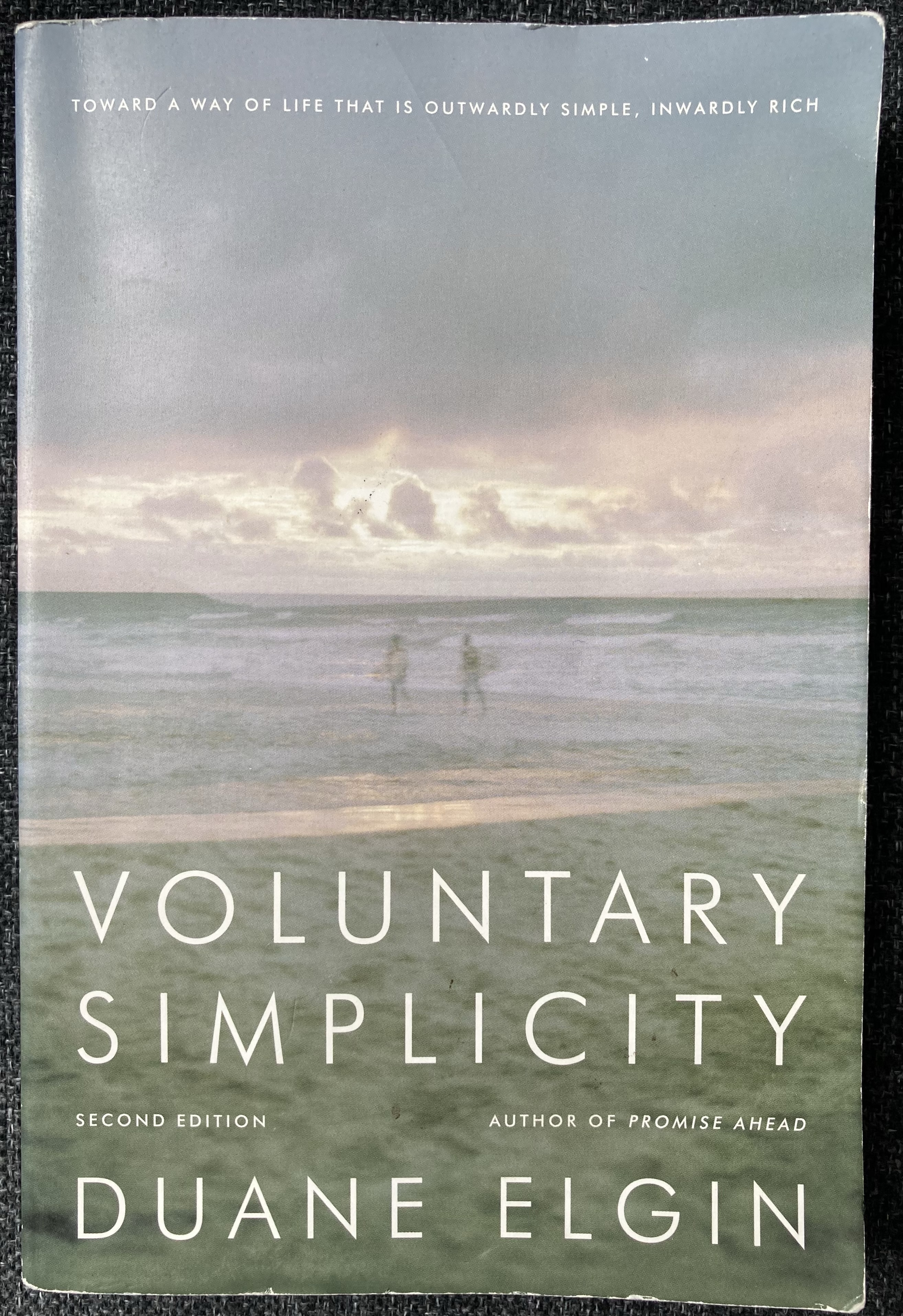
Voluntary Simplicity – Duane Elgin #reading

Voluntary Simplicity by Duane Elgin was the March 2025 choice for the TimeCrafting Trust Book Club that I am a member of. I think it’s fair to say that it is unlikely that I would have read it otherwise, although the ideas that it covers – Simplicity and to a lesser extent Minimalism – are certainly ones that I am interested in.

Elgin bases large chunks of the text on a survey he was involved with several decades ago (the first edition of Voluntary Simplicity was published in 1981) which probed the motivations and thinking of many individuals, from many different countries and walks of life, who had opted to simplify their lives. He is at pains to point out the most common perceptions of those who choose to live a ‘simpler life’ – that they tend to be anti-technology, anti-innovation and backward looking – are not generally correct, and that living simply does not have to mean living in poverty, in a rural and/or plain environment, nor does it necessarily result in economic stagnation. In fact, Elgin makes the case that the ever increasing number of people who are choosing to live with simplicity are doing so because it provides a path to greater satisfaction with life, with a deeper connection to the entire world around us.

As the book proceeds, it becomes more and more focused on the necessity that we live more simply in order to survive on the planet as population growth continues, climate changes ever more significantly and obviously, and natural resources are depleted. And, of course, the need for solutions and responses to the challenges that Elgin describes has become significantly more pressing in the years since the book was first released. But Elgin does not get all of his future-visioning right. He places great emphasis on the potential for television to be the vehicle through which positive messages about simplicity can be delivered and is rather dismissive of the potential for new technologies to invade this space. Nevertheless, Elgin’s arguments do mostly stand up to scrutiny.

I felt that Voluntary Simplicity was an ‘okay’ read, although I am sure that there are better, and more up-to-date, books on this topic. I don’t think that it is surprising that prior to reading the announcement that Voluntary Simplicity had been picked as a Book Club book I had ever heard of it or, indeed, of Duane Elgin himself. However, I did my reading did lead me to four quotes that I really liked. The first, comes from one of my favourite sources, the “quote-factory” commonly referred to as Henry David Thoreau. It has perhaps a rather depressing tone – ‘life is frittered away’ – but I think this is what lends it the power to motivate change:

“Our life is frittered away by detail… Simplify, simplify.“

I also really liked Elgin’s own take on the power of simplicity, namely that:

“Simplicity is the razor’s edge that cuts through the trivial and finds the essential.“

and I enjoyed his statement that:

“Our bodies are biodegradable vehicles for acquiring soul-growing experiences.“

‘Biodegradable vehicles for acquiring soul-growing experiences’ – I mean that really is life in a nutshell isn’t it?

Best of all, I think as a result of its own simplicity and the rhythm of the language used, is an adage that Elgin attributes to the New England Puritans:

“Use it up, wear it out, make do, or do without.“

That’s not a bad maxim to try to live by, at least to some extent.

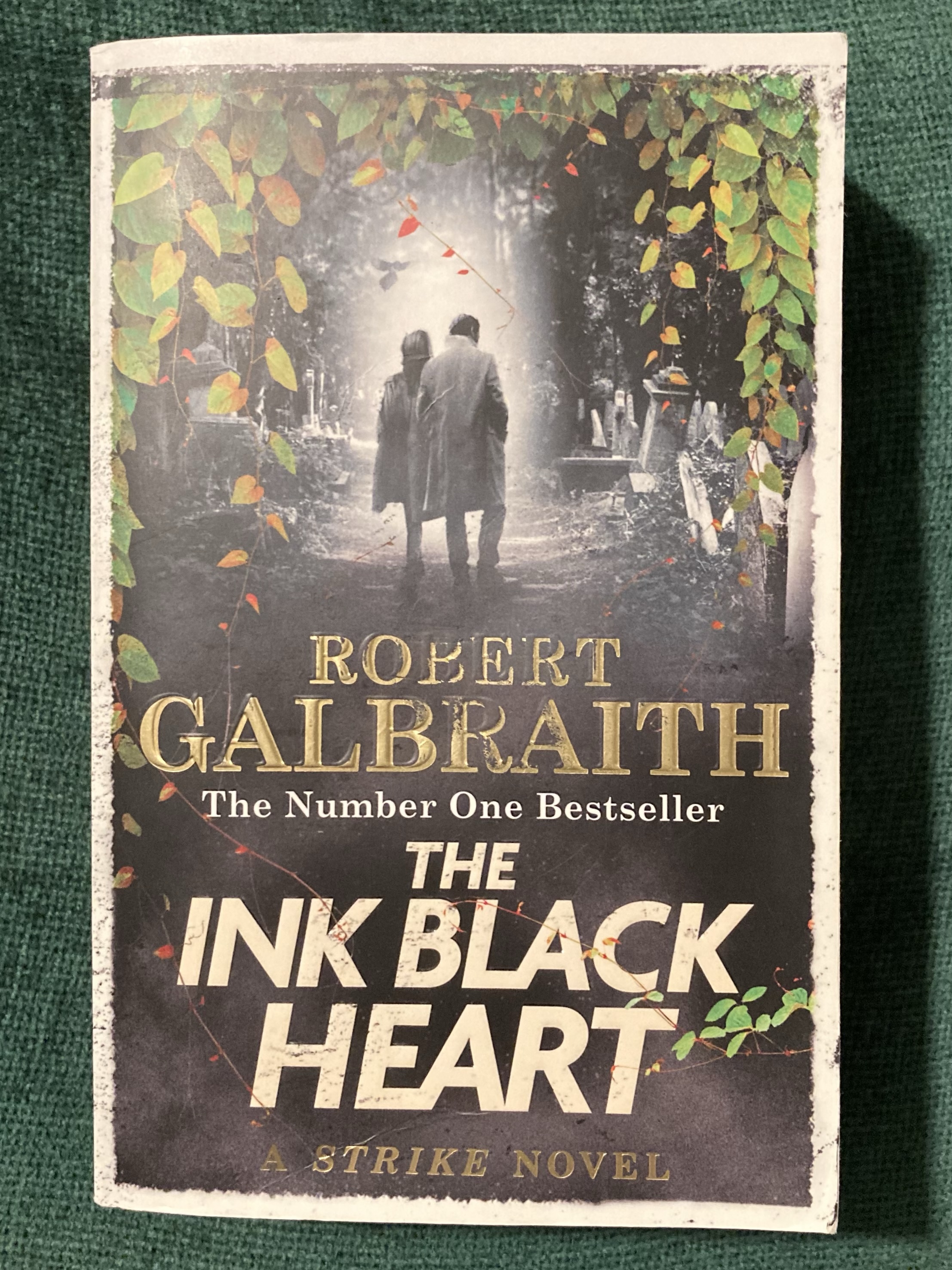
The Ink Black Heart – Robert Galbraith #reading

Oh J.K. Rowling (a.k.a. Robert Galbraith)… Why oh why do you seem to be obsessed with writing ever longer lengthier novels?

The Ink Black Heart is the sixth novel in the Cormoran Strike series, written by J.K. Rowling under the pseudonym Robert Galbraith. The plot follows Strike and his former assistant, now professional partner, Robin Ellacott, as they try to get to the bottom of a complex and grisly crime – the murder of the co-creator of a highly successful online cartoon series (The Ink Black Heart of the book’s title) in the very graveyard in which the cartoon is set. The story plot is typically convoluted, throwing in lots of characters, many of whom are suspects at some point, with all of the action happening alongside the ongoing will-they-won’t-they saga of Strike and Robin’s frustrated relationship.

Compounding this complexity, the plot is made even more complicated to follow by the fact that large chunks of the dialogue between some of the characters takes place via online messaging threads. This throws up two issues for the reader. First, because the characters involved in the online messaging conversations hide their identity behind anonymous usernames it is some way into the book before you know who is talking to who (obviously, this is deliberate). Secondly, it is an (impossible?) challenge to work out how to read up to three parallel conversations between different pairs or groups of, sometimes overlapping, individuals. I can understand why the Rowling/Galbraith chose to write these sections in this way – the chat threads take place within an online game that is based on The Ink Black Heart cartoon – but I felt it made reading the book unnecessarily hard, and at times rather frustrating, work.

I should come clean… In general, I’m not a fan of long books. I like to feel that I am making reasonably rapid progress through a novel and that I won’t get stuck on the same book for more than a few weeks. So with The Ink Black Heart extending to around 1200 pages it took me a while to summon up the courage to make a start on it. However, it wasn’t simply the length of The Ink Black Heart that set me off on the wrong foot, because I’ve also had a long-standing gripe about the way that Rowling’s books seem to get longer and longer with each new one that comes out. This happened with the Harry Potter series, in which the first three titles were quite short, easily-tackled, but still satisfying stories, as the later volumes became progressively more ‘doorstop-like’ each time one appeared. I still enjoyed all of these books, but when I read them I really felt that Rowling’s writing could perhaps do with a good dose of editing… [hark at me, calling out one of the most successful, if not the most successful, writers of modern times.]

Rowling’s tendency for bloated writing is something that I think is particularly apparent in the Strike novels. I do enjoy reading them, but I can’t help but wonder whether it is really necessary to drape Strike and Robin’s relationship across quite so many pages. I think it’a all a bit tedious, and find myself almost screaming at the pair of them to just get on with it. [For balance here, I should say that both my wife and my elder daughter completely disagree with me on this point!] There is also a lot of description of minute details of events that have no bearing on the plot, which is fine if you like that sort of thing (i.e. not being allowed to get to the heart of the matter as quickly as you would like), but stretches my patience close to breaking point. I suspect that The Ink Black Heart could probably be half its present length and still be a great read (and obviously a better read in my opinion).

Perhaps, in the future, Rowling/Galbraith could write two separate books that can be read in parallel – one housing all of the crime/sleuthing-related action and then for those that can be bothered to read it, a second volume that takes a microscopic look at the trials and torments of the relationship between Strike and Robin. At the end of each chapter of the first volume the text could read something like this:

Reader:
If you want to get straight on with the exciting action to discover just how the shocking realization that Strike and Robin have just made takes them one step closer to uncovering the identity of the killer that lives in their midst, then turn the page and read on.
But if, instead, you’d like to lose the thread of the story and forget exactly who said what to whom as you read another account of Robin’s misapprehension of Strike’s words to her in their last conversation and Strike’s desperate attempts to convince himself that getting closer to Robin can’t possibly be the obvious conclusion of them spending almost every waking hour together, then switch over to the companion volume where things might eventually get ever-so-slightly slushy.

Sizzling sleuthing or risky romance? You decide…

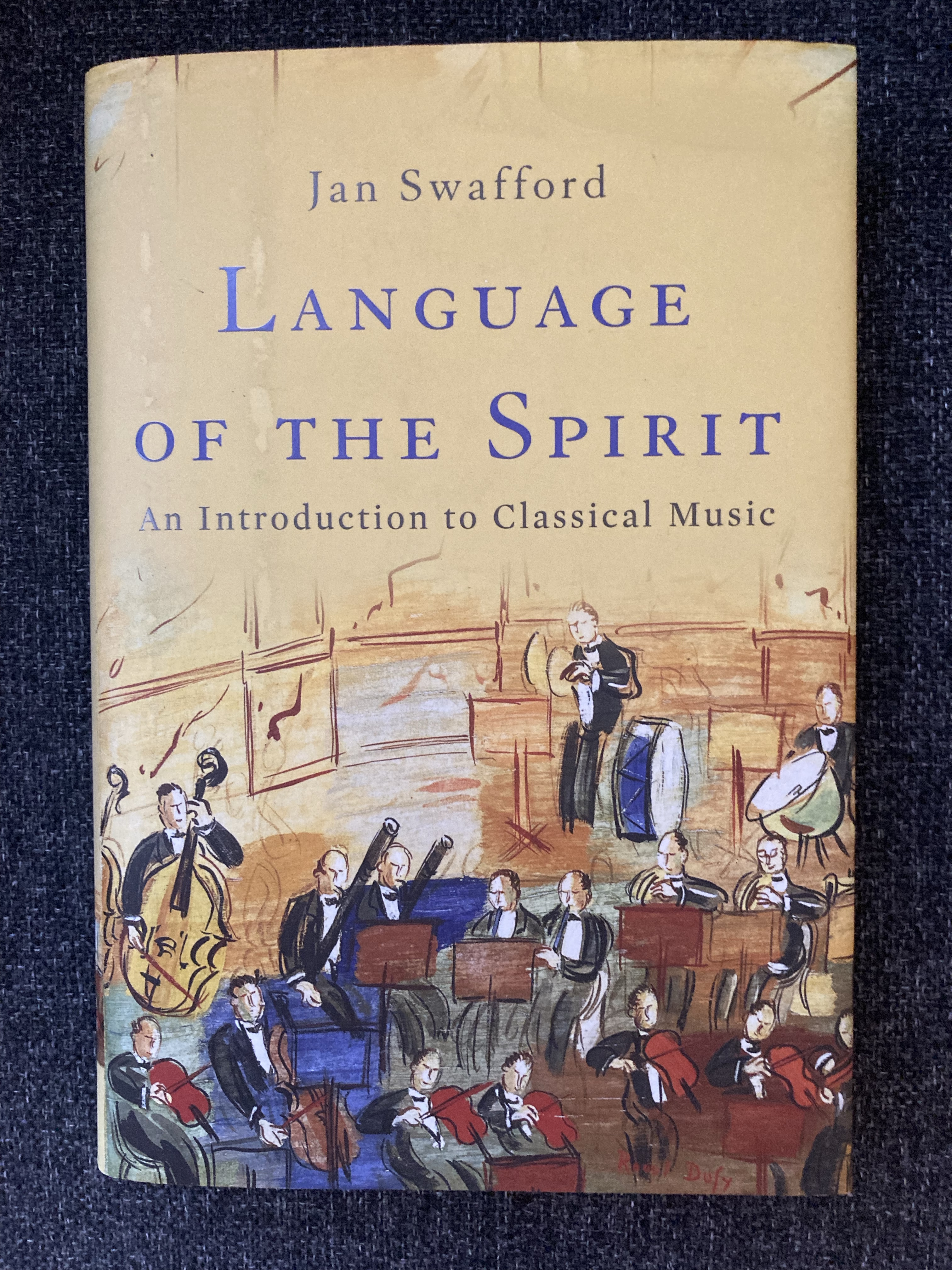
Language of the Spirit – Jan Swafford #reading

I started reading Jan Swafford’s Language of the Spirit – An Introduction to Classical Music back in June 2023 and finally completed just a fortnight ago. It would be tempting to conclude from this that it was a book that I struggled through but, in fact, nothing could be further from the truth.

I grew up in a household that was full of classical music, from the long, purpose-made shelf unit in the living room that was stuffed full of vinyl records, to the assortment of musical instruments that my father acquired and dabbled with (flute, trumpet, clarinet, mandolin, violin). Apparently, when my brother and sister and I were very young, we would be accompanied on our way to bed by our personal favourite pieces of music, presumably each one being some piece that we had reacted to positively at some point. I don’t recall what my sister’s piece was, but I do know that my (older) brother’s piece was a movement from Schubert’s ‘Trout’ Quintet and mine was the rather stirring ‘March Slav’ by Tchaikovsky (so it is probably no coincidence that Tchaikovsky later became one of my absolute favourites).

I had piano lessons from the age of about six and then at around nine years old I began to learn the ‘cello (because apparently I had shown an interest in learning it, although I can’t say that I remember that and I suspect it was more because it was an instrument that my father wished he had been able to learn). I was never that great at the piano, and stopped after passing my Grade 6 exam, but playing the ‘cello certainly became a big part of my life all the way through my teens and well into my 20s. Over the years, I played in various ensembles and orchestras, in particular leading the ‘cello section in the Somerset Youth Orchestra, the Somerset County Orchestra, Oxford Sinfonietta and Bangor University Orchestra and being on the first desk of the ‘cello section for the annual summer gatherings of the Somerset Chamber Ensemble/Orchestra. It’s fair to say that I was a pretty good ‘cellist – although better known, I think, for my expressive playing than for a robust technique (or any kind of technique at all really – practice and I have never really been comfortable bedfellows in any area of activity…).

I always enjoyed orchestral music the most, especially music composed from around 1850 through to perhaps 1930 – the romantic and late-romantic periods – music full of emotion, passion and angst. My mother used to call the kind of music I liked best ‘troubled music’, which I guess is fair: Brahms, Tchaikovsky (and assorted other Russian composers of that time), Wagner, Sibelius, Richard Strauss, Mahler – that kind of thing. Unlike a lot of musicians, I never went much for some of the classical greats like Bach and Mozart, especially the latter, whose music (am I allowed to write this?) I tend to find rather boring.

In Language of the Spirit, Jan Swafford, a US-composer and music academic, provides a wonderful journey through the classical music canon, from early single-line chants, through all of the great names, and right up to the present day and the post-modernists. The book is mostly written on a one-composer-per-chapter basis, with most chapters being perhaps six to eight pages in length. In each case, Swafford outlines what makes each composer’s work distinctive, and provides a little detail of about their life, their influences and their major works, which brings me to the reason why it has taken me the best part of two years to finish the book…

Just for fun, I decided at the outset that I would listen to every piece of music that Swafford had picked out as being important or a good example of some aspect of a composer’s works. This meant that for each chapter I created a playlist with something like 8-15 pieces requiring multiple (many in some cases) hours of listening – Spotify was my friend! In the end, I managed to listen to every single piece that was highlighted or recommended (including several full operas) except for one piece by Stockhausen that I couldn’t find (but based on the Stockhausen works that I did listen to I can’t say I am too upset about that).

I listened to lots of music that I already knew well, lots of music that I thought that I knew well, and even more music that I didn’t know at all, some of it major works by major composers. I had a few surprises, particularly enjoying the music of Schumann (who I have never paid that much attention to in the past) and Grieg (who I always thought was a bit lightweight), and despite not really enjoying most of the noise that was described as atonal and/or post-modern, there was something about the work of Philip Glass that I enjoyed more than I feel I should have done.

Having now finished reading the book, and having listened to the last piece (John Adams’ Shaker Loops), I was spurred on to re-arrange the furniture in the small bedroom that I use as a kind of home office/personal den so that I could fit in some nice wooden CD shelves that we have struggled to find a good home for recently, and I unboxed all of the CDs (not just classical) that have sat out of sight since we packed them up last summer before having our kitchen re-modeled.

If you don’t know much about classical music but want to know more then I thoroughly recommend Swafford’s book. It is written for a general reader and gives a lot of interesting background and insight into a huge range of music. Alternatively, if you are like me, and know (or think you know) a lot about classical music already, then Language of the Spirit is a great stimulus to rediscovering old favourites and discovering new ones (and also discovering ‘music’ that you will never want to hear again for that matter – but each to their own of course!). Reading Language of the Spirit didn’t convert me into a Mozart-lover – I’m still very much in the ‘troubled music’ camp – but it did broaden my knowledge and has given me a number of composers to explore further. I also discovered that rather than being the somewhat over-sentimental ‘slush-fest’, that I recalled it being from when I played it with the Somerset Youth Orchestra over 40 years ago, Rachmaninoff’s Second Piano Concerto is indeed a rather special piece of music.

Meditations – Marcus Aurelius #reading

Meditations is essentially a collection of journal entries written by Marcus Aurelius, Roman Emperor (161-180) and well-known adherent to the principles of Stoic philosophy. Most of the entries are short notes, written by Marcus as he unpacked his thoughts on the events of a day just passed or noted down some reminder to himself about the way that he wanted to live his life. These entries were never set down with a view to them being read by anyone other than the author, but they now constitute one of the most commonly cited sources of Stoic wisdom, to the extent that Marcus Aurelius is now generally regarded as one of the big three Stoic philosophers (along with Seneca and Epictetus).

I have read and listened to multiple books on Stoic philosophy and the Stoic approach to live that draw heavily on Meditations, most notably the works of Ryan Holiday – in particular The Daily Stoic and the first three books in his series on the four Stoic virtues: Courage is Calling (Courage), Discipline is Destiny (Temperance) and Right Thing, Right Now (Justice) [the fourth and final book in the series: Wisdom Takes Work (Wisdom) is scheduled for publication later in 2025] – and I have dipped into Meditations on and off over the years. But I had not actually read Meditations in its entirety for myself. With that in mind, at the start of this year, I decided to include Meditations as a component of my ‘morning reading’ sequence.

My initial plan was to read one entry of Meditations each morning, but I soon found that the entries are so variable that this approach was frequently not particularly satisfying, and so I switched to reading 5 or 10 entries at a time (depending on how they fell on the page). This meant that it ended up taking me 2.5 months to complete the whole volume.

I had quite high hopes for my reading of Meditations – I was familiar with it as a source of many great quotes – but, in fact, I found it something of a slog to get through. Every now and again a sentence would leap out at me and I would rush to note it down, but around those golden nuggets there was quite a lot of dull rock. I think that most readers would get a lot more out of reading material that draws from Meditations, such as the aforementioned works by Ryan Holiday, than working their way through the original source material. It can obviously be argued that the former approach is lazy and relinquishes control over what wisdom one might gain from the material, but my feeling is that in this case, the ‘tour’ is much enhanced by the commentary provided by a skillful guide.

I guess the real issue with Meditations is that, as already noted, it is not a book that was written by the author to be read. It’s much more suitable for the ‘open at a random page and read an entry whenever the mood takes you’ approach than a cover-to-cover examination (unless your intention is to actually study it). But either way, the little nuggets of wisdom should emerge, and can serve as useful reminders. Here are a few that stood out for me…

Be like the rocky headland on which the waves constantly break. It stands firm, and round it the seething waters are laid to rest.

Just as drifting sands constantly overlay the previous sand, so in our lives what we once did is very quickly covered over by subsequent layers.

Perfection of character is this – to live each day as if it were your last, without frenzy, without apathy, without pretence.

When you have done good and another has benefited, why do you still look, as fools do, for a third thing besides – credit for good works, or a return.

Universal nature delights in change, and all that flows from nature happens for the good.

Now It All Makes Sense – Alex Partridge #reading

A few weeks ago, I completed my seventh book of the year: ‘Now It All Makes Sense’ by Alex Partridge. This was one that I consumed in audiobook format, narrated by the author.

I decided to listen to this book after my wife drew my attention to it. I’m not sure where she came across it being mentioned, but it’s clear that Partridge currently has a pretty massive media presence with social media channels (with millions of followers), a podcast called ADHD Chatter (with 500,000 listeners) and now this book (an ‘instant Sunday Times bestseller’ apparently). From a bit of searching online, it seems that, in the world of new media he is viewed as one of the experts on adult ADHD (Attention Deficit Hyperactivity Disorder). His background is in social media content creation – he founded UNILAD and LADBible at the age of just 21, two social news and entertainment companies that, according to his biography, were followed by 300 million people. I guess it is not surprising then that after being diagnosed with ADHD at the age of 34, he has come to be a dominant figure in the online adult ADHD media space but I’d never heard of him.

You might think that as a fellow late-diagnosed ADHDer (albeit more than 20 years later in life than Partridge), I would have found plenty in ‘Now It All Makes Sense’ that resonated with me, but that wasn’t the case at all.

I’ll come straight to it… I didn’t much like this book. Partridge clearly writes from his own experience, which is, obviously, a sensible thing for him to do… except that throughout the book he refers to ADHD only in terms of his own particular expression of it. He writes/says things like “Those of us with ADHD will be familiar with…” and “As anyone with ADHD will know…”, and then he describes how he is forgetful, how he loses things, how he is completely disorganized, how he is entrepreneurial etc. Well, I have ADHD and I am not (generally) forgetful, I don’t (generally) lose things, I am probably one of the most organized people around and would hardly describe myself as entrepreneurialanything…, so no, actually, I am not “familiar with” and don’t really “know” the ADHD that is described by Partridge, not in myself at least. And if I am not familiar with it then I am sure that there are plenty of others in the same boat. ‘It’ might now all make sense to Alex Partridge, and I am sure that ‘it’ will now also make more sense to some readers of his book, but if I had read or listened to the book a few years ago it would simply have reinforced the inaccurate understanding of ADHD that I then held… and who knows, that might have prevented or delayed me from being able to make sense of my own ‘it’ in the way that I have been able to since my diagnosis.

There’s nothing wrong with Partridge’s account of his ADHD, the impacts it has had, and is having, on his life, and the advice and tips that he provides in the book… provided, that is, that you have an ADHD presentation that is similar to his (or are seeking to understand ADHD in relation to someone you know who is like him). But many people don’t have that ADHD presentation like his and so are not that much like him… that’s one of the peculiarly frustrating but also, dare I say it, interesting, things about ADHD – the challenges it creates can be very different for different individuals. What is wrong… no, perhaps ‘wrong’ is too strong a word here, let’s say ‘potentially unhelpful’ is that Partridge doesn’t really seem to recognize this variation in the diverse challenges that ADHD presents for different people enough. In this way, I think that Partridge misses the opportunity to really broaden out his readers’ understandings of the challenges of living with ADHD, and given his huge online audience and social media status, I think that’s rather disappointing, Maybe instead of ‘Now It All Makes Sense’ the title of the book ought to have been ‘Now I All Make Sense’ (forgive the mangled grammar) to reflect the rather personal nature of Partridge’s narrative.