Dartmoor Panoramas #art

The proximity of Dartmoor to our home in Plymouth generally means that it is our go-to place for weekend walks, so it is hardly surprising that my phone is full of photographs of Dartmoor landscapes. I’m a particular sucker for ‘big views’, but my attempts to capture these in photographs are always something of a let down. Looking with the naked eye, big views fill my visual space with rich detail, but on camera everything seems to shrink, recede and flatten, resulting in a rather distant picture that is dominated by sky, and especially foreground, that the brain somehow filters out of the live view. I expect that this phenomenon is well understood by photographers, and it probably even has a special name, but to me it is just known as ‘disappointment’. This is compounded by the difficulty that I face when I subsequently try to capture this same kind of open, expansive view in one of my paintings. The part of a photograph that I want to paint seems to be only a small component of the whole, and no amount of zooming in seems to really help.

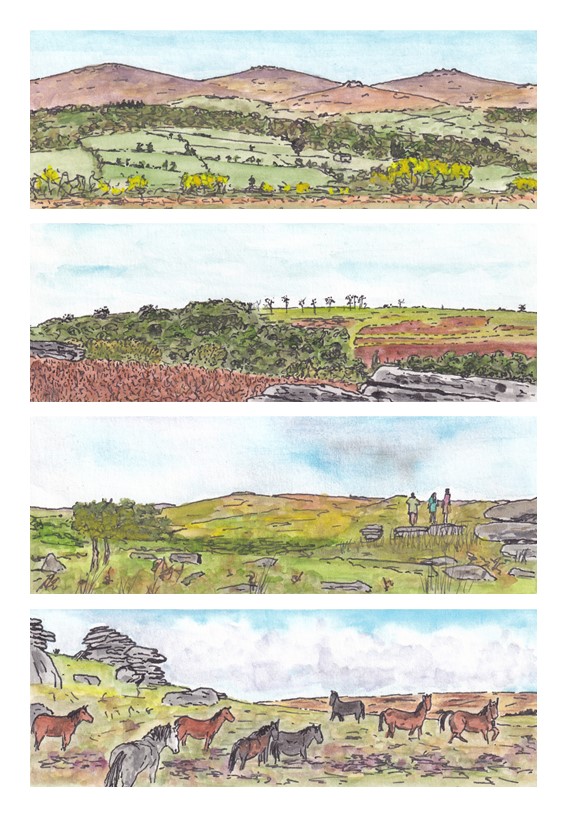
On one recent trip to Dartmoor I was pondering this issue when it occurred to me that what I was seeing with my eyes was a little like the view I got when I used my thumbs and index fingers to create a rectangular, letterbox-like, frame and then looked through that frame as if looking through a window. Despite there being so much more that could be seen, my brain seemed simply to ignore that part of the view that would have outside this frame, whereas my phone camera played no such trick. I began to wonder whether the key to painting this kind of view was to change the size and shape of the picture, adopting a similar letterbox, or panoramic, format. So, for a few days I played with this approach. The results are a series of four small painting that I refer to as my Dartmoor Panorama series.

I’m pleased with these pictures, at least to the extent that they better capture something approximating to the kinds of spacious views that I like best. Using a panoramic format does seem to work. In the third picture I was brave enough to include some people standing on one of the tors and gazing out at the view> I think this little piece of detail adds a lot to the picture, including a splash of contrasting colour. I was even more brave in the fourth picture, including a group of Dartmoor ponies. I tend to think that I’m not able to paint animals, but perhaps I am improving, because at least some of the ponies in this picture seem to have come out pretty well. I am particularly pleased with the grey pony in the foreground and the somewhat lively pony furthest to the right.

I feel sure that I will use this approach to painting expansive views again, and I suspect that at some point my curiosity will lead me to explore some photography guides to see whether I can find a proper explanation of my observation. It might have something to do with ‘foreshortening’ and/or ‘depth-of-field’ (words that I am vaguely familiar with that at least sound like they could be contributing factors). Who knows, perhaps someone reading this post will be able to point me in the right direction!
Rock Giant #poem

You have used me as you wish to have your fun,
scrabbling roughly on the pockmarked surface of my skin,
climbing high to turn your face towards the sun.
You scrape your boots across me to remove accumulated soil,
and carving your initials in my surface,
give little thought to what you spoil.
You have taken from me what you need
using iron picks to gouge out fragments,
thinking that you caused no pain because you saw no sign I bleed.
You turn your eyes towards me and see only solid rock,
looking down upon my dumbness,
laughing as you mock.

By day, as you approach from the grassy slope below,
you start to notice many shapes of things you know.
You see an outline that reminds you of a faithful hound,
you watch it shift as you move forwards,
then it’s gone without a sound.
You turn to view a castle, but no soldiers move for they have fled.
You move your head to shape a profile –
only then you see the witch’s head.
You trace out furrowed brow, hooked nose and jutting chin;
you feel grey eyes look through you,
and you shiver as an evil spell takes hold within.

At night, in your imagination, led by an unheard call,
you see me rise up from my station as I yawn and stretch so tall.
You hear the distant thunder of my steps
as I march the slowest beat.
You sense vibrations deep below,
the trembling ground beneath my feet.
You are frightened of my power, as I tear the earth apart.
You are petrified, turned solid, as the terror grips your heart.
You are fearful that I come at last to take what I am due.
You sense that it is time.
And you are terrified that I am hunting, hunting now for you.

But none of this is true,
for all that you see, and everything that you imagine,
has been shaped by the stories you were told,
and what they let you do.
Those imagined forms, the wild thoughts,
and all the feelings they produce may seem fantastic
when compared with what is in your normal view.
So, what is the truth?
If only you knew…

I was formed from countless tiny pieces that began as dust,
mixed together in her bowl,
baked by her heat to form a crust.
I was once pressed tight together as I found my solid form,
extruded by her shuddering contractions,
melded in her womb so warm.
I have rested for so long as if I have no task,
snuggled by her mossy blanket,
wrapped protectively within her grasp.
I have waited patiently for several million years,
cooled by her gentle whispers,
washed clean by her falling tears.

For your time is not all time.
Your whole existence is the smallest fraction of my life.
This place was mine so long before you came,
and will remain my home for even longer once you die.

And your space is not all space.
Your whole world is like a single speck of the quartz that shines
within the substance of my form,
just one of countless millions of specks, all of which are mine.

And your thoughts are not all thoughts.
Your thoughts are small and they are fleeting, and so they rarely bend.
You are constrained by what they choose to tell you.
There is so much you cannot comprehend.

And your life is not all life.
Your life is short, and it is fast, and so it limits what you try to claim.
You cannot grasp the unfamiliar.
You are bound by the rules that shape your game.

Believe me, I do not lie.
I do not speak to garner fame.
For beyond all that you can see, and everything that you imagine,
are stories to be told and things to see that far expand your frame.
You may think you are the only one who holds within a spark,
but that is falsehood as we share that conscious flame.
I too am alive,
and Rock Giant is my name.

(c) Tim O’Hare, August 2023


ROCK GIANT: The last few walks that we have done have been on the familiar territory of Dartmoor, taking in one or more of the rocky tors that sit atop many of the hill summits. These enormous piles of granite slabs are the remnants of old volcanoes, material pushed upwards from the upper mantle almost 300 million years ago. I find it impossible to visit a tor without seeing the profiles of faces in the shapes made by the great piles of rocks, or imagining that the rocks are the tip of a toe, an elbow or some other part of a huge stone giant asleep beneath the ground. And then, in a natural progression of my thoughts, those rock giants begin to stir. I am not at all sure why, in the poem, I imagined the rock giant as a threat. My instinct is that they are, in fact, very gentle and friendly creatures. But, of course, I will never really know, because they still have much sleeping to do before they awaken.

Mistakes Are Not Always Bad #wisdom

A couple of weeks ago we paid a visit to Make Southwest, an exhibition space for contemporary craft and design and a leading charity for craft education located in the small town of Bovey Tracey on the southern edge of Dartmoor, about 25 miles from our home in Plymouth. It’s a venue that we have visited a few times before – there is always some kind of special exhibition (this time it was a exhibition of contemporary bells called Sound and Silence) and an interesting array of local artwork, books and assorted items to look at in the shop. On this occasion, the reason for our trip was to see a smaller exhibition of wood engraved prints and, in particular, the printmaker Molly Lemon, who had travelled down from her base in Gloucestershire to demonstrate her work. We have encountered Molly at several Craft/Art Events in the last couple of years and always enjoyed viewing, and chatting to her, about her work. We also enjoyed seeing her compete in, and reach the semi-finals of, the Sky Arts TV Series Landscape Artist of the Year a few weeks ago.

Since I started painting about a year ago, whenever I go to any kind of art gallery or art/craft event I particularly enjoy scavenging the work that is on display or sale for ideas that I can try out for myself. Looking at the various pieces of artwork for sale in the shop at Make Southwest, I was particularly enamoured by some tiny pieces of work created by the printmaker Mike Tingle (also here). These were very small (just a few centimetre) square prints on slightly larger squares of rough-edged paper, with a title and the artist’s name written in pencil around the picture (there is an example of a similar kind of picture just below the centre in this piece of work: Dartmoor Box No 1). I really liked the miniature size and somewhat ‘rough’ nature of the pieces and I immediately thought that it would be fun to try to produce something similar using one of my own small Dartmoor Scenes watercolour paintings.

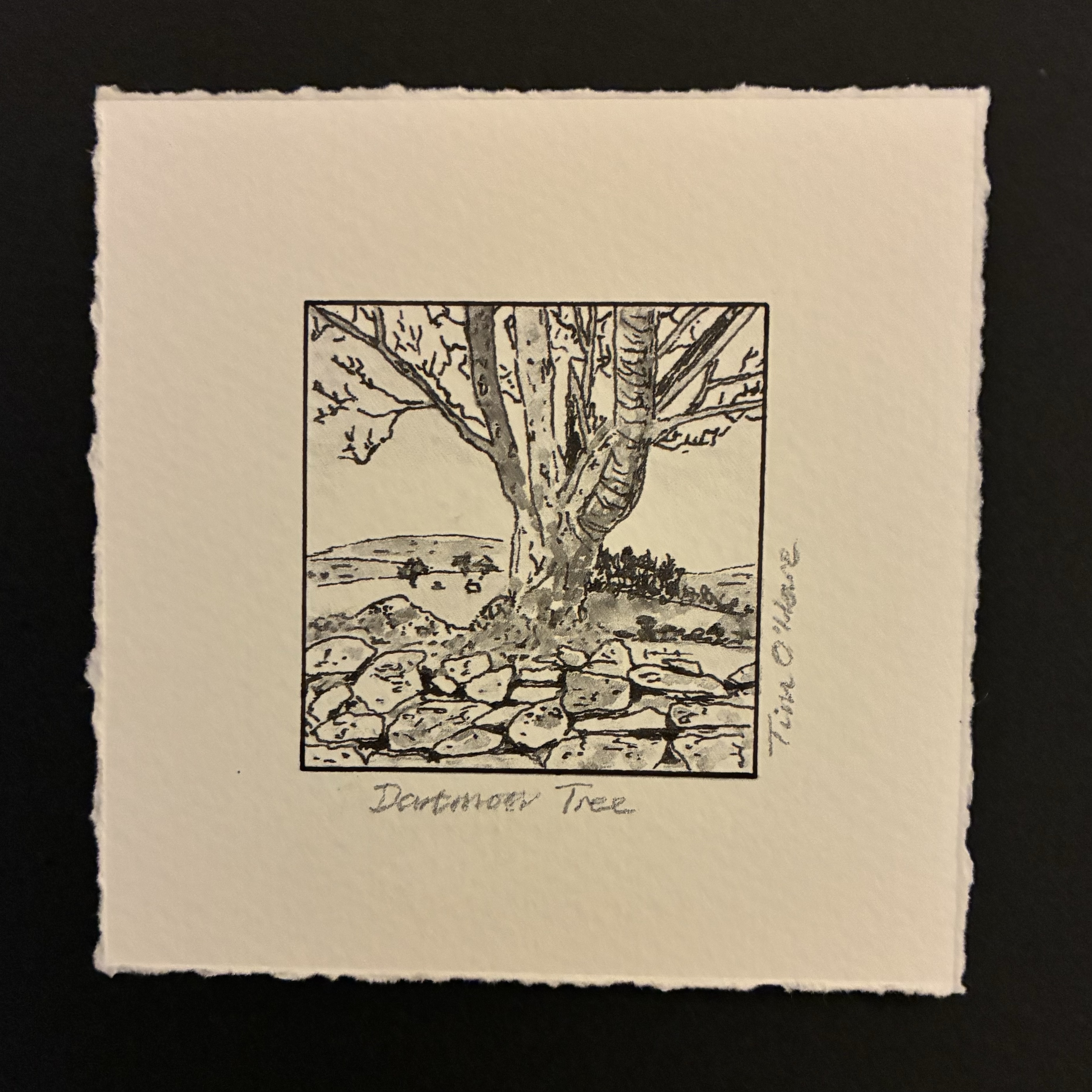
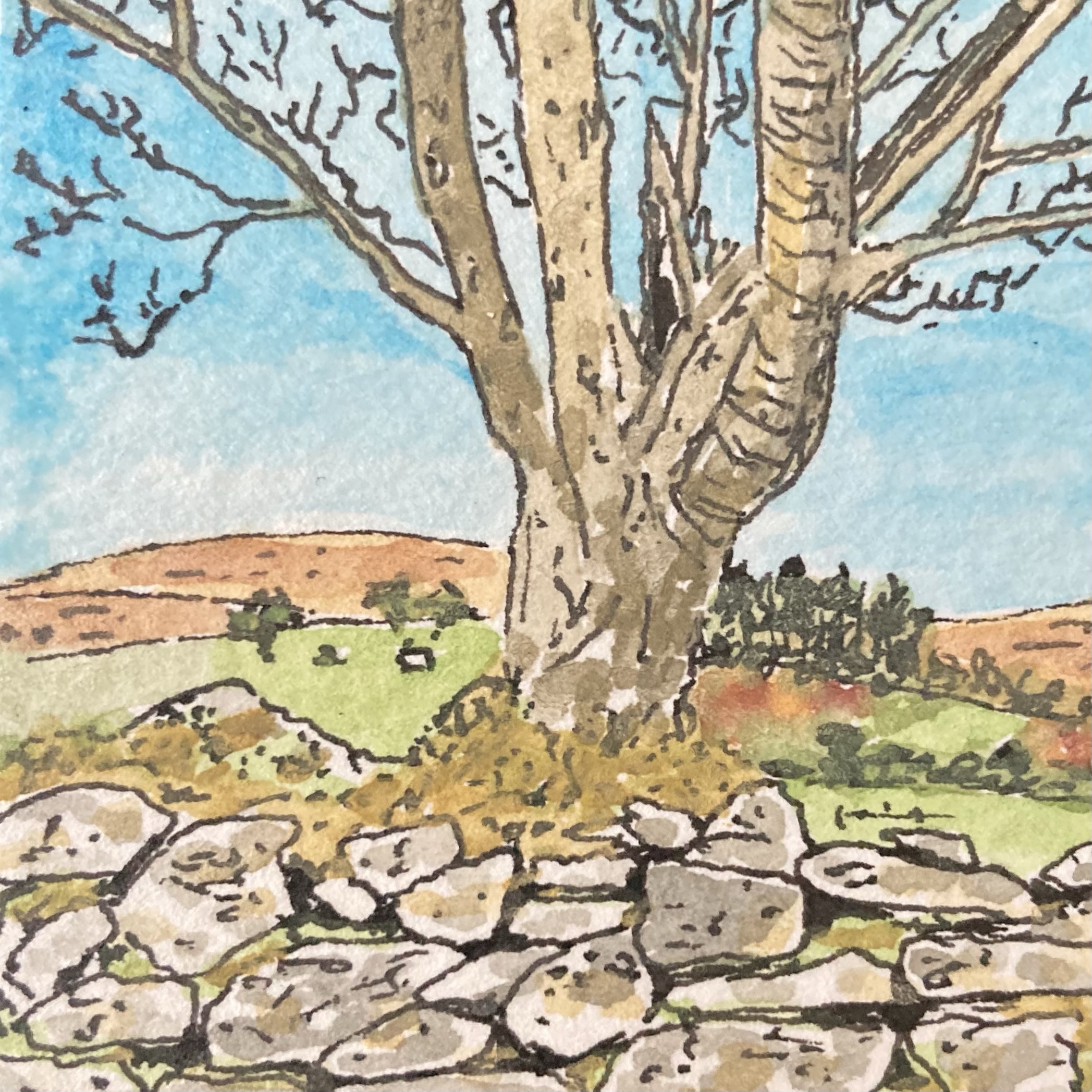
After returning home, I set about seeing what I could produce. First, I selected one of my pictures, opting for this one of a tree growing out of a typical Dartmoor dry-stone wall:

The original picture is a 4.5 cm square ink and watercolour sketch, and my intention was to use our home inkjet printer to make the best quality colour photocopy of it that I could, printing onto a sheet of watercolour paper so that the texture of the original was preserved. I’d already played around with making copies of some of my paintings in this way and so I knew that although the copied versions weren’t quite the same as the originals, with the paler colours tending to wash-out a bit, the process worked pretty well. So far so good.

This is the point at which I made my mistake. In the process of making the copy I somehow selected black-and-white printing, and so when I saw what the printer had spat out into the print tray I was instantly annoyed and frustrated. To make matters worse, because the original picture was on a small square of fairly thick paper, as the scanning light moved below the copier glass a dark shadow line was cast on one side of the copied picture. Not only did I only have a black-and-white copy, but I had a black-and-white copy that had a dark line along one of its edges. What a waste of a sheet of paper and ink…

However, once I had overcome my initial disappointment and self-censure, I decided to press on with the rest of my production process and see what the end result looked like. I had intended that there would be no border between the picture and the surrounding area of paper, but now there was that dark line along one side spoiling that design idea. What could I do? Well, go with the mistake of course. I took my drawing pen and with the aid of a straight edge and a lot of care, I inked in a similar line on the other three sides. Hmmm… it didn’t look as I had planned but I liked the result. Then I measured out a wider border, and again aided by a straight edge, I tore the paper down to size. This part of the process is something that I have found takes a lot of care… if the tear is too sharp you don’t get the nice rough edge I was after, but if you are at all rushed and loose you end up with something that looks clumsy and careless. Fortunately, I managed to do a good job. Finally, I grabbed a soft pencil and quickly wrote a title below the bottom edge and my name on the right-hand side…

The result of this endeavour was the small picture shown at the top of this post and, despite my black-and-white and shadow mistakes in the copying process, I’m really pleased with the end result, so much so, in fact, that I intend to take the rest of my Dartmoor Scenes pictures and treat them in the same fashion. Even better, not only did I end up with a new picture that I really liked and the discovery of a new way to transform existing pictures into a different, somewhat distinctive, form, but I also gave myself a great reminder that making mistakes in life is not always a bad thing. In fact, sometimes, as in this case, a mistake can open up a different path from the one that was intended that leads you towards an unexpected but interesting, exciting or enjoyable destination!

Dartmoor Scenes #art

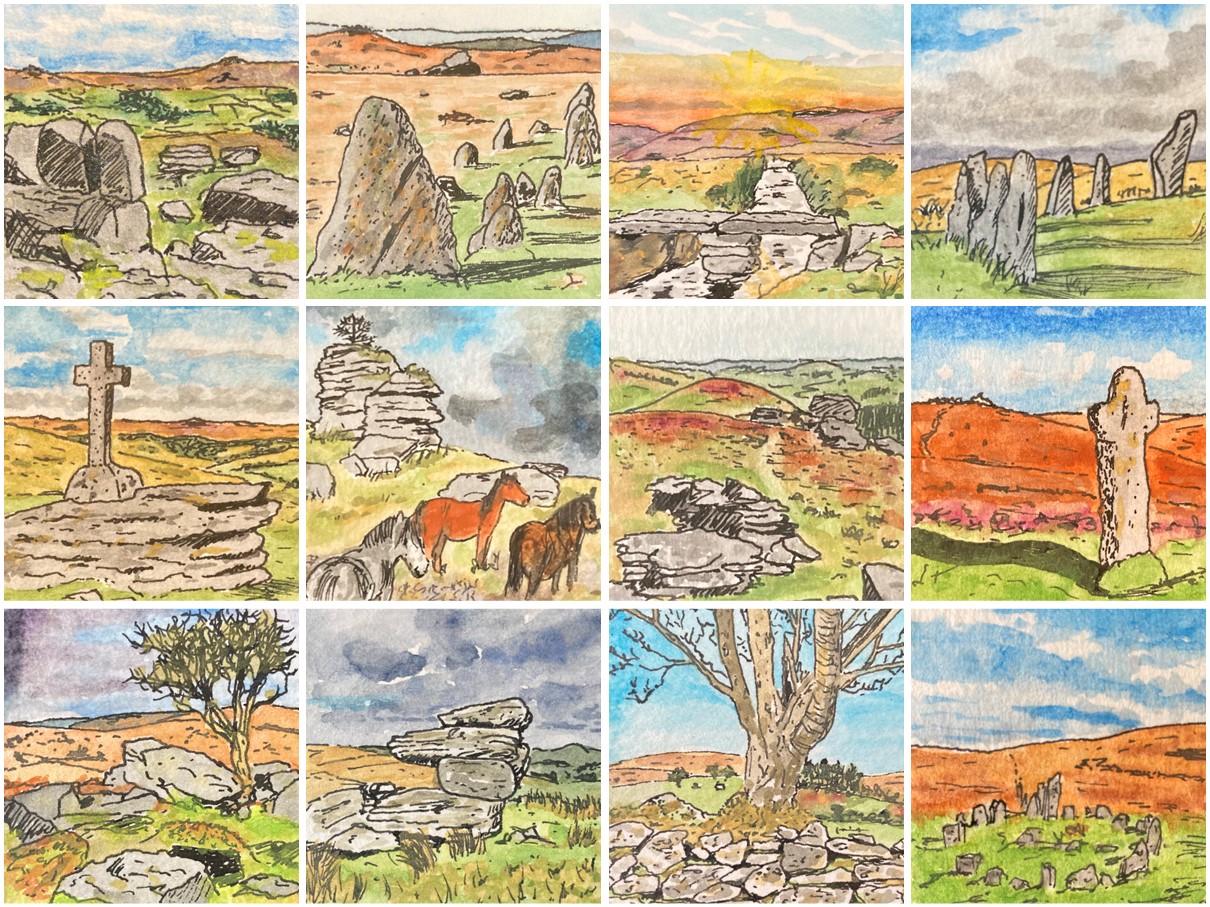
At the beginning of last month (March 2025) I decided that I wanted to try to embed a more regular art practice into my life. So, one evening, I sliced a piece of watercolour paper into a series of 5 cm squares with the intention of painting some kind of miniature picture each morning. I didn’t know what I would paint, just that I would try to paint something, as often as I could.

It was interesting, then, to wake up the next day and find myself sitting down at my painting table at 7:30 am, before I had even eaten breakfast, painting a little scene of a tor and some scattered rocks, a scene that is typical of Dartmoor, the National Park just north of Plymouth where I live. Because I was working on such a small piece of paper, and because I was trying to work quickly, before I got fully enmeshed in the day’s activities, I found myself adopting a simpler style than usual, with fewer, and bolder, colours and some use of cross-hatching to show shadows and darker areas. I liked what emerged.

After that first painting (the one at the top-left of the composite picture at the top of this post) I still didn’t know what would happen next, but at some point, perhaps after two or three days, I came to realise that I was creating a series of miniature pictures that I labelled Dartmoor Scenes. Initially, it was my intention to paint five pictures, one on each weekday, but having successfully reached that number I decided to push on to nine. This seemed to me to be a good number for a series of little square pictures, neatly forming a 3 x 3 grid.

As I approached what I thought would be the final picture, I received a comment on my Bluesky (social media) account on which where I was posting my new picture each day, suggesting that the pictures would make a nice calendar. It was an idea that I liked, a lot, but of course a calendar needs 12 pictures, one for each month… and so my miniature watercolour Dartmoor Scenes series had to become a collection of 12 pictures in total.

I really enjoyed producing these little pictures (and have since gone on to produce two more sets of 12 similarly-sized pictures on different themes – watch this space for details!). I enjoyed being forced to keep things simple and was really happy with the results (more in some cases than in others). I particularly like the stone row and stone circle pictures on the top row (second-left and top-right), and the tree and wall scene (third-left, bottom row). I also really like the way that they look when placed together.

Although it was already almost the end of March by the time I received it, I got a desk calendar printed up as a kind of test run to see how well it worked… and it worked very well indeed, the pictures coping with being expanded to almost double their original size. Subsequently, I have also had each picture printed as a 10 cm square card and had some copies of a larger card printed with a 3 x 3 composite of the nine pictures that I think are the best of the selection. At some point I hope to get more of these cards printed so that I can have a go at trying to sell some of my artwork. It will be interesting to see what happens if and when I do!

As an experiment in trying to be more regular with my artistic endeavours, this activity has worked really well, and although I have now moved on from Dartmoor Scenes, I suspect that I will return to this theme again at some point and complete another set (at least another four to get to a 4 x 4 grid, but who knows, maybe I have another 13, 24 or even 37 Dartmoor Scenes still in me!)

If you like these pictures, I’d love it if you added a quick comment to this post. It would be fun to know which one(s) you like best.

The Royal Oak and a view between Meavy and Burrator #art

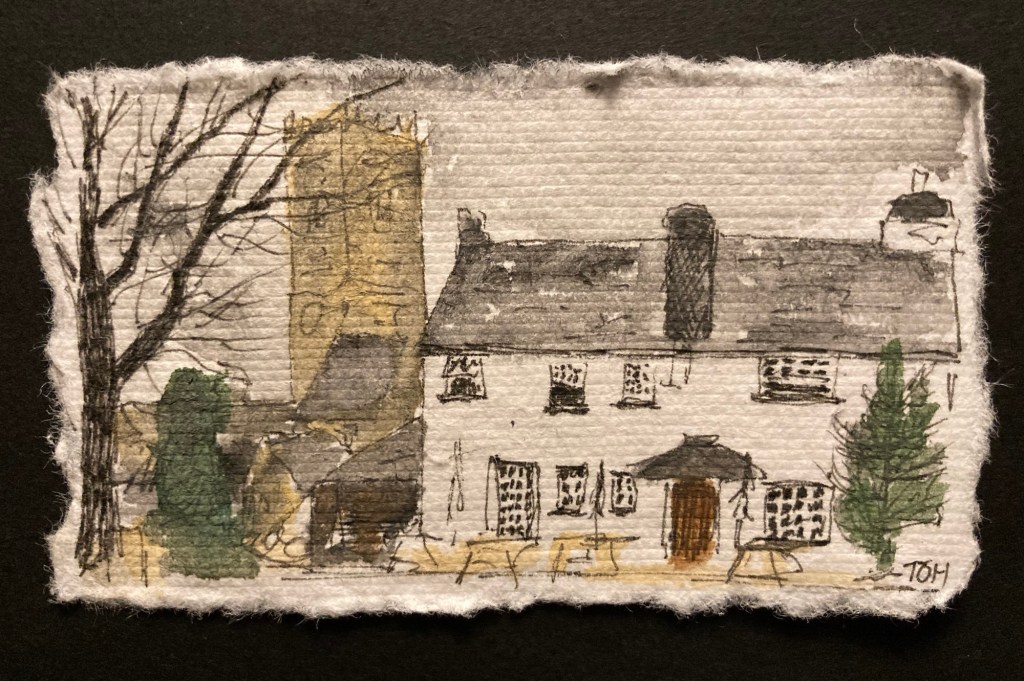
The Royal Oak, Meavy

Today I have been suffering from a horrible fluey-cold which has left me feeling unable to do very much – a somewhat frustrating occurrence given that it is Sunday. But one positive of being forced into relative inactivity by illness is that as well as being unable to do very much I also don’t feel that I need to do anything very much and as a result I was able to sit down for an hour or so just now to do a little painting. At the outset it was my intention to do one quick miniature watercolour landscape and after a quick look in the photo library on my phone I decided that The Royal Oak pub in Meavy about 10 miles from here on the edge of Dartmoor would be my subject. The photo I based the picture on was one taken at end end of last month on the last proper walk that we have done (see: Out and About Again At Last) – it shows the pub closed and on a rather dull day so perhaps it was not the most inspiring choice. Nevertheless, I am still quite pleased with how it came out and that I managed not to over complicate it.

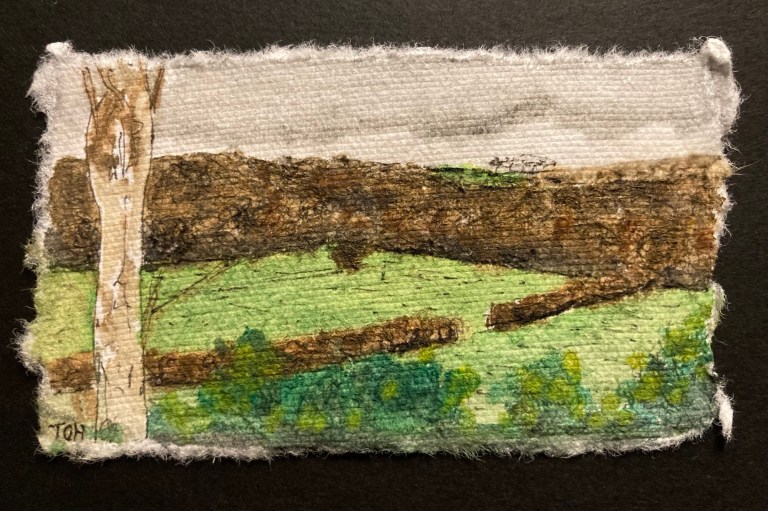
Having completed this picture I was still in the mood for creating art and so I switched my focus to another photo taken on the same day showing a view from the woodland path between Meavy and Burrator…

View from path between Meavy and Burrator

I’m reasonably happy with this second picture. I think the Silver Birch tree on the left has come out fairly well and I like the clump of trees on the horizon but I don’t think I have fully captured the texture of the leafless trees in the middle ground or the spires of gorse in the foreground. Despite its faults, I think I have captured the general impression reasonably well and I’m also pleased to have got in a bit more practice in quickly producing this kind of miniature landscape picture. I’m thinking about trying to produce pictures of this type more often (‘dailyish’ if I can) and I may have a go at seeing whether they might sell for a few pounds somewhere one day.

Out and About Again At Last #other

Four months ago, at the end of August 2024 I managed to do some damage to my left Medial Collateral Ligament while completing long runs. I think I did the injury earlier that month while running the second half of the West Devon Way from Peter Tavy to Okehampton but then I compounded things by attempting to complete my leg of the King Charles III Coastal Challenge, or at least a good chunk of it from Par Beach to Looe, a couple of weeks later. By the end of that run, over typically up-and-down Cornish coastal path terrain I could hardly walk and ever since then I have been trying to nurse it back to strength with the help of some visits to a Sports Therapist and, more recently, a Physiotherapist. But although the area where the MCL itself attaches to the top of my calf muscle has gradually become less sore, I have not been able to get my leg back to normal and pain-free – it now has a tendency to feel somewhat unstable and ‘clicky’ and is very sore most of the time and especially after I have spent any time sitting down. It has been very frustrating, not only preventing me from doing any running (apart from an 0.6 mile test run in mid-December) but it has also meant that I have cut back on walking and certainly not gone for any proper walks our and about on Dartmoor or at the coast.

Consequently, it was with a lot of joy that we took ourselves up onto the edge of Dartmoor yesterday morning for a short loop walk from the village of Meavy over to Burrator Reservoir and then back along the line of the old railway before dropping back to our starting point. The walk, 2.6 miles in total, is one that we have done multiple times before and gives a nice mix of terrain and some good views across the valley and the reservoir.

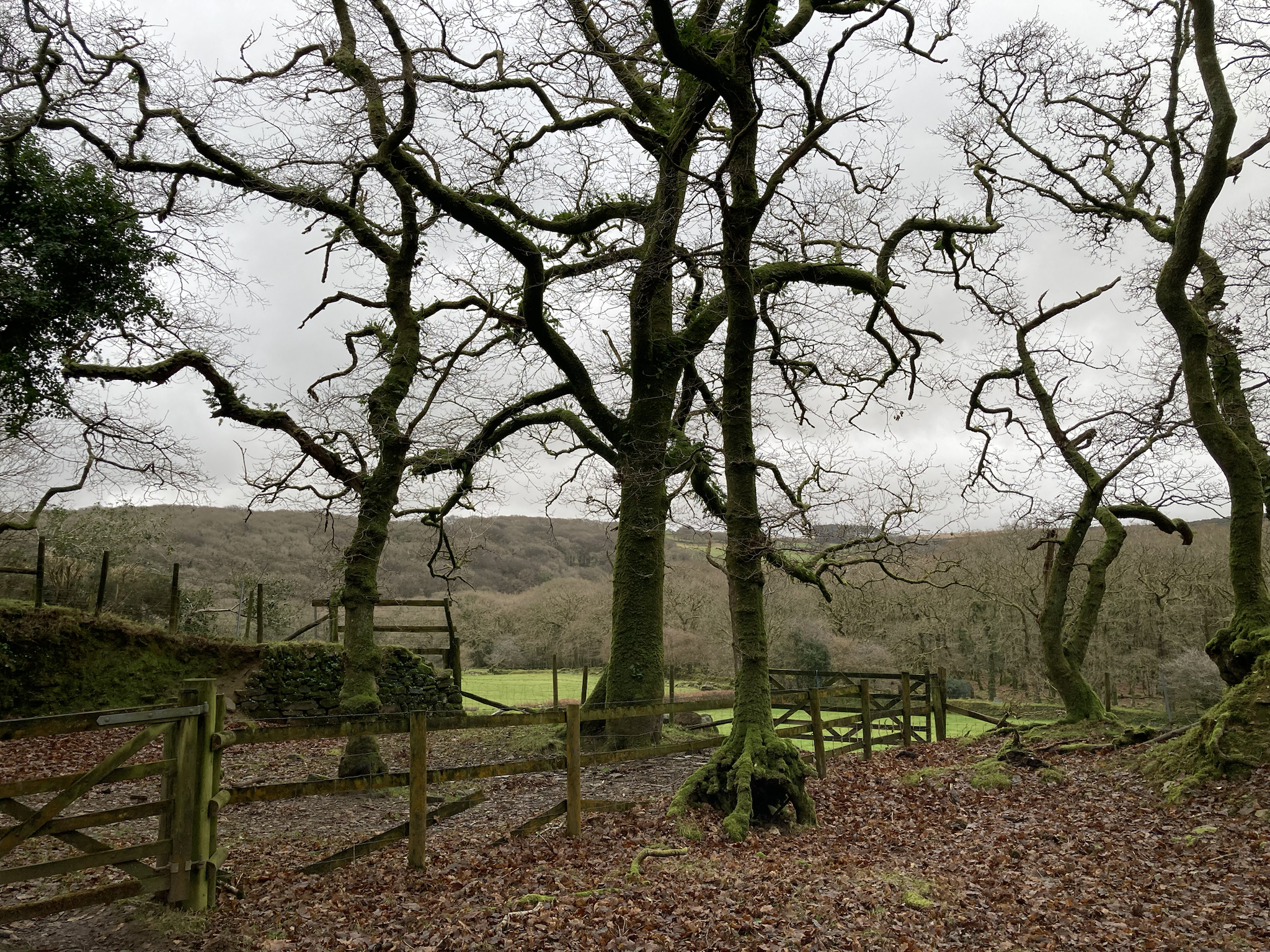
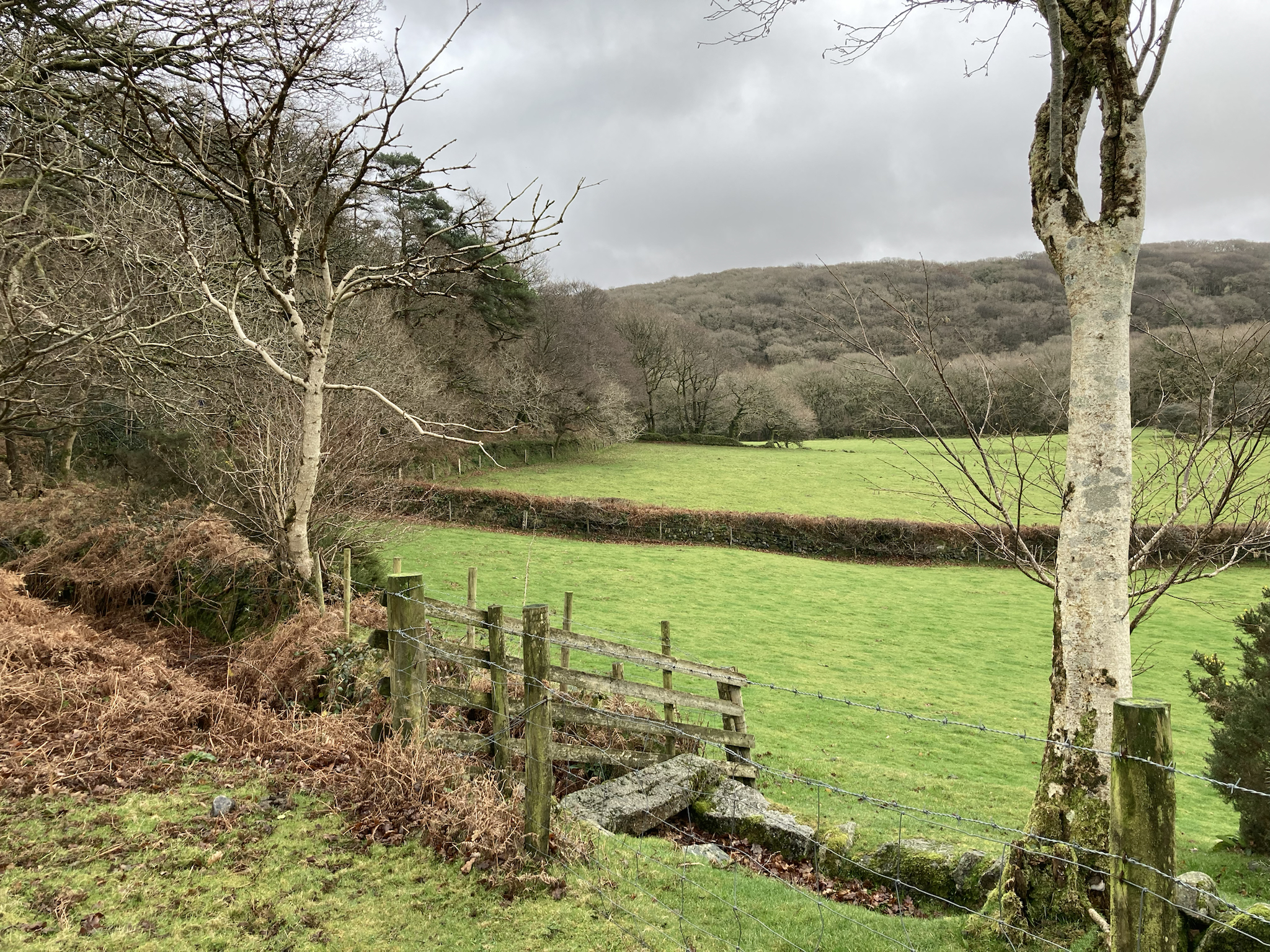
I particularly like the first section of the walk across some fields into a wooded area…

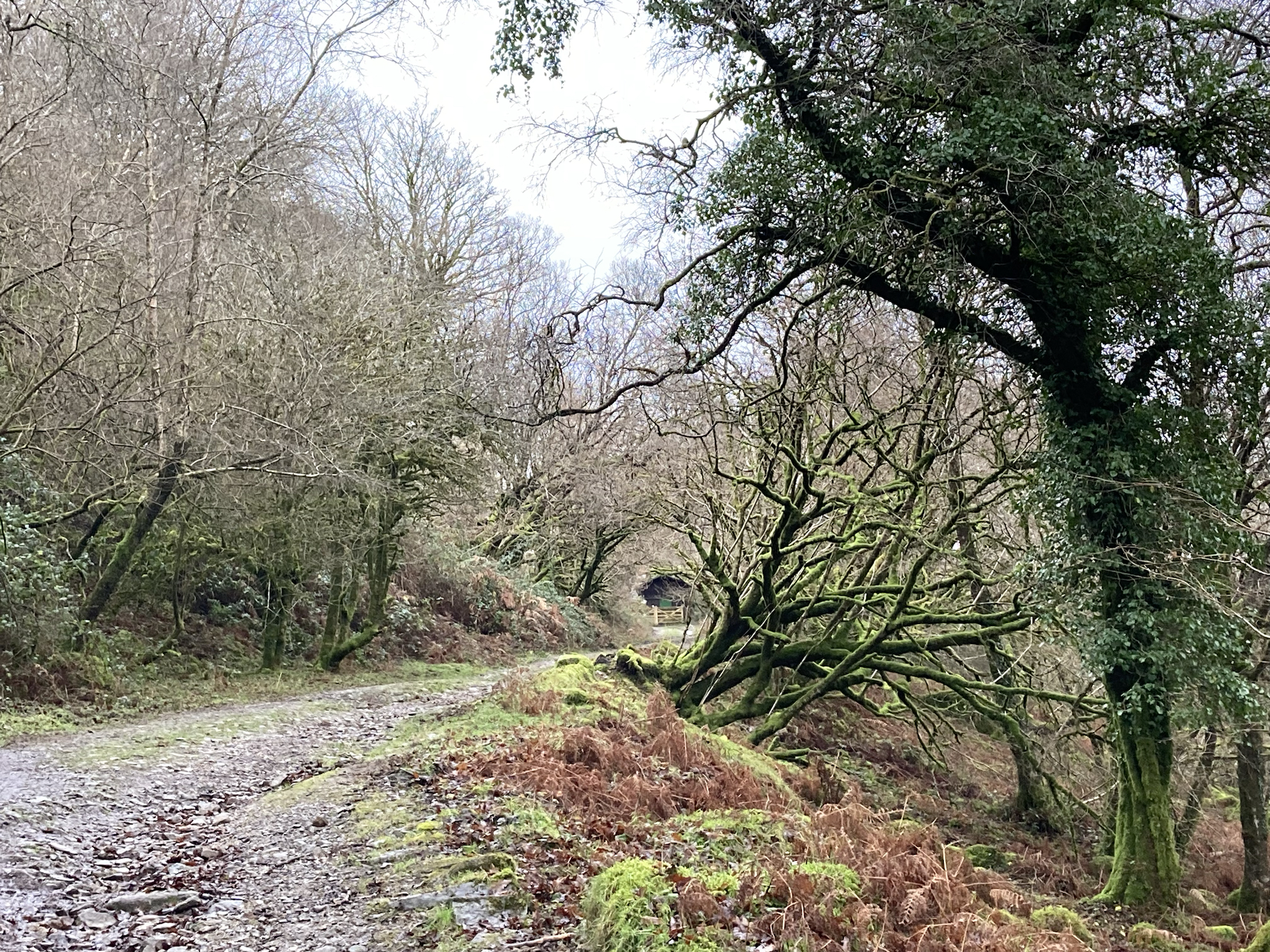
… after which the path climbs up towards the road at Burrator Reservoir …

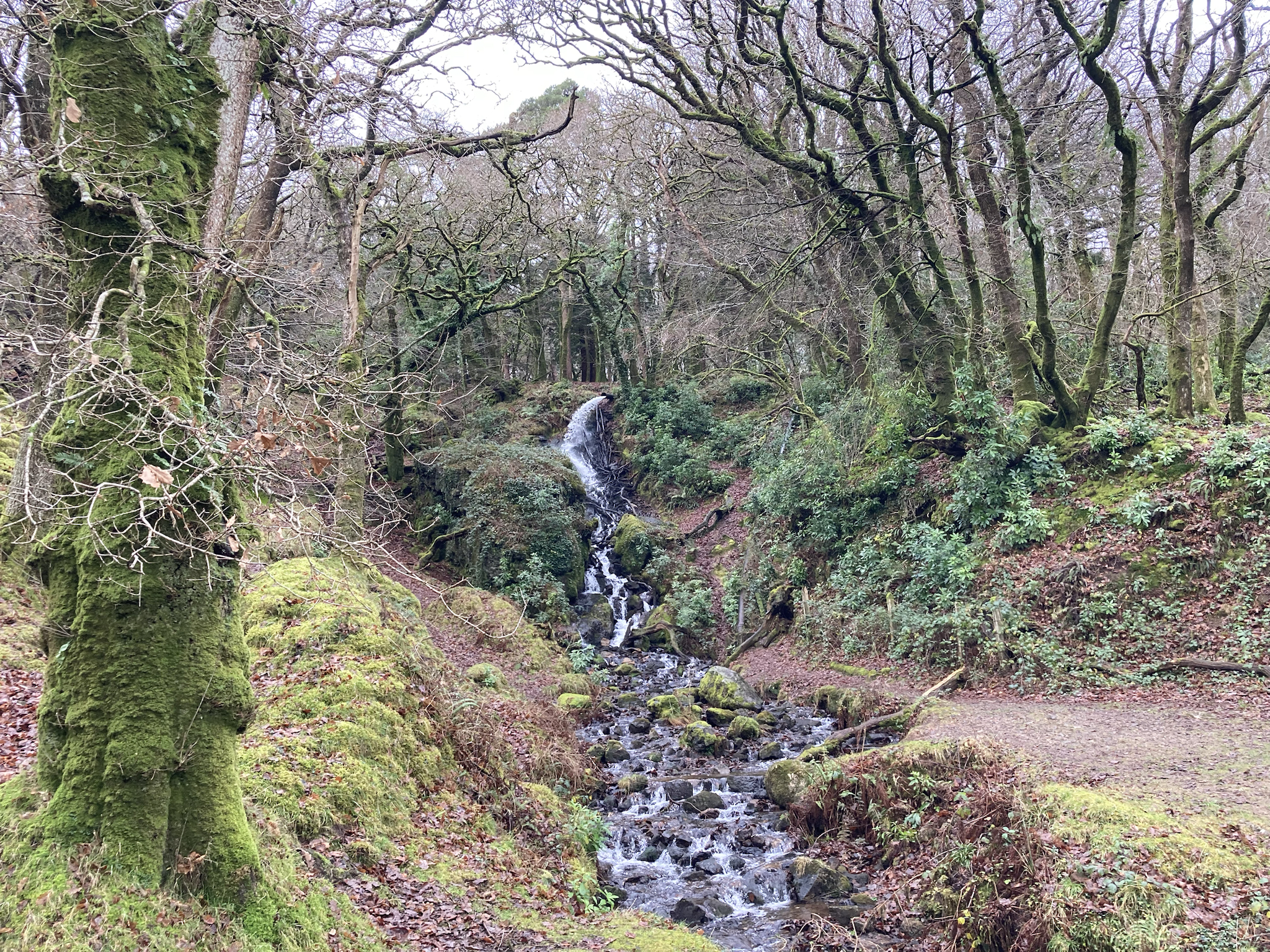
After joining the road, we proceeded along it, above the reservoir, until reaching a small waterfall at which point we turned back to join the old railway line back towards Dousland …

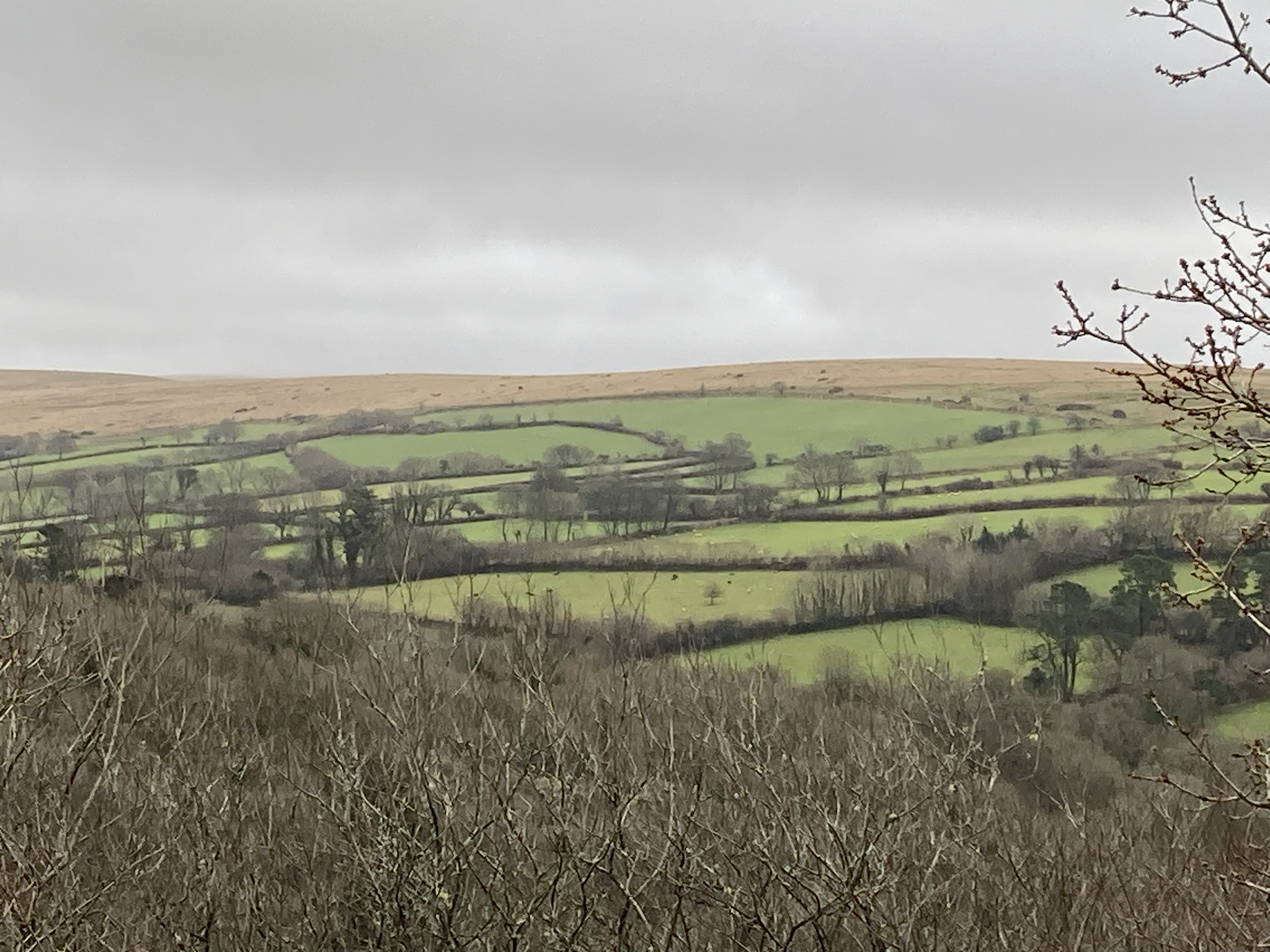
The return section is more open with views south across the valley …

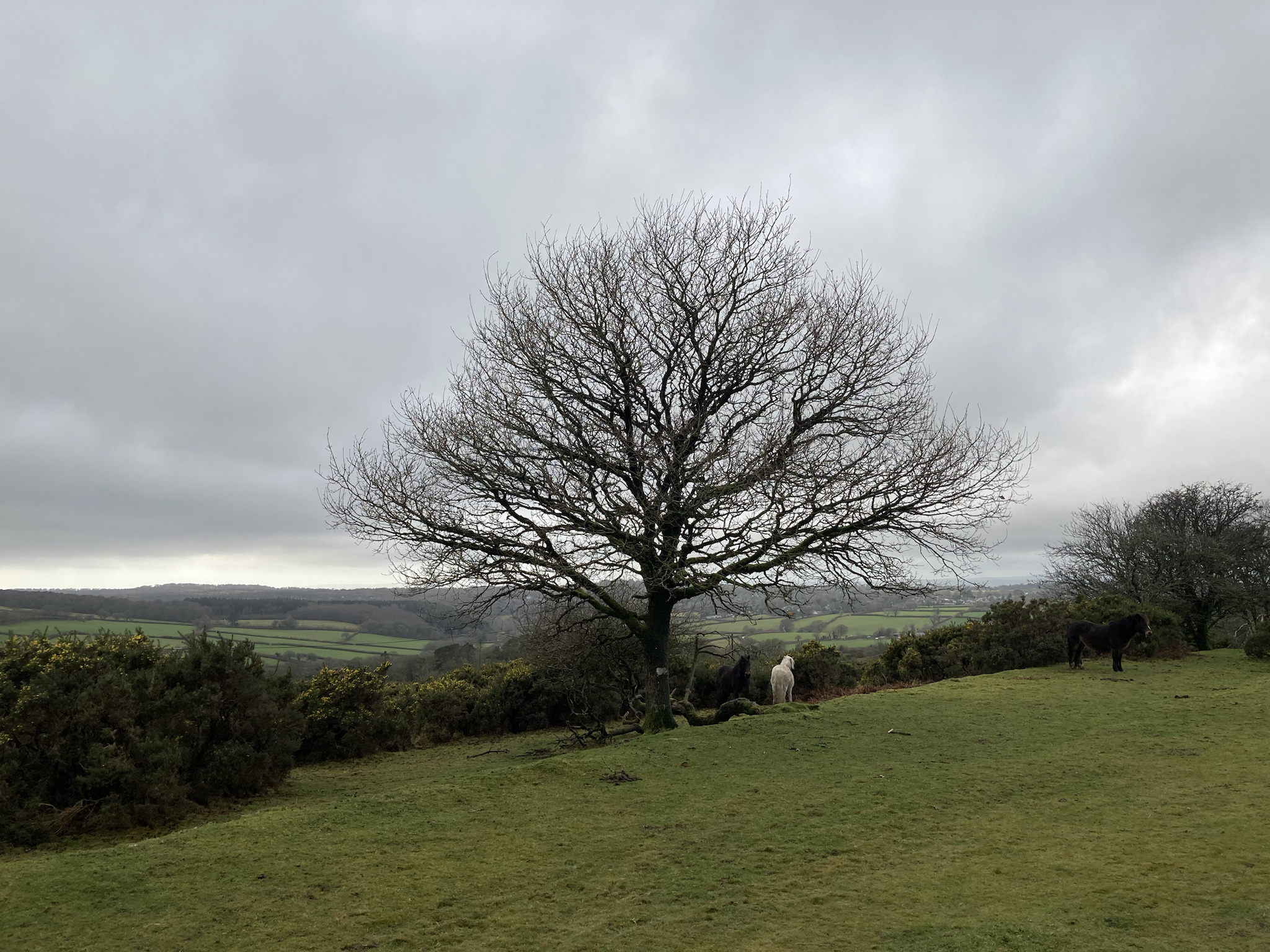
I always like views that have a mix of farmland and wilder moorland. Towards the end of the walk I also got to see another favourite sight, a fairly symmetrically-shaped tree, or what I now refer to as a symmetree!

Although the weather was not great, with cloudy and grey skies, there was no rain and it was just so good to get out and about, to be breathing fresh air, to be unconstrained by walls and to be immersed in nature again.

One day on, I am pleased to report that although my leg does feel somewhat sore, it does not feel any worse than on any other day and so hopefully it will now be possible to start to introduce a bit more proper walking back into life.

Stone Circle, Dartmoor #art

Back in April I decided I would like to have a go at sketching and painting. I have often thought about trying to do watercolour painting but my natural tendency towards perfectionism and my inability to carve out time for such activities has always put paid to those ideas. Back in Primary School – 50 or so years ago – I was quite into drawing and painting (without any particular flair) but in the intervening years I have hardly picked up a sketching pen or paint set. So, it was a bit of an impulse decision when I decided to work my way through a free video course on drawing and painting with ‘loose lines’ earlier this year. The course consisted of ten short videos that gave prompts to follow and, importantly, encouraged imperfection and embracing of mistakes (one of the practice tasks included instructions to deliberately make mistakes which I will admit I found hard to follow).

After just a few days of working through the course I was branching out to do more ambitious pieces and soon found myself starting to develop my own style. Since then I have been producing pictures on a fairly regular basis – mostly quick (15-30 minute), small watercolour landscapes and usually with quite a lot of detail put in with black ink. Producing these little works of art has been something I have greatly enjoyed and even though I say it myself the final pieces have been pretty good and certainly much better than I expected them to be given that I have a complete lack of technical training and zero experience to guide me. I just try things out, play and see what happens.

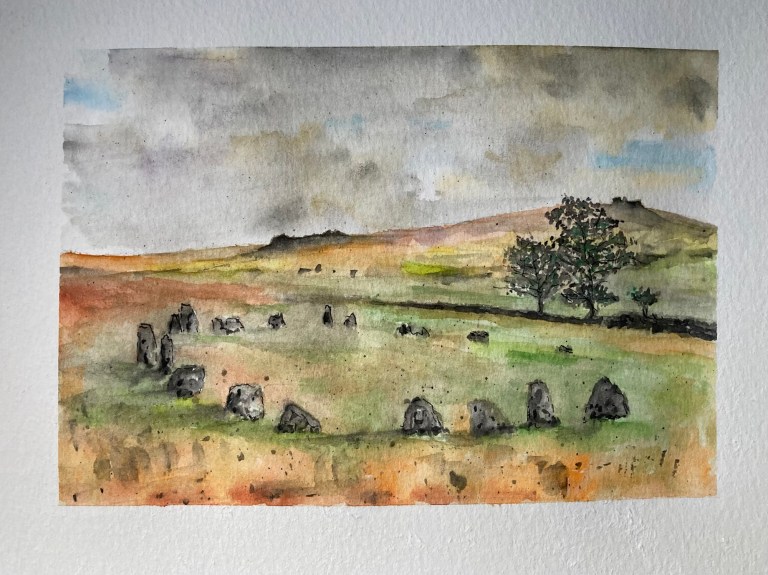
Over the weekend just gone I sat down for half an hour or so and decided I would have a go at producing a watercolour painting without doing what I usually do which is to first draw out the subject in a fair amount of detail in ink and then subsequently add more detail in ink on top of the paint. I have called this a ‘minimal ink’ watercolour (I did put a few small details in after I had completed the painting). I chose a photo of a stone circle on Dartmoor as my subject matter. The result is the picture at the top of this post and it is one that I am really pleased with. I am pleased with the sky as I have captured the colours and cloud shapes better than any sky I have painted previously and I am pleased with the oranges and pinks in the colour of the moorland. Most of all I am pleased that I have extended the range of my art a little more by limiting my use of ink and creating something that is a little less detailed and a little more impressionistic. It is certainly a style that I will have a go at again sometime.

Symmetree

I love trees. I love the way that they seem to produce all of their substance out of nothing; the way that they can hang around for ages while the world changes around them; they way that they are all so different whilst still obviously being trees; the way that they change on all kinds of timescales.

I like taking photographs of trees, particularly ones with a high degree of symmetry where the shape of one side of the tree is the same as the shape of the other side and where the trunk is nice a straight and down the middle. I don’t only like symmetrical trees but I do think I like those ones the best.

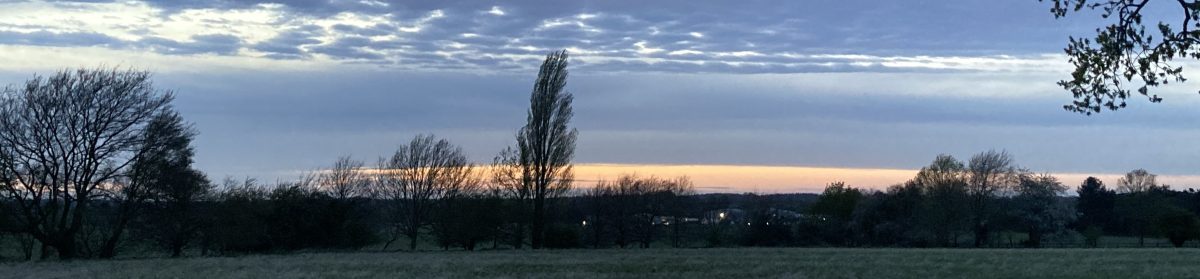
A couple of days ago I was up on Roborough Common (on the south-western edge of Dartmoor). It was my first time properly outside of Plymouth for at least 8 weeks. It was a beautiful sunny and still evening – aren’t they all at the moment? We parked up the car, set out for a stroll and there it was, was one of my favourite symmetrical trees; one that is always hard to walk past without taking a photograph. And so, of course, I did, resulting in a picture that I am particularly proud of.

This isn’t just a symmetrical tree; it’s a Symmetree…