Mistakes Are Not Always Bad #wisdom

A couple of weeks ago we paid a visit to Make Southwest, an exhibition space for contemporary craft and design and a leading charity for craft education located in the small town of Bovey Tracey on the southern edge of Dartmoor, about 25 miles from our home in Plymouth. It’s a venue that we have visited a few times before – there is always some kind of special exhibition (this time it was a exhibition of contemporary bells called Sound and Silence) and an interesting array of local artwork, books and assorted items to look at in the shop. On this occasion, the reason for our trip was to see a smaller exhibition of wood engraved prints and, in particular, the printmaker Molly Lemon, who had travelled down from her base in Gloucestershire to demonstrate her work. We have encountered Molly at several Craft/Art Events in the last couple of years and always enjoyed viewing, and chatting to her, about her work. We also enjoyed seeing her compete in, and reach the semi-finals of, the Sky Arts TV Series Landscape Artist of the Year a few weeks ago.

Since I started painting about a year ago, whenever I go to any kind of art gallery or art/craft event I particularly enjoy scavenging the work that is on display or sale for ideas that I can try out for myself. Looking at the various pieces of artwork for sale in the shop at Make Southwest, I was particularly enamoured by some tiny pieces of work created by the printmaker Mike Tingle (also here). These were very small (just a few centimetre) square prints on slightly larger squares of rough-edged paper, with a title and the artist’s name written in pencil around the picture (there is an example of a similar kind of picture just below the centre in this piece of work: Dartmoor Box No 1). I really liked the miniature size and somewhat ‘rough’ nature of the pieces and I immediately thought that it would be fun to try to produce something similar using one of my own small Dartmoor Scenes watercolour paintings.

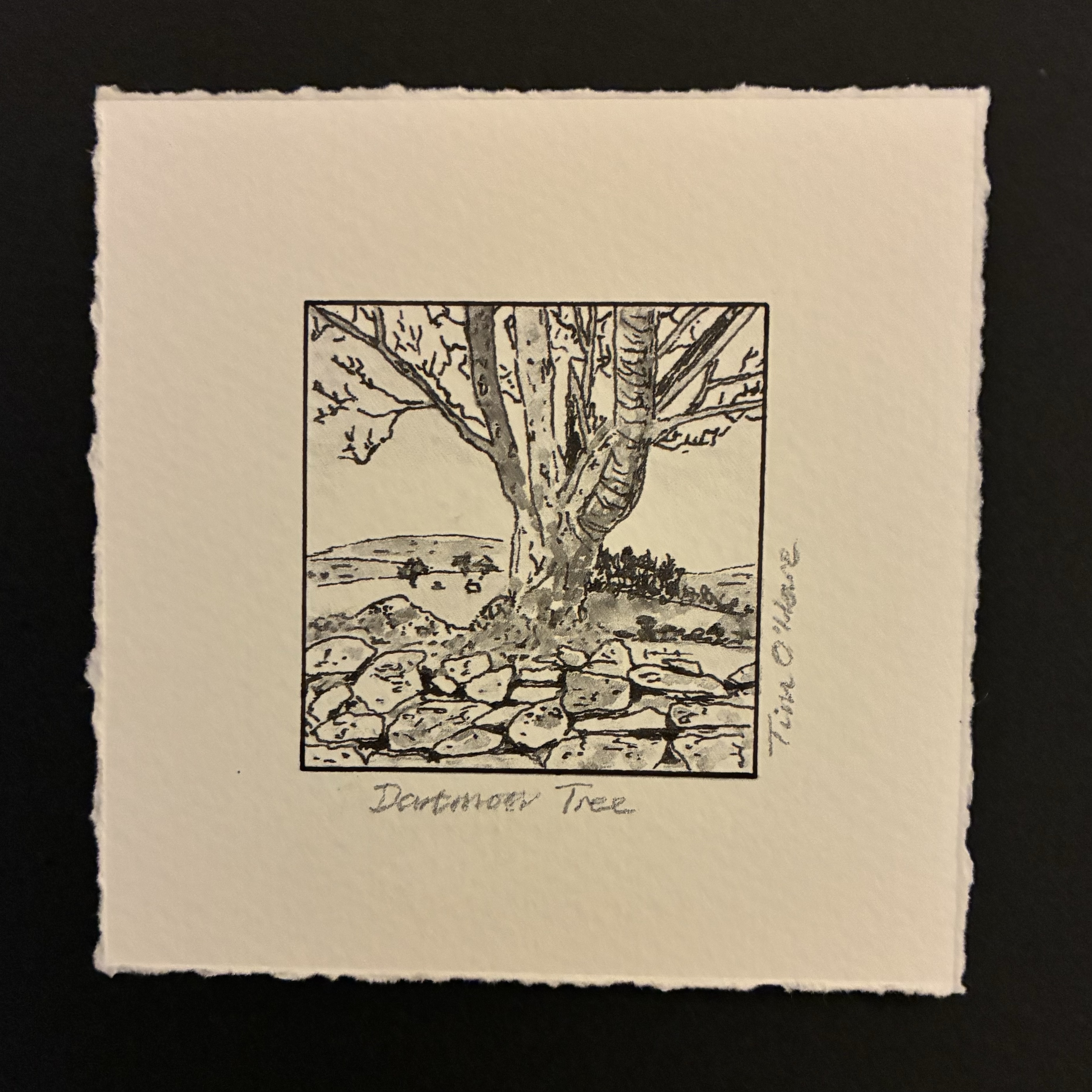
After returning home, I set about seeing what I could produce. First, I selected one of my pictures, opting for this one of a tree growing out of a typical Dartmoor dry-stone wall:
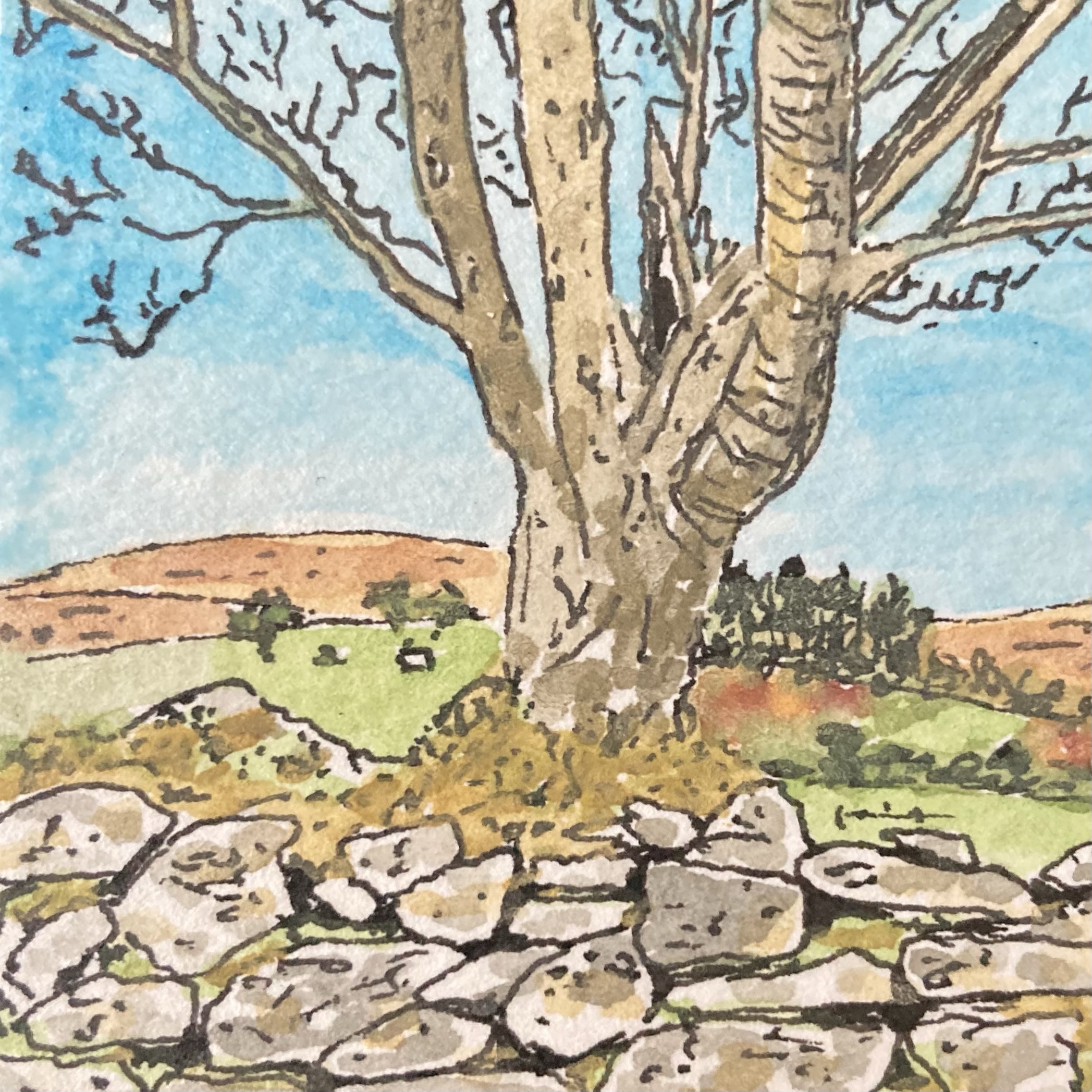
The original picture is a 4.5 cm square ink and watercolour sketch, and my intention was to use our home inkjet printer to make the best quality colour photocopy of it that I could, printing onto a sheet of watercolour paper so that the texture of the original was preserved. I’d already played around with making copies of some of my paintings in this way and so I knew that although the copied versions weren’t quite the same as the originals, with the paler colours tending to wash-out a bit, the process worked pretty well. So far so good.

This is the point at which I made my mistake. In the process of making the copy I somehow selected black-and-white printing, and so when I saw what the printer had spat out into the print tray I was instantly annoyed and frustrated. To make matters worse, because the original picture was on a small square of fairly thick paper, as the scanning light moved below the copier glass a dark shadow line was cast on one side of the copied picture. Not only did I only have a black-and-white copy, but I had a black-and-white copy that had a dark line along one of its edges. What a waste of a sheet of paper and ink…

However, once I had overcome my initial disappointment and self-censure, I decided to press on with the rest of my production process and see what the end result looked like. I had intended that there would be no border between the picture and the surrounding area of paper, but now there was that dark line along one side spoiling that design idea. What could I do? Well, go with the mistake of course. I took my drawing pen and with the aid of a straight edge and a lot of care, I inked in a similar line on the other three sides. Hmmm… it didn’t look as I had planned but I liked the result. Then I measured out a wider border, and again aided by a straight edge, I tore the paper down to size. This part of the process is something that I have found takes a lot of care… if the tear is too sharp you don’t get the nice rough edge I was after, but if you are at all rushed and loose you end up with something that looks clumsy and careless. Fortunately, I managed to do a good job. Finally, I grabbed a soft pencil and quickly wrote a title below the bottom edge and my name on the right-hand side…

The result of this endeavour was the small picture shown at the top of this post and, despite my black-and-white and shadow mistakes in the copying process, I’m really pleased with the end result, so much so, in fact, that I intend to take the rest of my Dartmoor Scenes pictures and treat them in the same fashion. Even better, not only did I end up with a new picture that I really liked and the discovery of a new way to transform existing pictures into a different, somewhat distinctive, form, but I also gave myself a great reminder that making mistakes in life is not always a bad thing. In fact, sometimes, as in this case, a mistake can open up a different path from the one that was intended that leads you towards an unexpected but interesting, exciting or enjoyable destination!
House Plants #art

I thoroughly enjoyed completing my recent series of mini-watercolour landscapes of Dartmoor Scenes, and in the process I found that I had managed to insert a short burst of art practice into my daily(ish) routine. Consequently, it wasn’t a surprise that I found myself wanting to continue painting mini-pictures each morning. The only question was: What should I paint next?

The answer – well the first answer at least – turned out to be house plants. This might seem like a somewhat strange choice, especially as the vast majority of the pictures I have painted in the last year have been location-based: buildings or landscapes of one sort or another. But in fact, house plants are a subject that I have painted before.

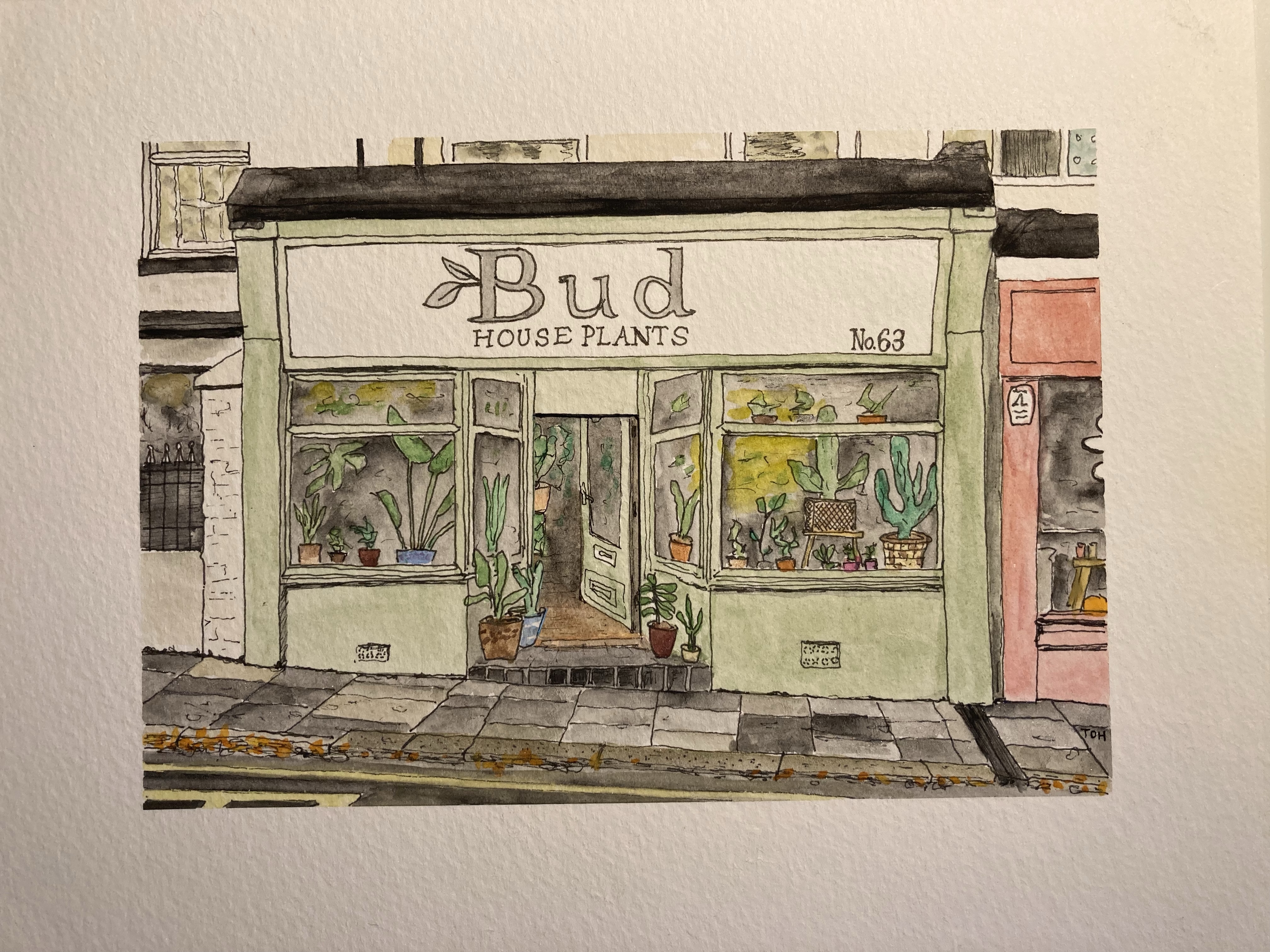
My initial foray into painting house plants stemmed from a ‘location’ painting that I did back in November as a birthday present for a family friend who just happens to run a wonderful plant shop in Plymouth. The picture I produced was much appreciated and has subsequently been professionally framed and put on display…

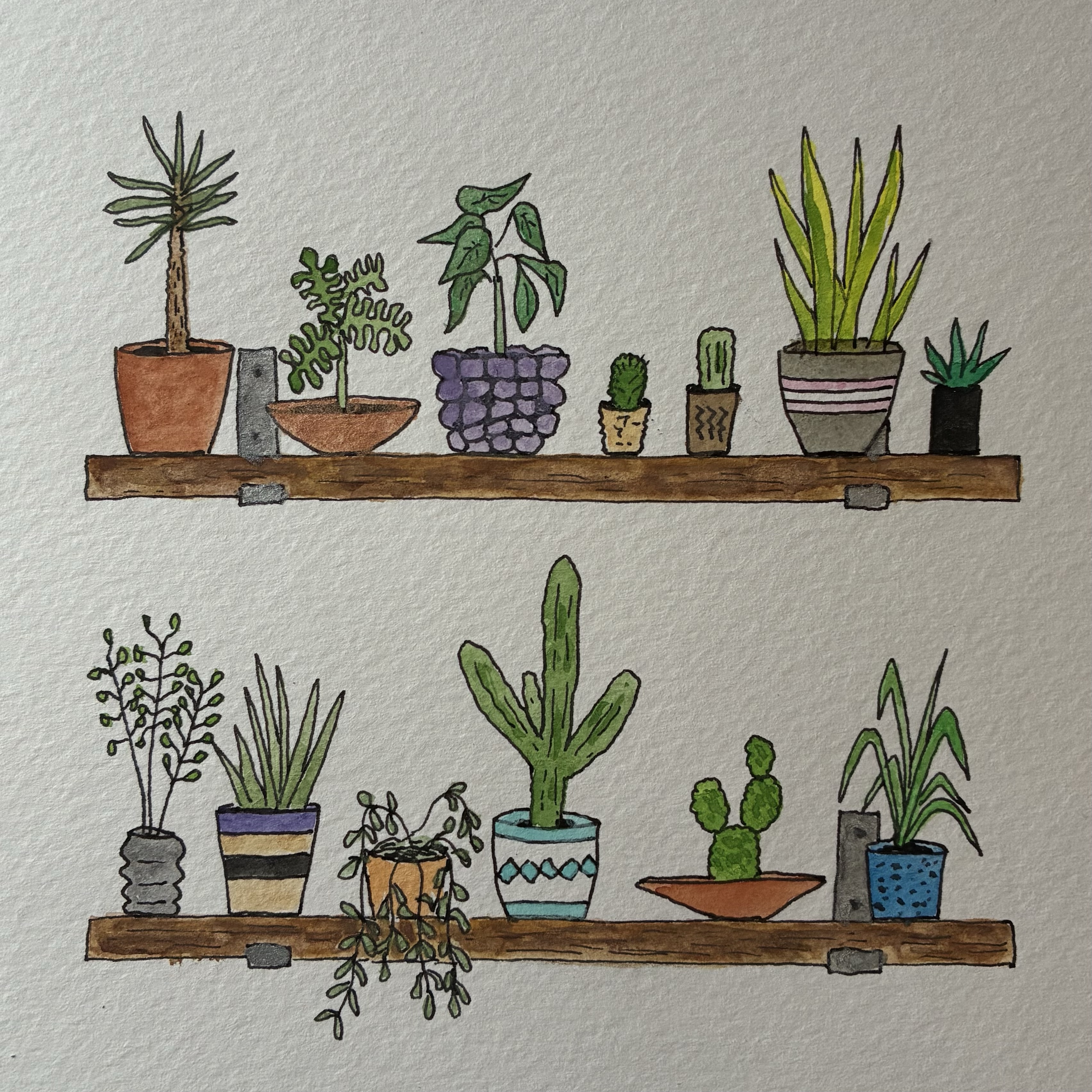
When I was painting this picture I really enjoyed painting the various plants with their different forms and pots, and so a few weeks afterwards I did a quick painting showing an assortment of plants in a suitably varied set of pots on a couple of wooden shelves (based on some nice chunky wooden ones that we had just put up in our kitchen!).

The next time we paid a visit to the shop it was suggested that I might produce some house plant greetings cards and have them for sale alongside some others (quite different) produced by a couple of local artists that were already on sale in the shop. Unfortunately, when painting my original picture I had not thought about placement of the design, and with some of the painted areas reaching almost to the edge of the paper it was not easy to use it for a printed card without risking some fairly crude surgery to some of the plants on the top shelf! However, that conversation sowed the seed of the idea in my mind, and so when I was considering where to go next with my mini-paintings, house plants were an obvious choice.

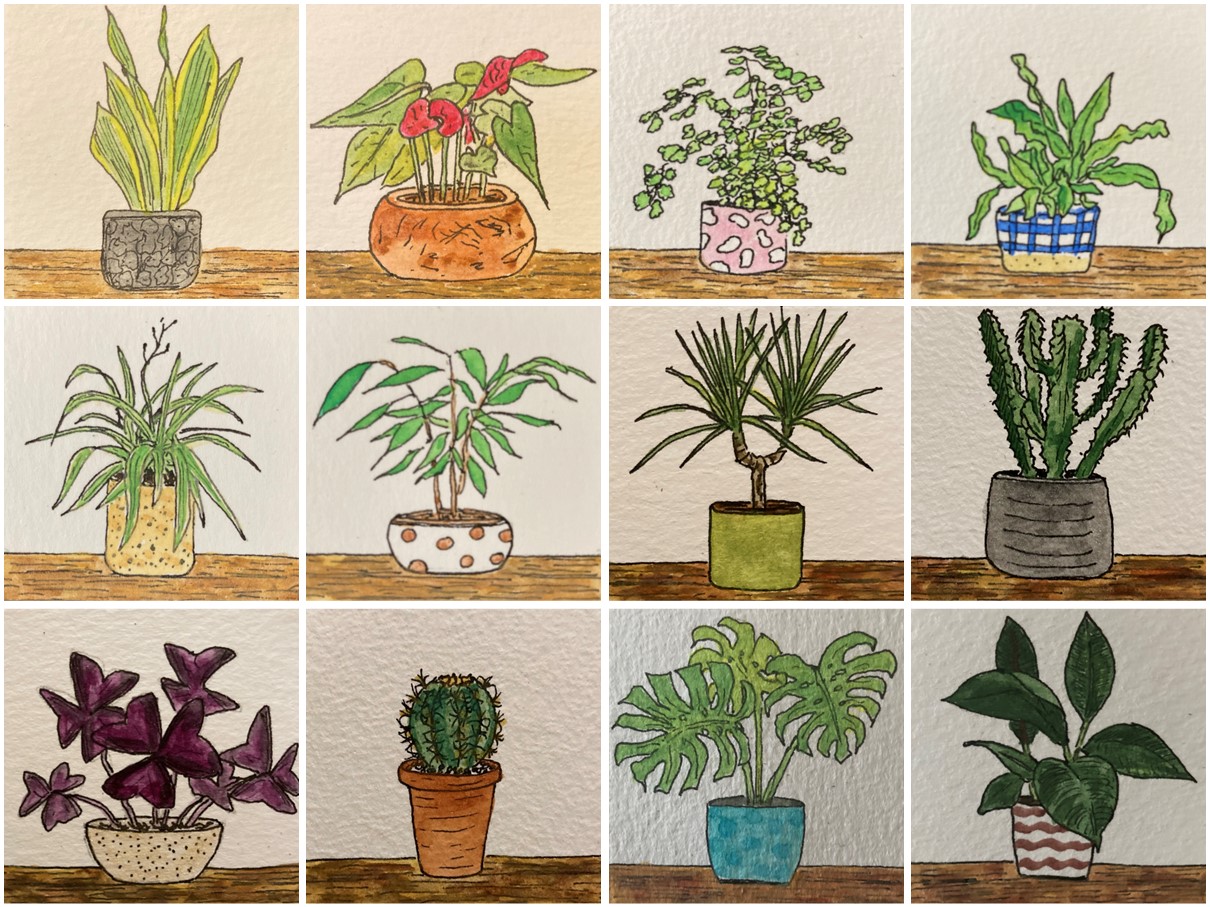
The result was the set of 12 mini-pictures of individual house plants which I have put together into the composite picture at the top of this post. Like my Dartmoor Scenes pictures, these are 5 cm squares, and I have also had a sample greetings card printed from each individual picture and a 3 x 3 composite of a selection of the pictures. These printed version all worked nicely despite being enlarged to almost double their original size, and I will probably pursue trying to sell these in some format in the future. But whilst I loved painting the mini-pictures of individual plants, and really liked the composite pictures too, I did feel that the original picture, with an assortment of plants on shelves was the best of all. The plants are obviously the star players, but those chunky wooden shelves play an important supporting role.

To bring things right up to date, a couple of days ago I sat down and painted a second version of my ‘house plants on shelves’ picture, and this time I made sure that I positioned the painting in the middle of a larger piece of watercolour paper so that I could subsequently crop the picture without fear of pruning the plants! I’m pleased with the result (see below), and I can now go ahead and get some copies printed ready for sale.

Obviously, I’m not expecting to make a fortune from this activity, but I do think it will be fascinating to see whether my picture is able to catch the eyes of any customers enough to persuade them to part with a few pounds of their hard-earned cash…

Dartmoor Scenes #art

At the beginning of last month (March 2025) I decided that I wanted to try to embed a more regular art practice into my life. So, one evening, I sliced a piece of watercolour paper into a series of 5 cm squares with the intention of painting some kind of miniature picture each morning. I didn’t know what I would paint, just that I would try to paint something, as often as I could.

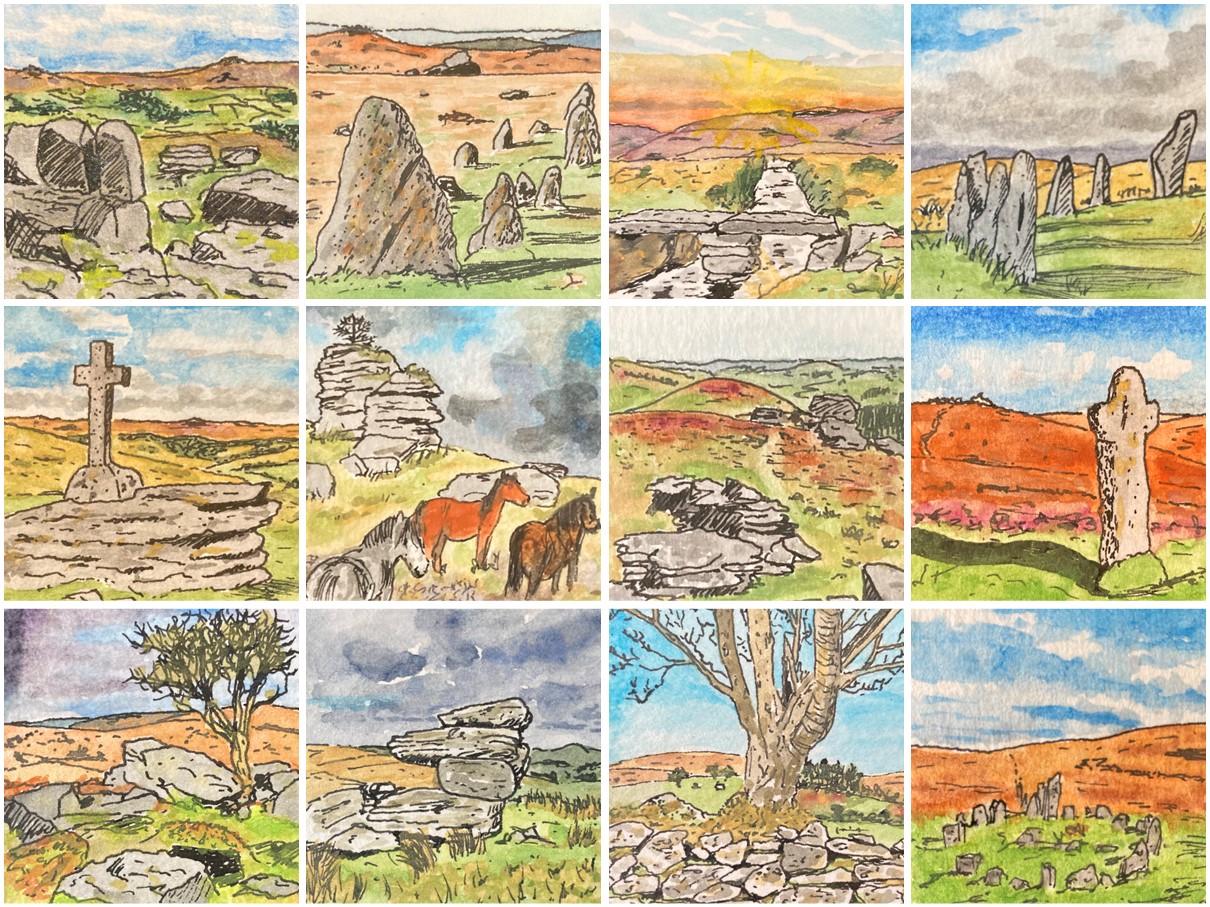
It was interesting, then, to wake up the next day and find myself sitting down at my painting table at 7:30 am, before I had even eaten breakfast, painting a little scene of a tor and some scattered rocks, a scene that is typical of Dartmoor, the National Park just north of Plymouth where I live. Because I was working on such a small piece of paper, and because I was trying to work quickly, before I got fully enmeshed in the day’s activities, I found myself adopting a simpler style than usual, with fewer, and bolder, colours and some use of cross-hatching to show shadows and darker areas. I liked what emerged.

After that first painting (the one at the top-left of the composite picture at the top of this post) I still didn’t know what would happen next, but at some point, perhaps after two or three days, I came to realise that I was creating a series of miniature pictures that I labelled Dartmoor Scenes. Initially, it was my intention to paint five pictures, one on each weekday, but having successfully reached that number I decided to push on to nine. This seemed to me to be a good number for a series of little square pictures, neatly forming a 3 x 3 grid.

As I approached what I thought would be the final picture, I received a comment on my Bluesky (social media) account on which where I was posting my new picture each day, suggesting that the pictures would make a nice calendar. It was an idea that I liked, a lot, but of course a calendar needs 12 pictures, one for each month… and so my miniature watercolour Dartmoor Scenes series had to become a collection of 12 pictures in total.

I really enjoyed producing these little pictures (and have since gone on to produce two more sets of 12 similarly-sized pictures on different themes – watch this space for details!). I enjoyed being forced to keep things simple and was really happy with the results (more in some cases than in others). I particularly like the stone row and stone circle pictures on the top row (second-left and top-right), and the tree and wall scene (third-left, bottom row). I also really like the way that they look when placed together.

Although it was already almost the end of March by the time I received it, I got a desk calendar printed up as a kind of test run to see how well it worked… and it worked very well indeed, the pictures coping with being expanded to almost double their original size. Subsequently, I have also had each picture printed as a 10 cm square card and had some copies of a larger card printed with a 3 x 3 composite of the nine pictures that I think are the best of the selection. At some point I hope to get more of these cards printed so that I can have a go at trying to sell some of my artwork. It will be interesting to see what happens if and when I do!

As an experiment in trying to be more regular with my artistic endeavours, this activity has worked really well, and although I have now moved on from Dartmoor Scenes, I suspect that I will return to this theme again at some point and complete another set (at least another four to get to a 4 x 4 grid, but who knows, maybe I have another 13, 24 or even 37 Dartmoor Scenes still in me!)

If you like these pictures, I’d love it if you added a quick comment to this post. It would be fun to know which one(s) you like best.

Ronda, Spain #art

As I noted in another recent ‘art’ post (Home Park, Plymouth Argyle), it seems to have become a ‘thing’ that I create handmade cards for birthdays and special occasions associated with family and friends. For these cards, I generally paint a small watercolour picture of a scene that has a special connection to the person or event being celebrated or one that just shows a place that they really like. I usually use some small (roughly 10cm x 15cm) rough-edged raggy paper, for the painting and then I tape this to a simple brown card. This gives an interesting and attractive, rather rustic, feel to the cards which I think is appropriate given their handmade nature.

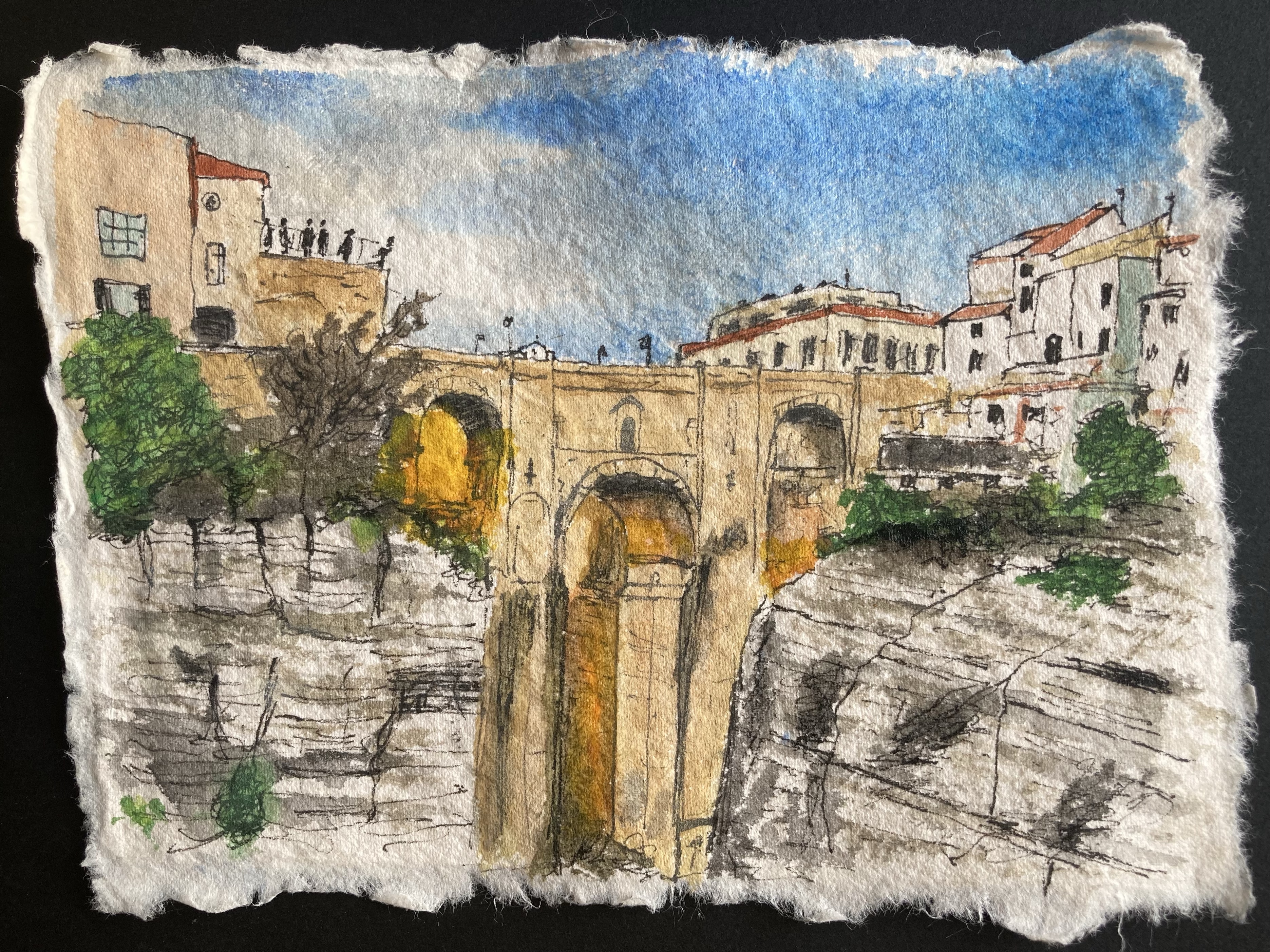
I painted the picture above, of Ronda in southern Spain, at the start of last month to use on a birthday card for my elder daughter’s husband. They travelled to Ronda to attend the wedding of one of my her workmates just a month or two before their own wedding last June and he liked it so much that my daughter was quick to suggest it as the subject for his card. To be completely honest, the other alternative was for me to try to paint a picture of Stamford Bridge, home to Chelsea F.C. (his team sadly) and apart from me not wanting to have to paint a scene that had lots of people in it, it was quite difficult to find a suitable picture to base a painting on. So, Ronda it was…

Funnily enough, despite being an incredibly scenic and much photographed location, with its deep gorge and steep cliff faces, Ronda was also a difficult subject to find a suitable picture to recreate as a painting. Most of the photographs of the town that I could find online were either taken from a distant vantage point designed to show the full majesty of the cliff-top location (which then made all of the interesting details of the buildings etc. shrink to an unworkable size) or were focused on a single ornate building or just the bridge that spans the gorge (and so did not really capture anything about the setting). In the end I opted for this shot of the bridge with a decent chunk of the cliff faces visible and some suitably Spanish-looking buildings. I tried to capture some of the drama in the scene as the setting sun creates its own lightshow between the pillars of the bridge. The picture/card was certainly appreciated, so I can’t have done too bad of job!

Miniature Creatures #art

A few weeks ago I started a new practice of spending a few minutes each morning producing a quick piece of artwork.


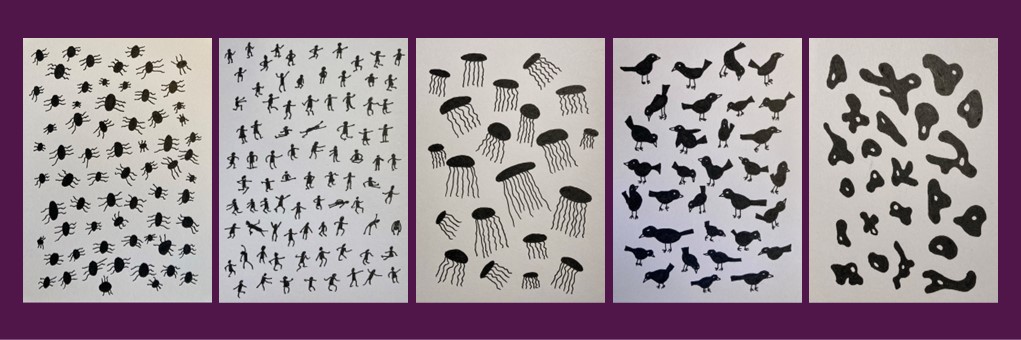
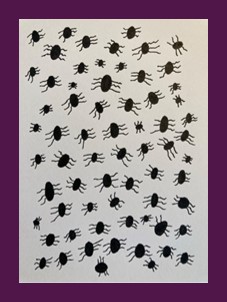
Without really thinking about what I was doing I grabbed a small sketchpad and in ink pen and starting doodling little bugs, eventually covering the page with an assortment of bugs all slightly different sizes, with different leg lengths and scurrying in different directions.


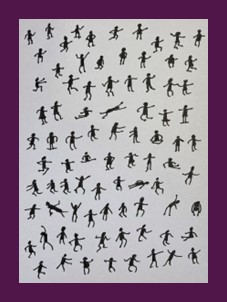
The next day, faced with another blank sheet of paper, I found that it was little people, in various poses that flowed from my pen. After posting these on my Bluesky social media account and asking which of the little people was a viewer’s favourite it was fun to see the various comments coming in.


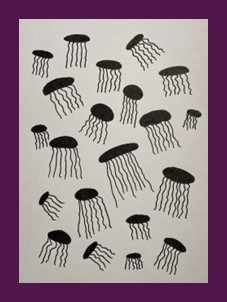
It was hard to follow the little people, and on the third day I went marine with a host of (sort of) jellyfish.


For the fourth day, having done a few trial sketches, I set about drawing small blackbirds. It was amusing to have it pointed out later that one of these was legless…


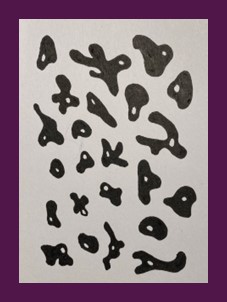
Finally, with my imagination failing me I completed my Miniature Creatures series with a page of amoeba (or is it amoebas?). Well, I call them amoeba, but really they are just weirdly-shaped black blobs with a white spot somewhere inside their ‘body’. Whatever they are, they look kind of alive…

It was interesting to produce some artwork that is quite unlike most of my drawings and paintings, much more abstract and in the case of the bugs, people and birds at least, a little cartoony. They are quite trivial pieces, but fun to do and judging by some of the feedback I got, fun to look at too!

Home Park, Plymouth Argyle Football Club #art

I’ve been a regular attender at the home games of Plymouth Argyle Football Club since soon after we moved to Plymouth in summer 1992. The first game I attended was towards the end of the 1992-93 season, and then from 1993-94 onwards I have only missed the odd game each season. In my time as a fan I have seen the team relegated 5 times and promoted 6 times, but sadly, it seems likely that those numbers will have evened out by the time the current season is completed…

In 2003 I started to take my two daughters alternately to games – at that time they were 7 and 5 years old – and then not long after that we would all go together. In the last few years, since my elder daughter moved away to set up her own home in Surrey, I have continued to attend with my younger daughter, and as she has now settled locally, it seems likely that this will continue. Going to Argyle is something that has brought us a lot of great memories, including a few when we travelled to away games for cup matches or key league games. Our trip to Port Vale in May 2023 to see Argyle clinch the League 1 title, achieving over 100 points in the season, was a particular highlight.

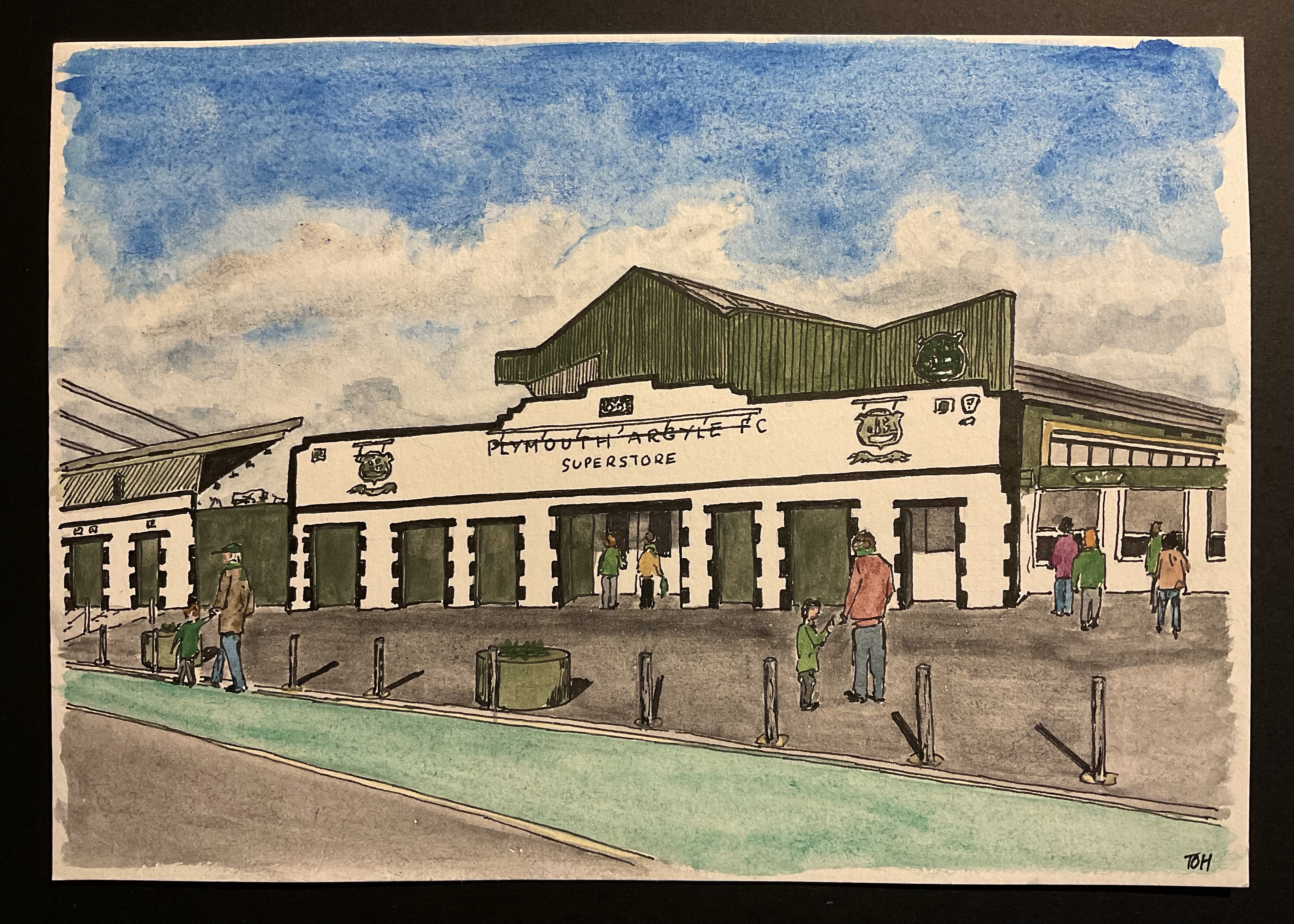
Since I started painting just under a year ago, it seems to have become a bit of a tradition that for birthdays and other special occasions I will paint some kind of artwork to give as a present. Sometimes this is just a small picture for a card or a bookmark, but on a few occasions I have gone for a larger, more ‘significant’ work. So, it was pretty obvious that for my younger daughter’s birthday at the beginning of this month I would produce an Argyle-related picture… The result was the above picture, showing the old entrance to ground, now converted into the club ‘superstore’. I was pleased with how it turned out and also pleased with myself for being brave enough to put a few people into the scene (but notice there are no faces or hands!)

I’m pleased to report that the painting, which I put in a black frame, was very well received… and now it has been given, it’s safe for me to release a picture of it into the world without any risk that I might spoil the surprise. Green Army!

Scott Building and Beckley Point, Plymouth #art

I’m a bit of a perfectionist, something which has definitely held me back over the years as I have held off pursuing certain activities ‘in case I couldn’t live up to expectations’ (a trait that I am sure many serial perfectionist procrastinators will be very familiar with). One such activity was always drawing and painting, so it was a bit of a surprise to me when, about a year ago (April 2024), I quite suddenly started painting and following a short video course on what is usually called ‘loose’ watercolour painting, I found that I was (mostly) quite able to side-step my need for ‘perfect’ and simply paint – deliberately being quick was a key element in this. Even better, not only did perfectionism not get in the way of me being able to paint, but I found that painting in a non-perfect way helped my loosen the grip that perfectionism had on me more generally.

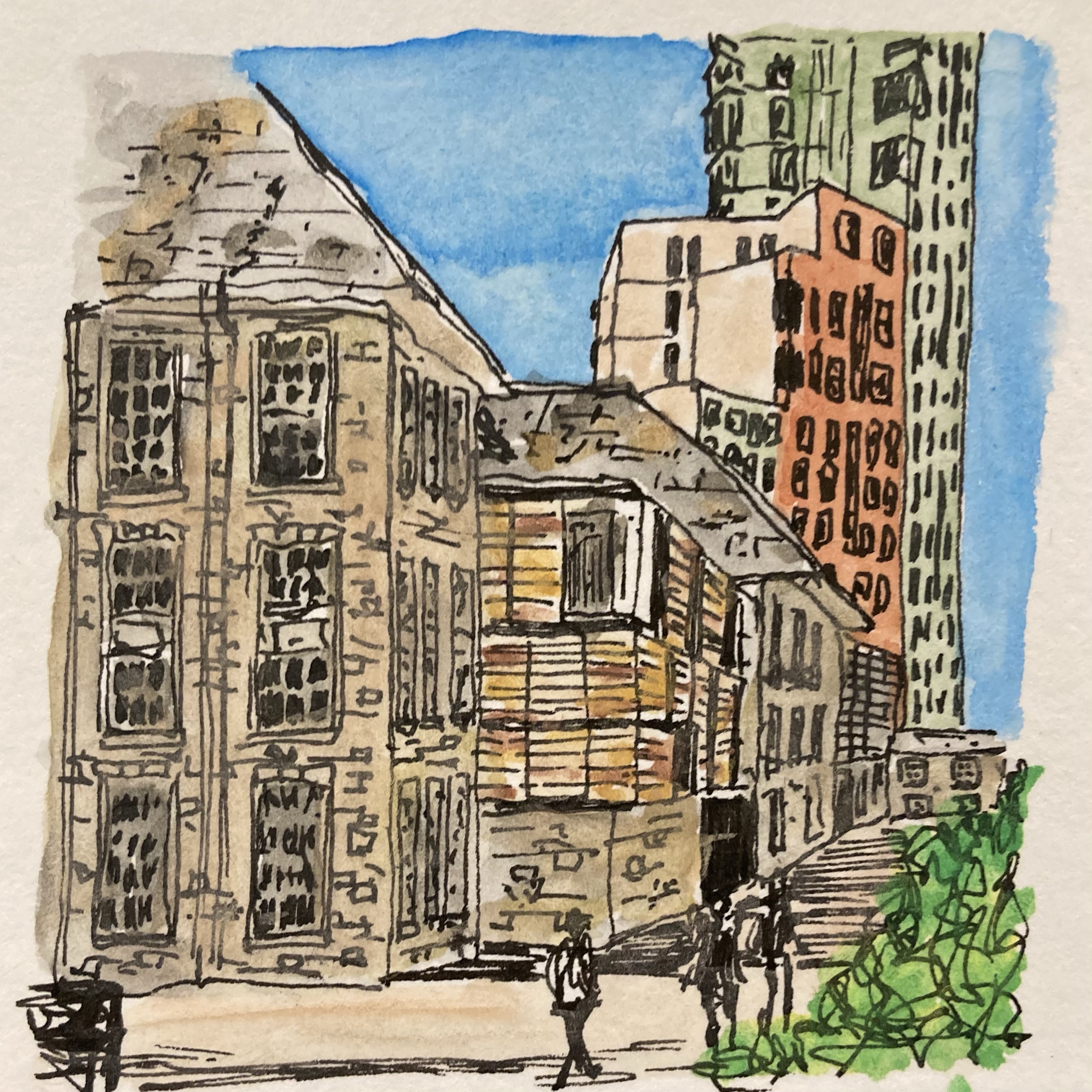
This little picture, painted a few agos, is a nice example of imperfectionism at work. It is a view of the Scott Building (University of Plymouth) on the left with the towering mass of Beckley Point accommodation block behind. If you were to stand where the photo that this picture is based on was taken, you would instantly notice all kinds of discrepancies – the colour of the closest building isn’t quite right, the ground appears to rise upwards because of the way I have used horizontal lines for the shadow cast by the building and the small building in the background (the Reynolds Building in which I used to have my office) is far too small. But none of this really matters. For a start, it’s only a little painting that almost no-one will ever see (and those that do probably won’t know what the scene looks like in reality), but more importantly, I have come to learn that it is the quirky little ‘undetails’ in a picture – a wiggly line here, am improbable colour there, the scratchy outline of a person – that add fun into the mix, and that it is far more important to vaguely capture the sense of a place rather than replicate it in every detail (although pictures like that can also be wonderful and interesting of course).

So, here’s to this quick, little, watercolour picture with all its imperfections – nice and bright, rather jolly and, I think, a sense of movement. It’s not supposed to be a masterpiece, it’s just fine as it is!

Periwinkle Tea Rooms, Selworthy #art

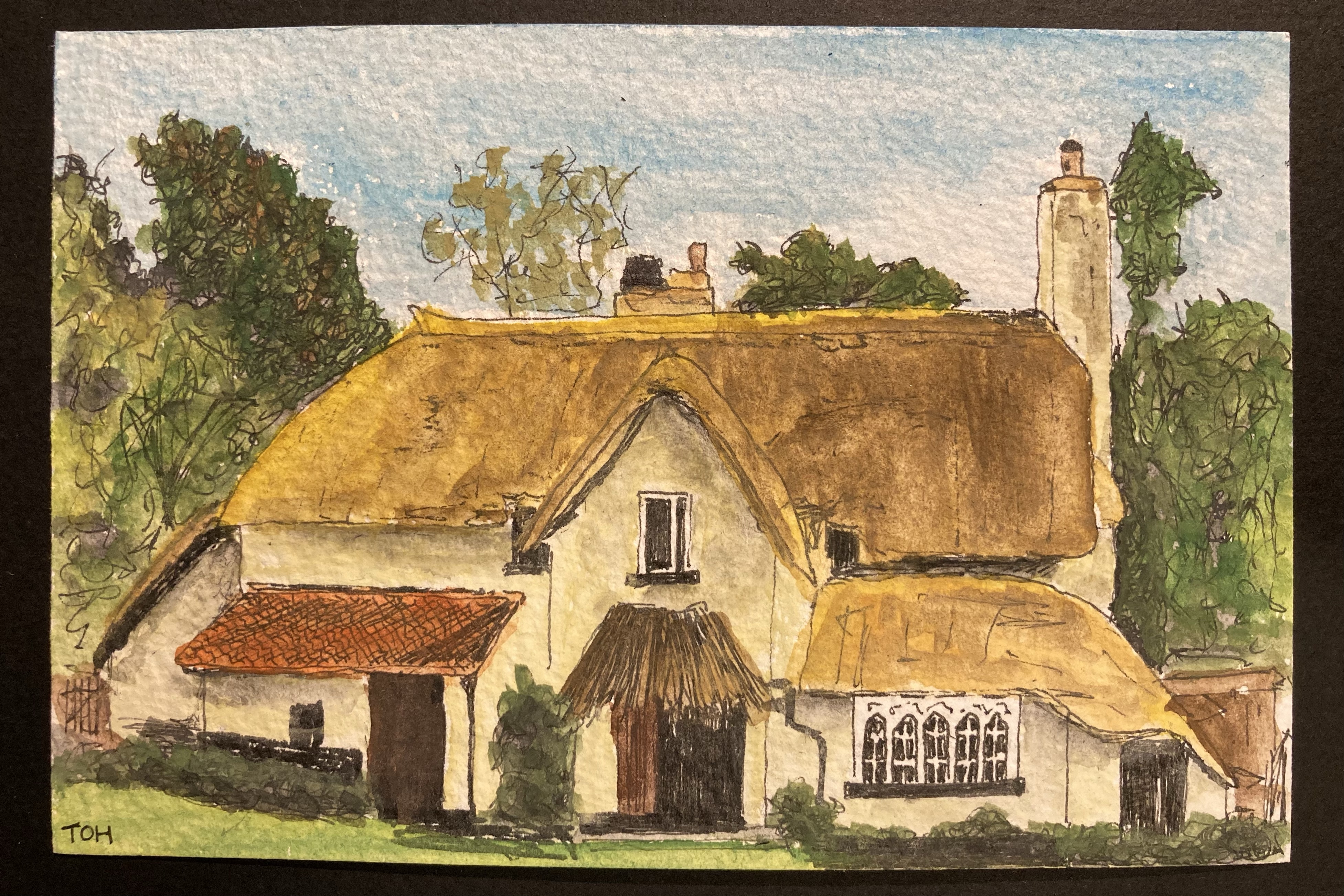
In the last couple of months it seems to have become routine that every time a family member or a close friend has a birthday I paint a small picture of a place that has a special meaning or is a favourite for them and use it to make a bespoke birthday card. Back towards the end of January it was my sister’s turn, and knowing how much she liked to visit the Periwinkle Tea Rooms at Selworthy, on the fringe of Exmoor in Somerset, the choice of subject matter was an easy one for me to make.

The result of my efforts is the picture above. I think it captures the look of the place pretty well – the thatched roof, cream-painted walls, red tiles and ornate windows and the general setting of the building nestled within a wooded area. There is perhaps only one snag… Every time I look at the picture I can’t help but see the twig-covered canopy that forms the roof of the porch as a big, bushy, and somewhat unkempt moustache. It’s just as well that there is only one window placed immediately above it. If there were two, spaced slightly apart to form a pair of eyes, I would never be able to look at the picture and see an old, quaint, thatched cottage ever again!

Cotehele Quay, Cornwall #art

Back in August 2024, whilst running the second half of the West Devon Way from Peter Tavy to Okehampton, I managed to land heavily on my left leg, jolting the knee inwards. At the time, it was just one of those slightly missed steps that occurs when out running on rough terrain, but in the next couple of days I found myself in a fair amount of pain, with my left knee feeling oddly loose and unstable. The pain subsided, and by the following weekend I was able to test myself out with a short run. Yes, okay, there was some reaction afterwards, but would it stop me completing my plan to run a section of the South West Coast Path from Par Beach to Looe a week later? What do you think?

Sometimes in life one makes mistakes… On Thursday 29th August, after being dropped at Plymouth Railway Station, I caught the 0747 train to Par, and having jogged the mile or so from Par Station to the beach, at 09:28 I began my self-propelled journey west. It was a beautiful sunny day, giving me spectacular coastal views and some great running… but by the time I reached Fowey, almost six miles into the route and having rounded Gribbin Head, my leg was screaming at me that it was sore… very sore. Did I do the sensible thing, and call it a day? You’ve probably gathered by now that the answer to that question is ‘no’. Instead, having cross the River Fowey on the passenger ferry, I climbed out of Polruan to begin the(how shall I put this?) somewhat undulating section of the path that would eventually take me to Looe, ten miles or so further along the coast. It was not a good decision – for undulating read brutally up and down and blisteringly hot… By the time I reached Looe I was hobbling along, and hardly able to run at all. It got worse. My wife had driven over to pick me up and in time it took us to drive home again my leg had decided that it wasn’t really interested in moving anymore – so it didn’t.

What followed was an initial period when my left knee felt like it could collapse on me at any time, and when it wasn’t making that threat it was clunking nauseatingly, as some internal part of it moved in a way that it clearly wasn’t supposed to. So, I rested up, took things carefully, and went to see a Sports Therapist who agreed with my self-diagnosis – that I had damaged my Medial Collateral Ligament (which is located on the inside of the knee joint and acts to prevent, or at least limit, unwanted inward movement). Over the next few months I paid regular visits to the clinic for ultrasound treatment, nerve stimulation and massage, and I completed (not especially diligently) a set of stretches designed to improve the overall strength and mobility of my leg. Things sort of got better…

Just before Christmas, still experiencing pain, especially after I had been sitting down for any length of time (which is essentially how I spend the bulk of my days…), and still unable to run, I switched to seeing a Physiotherapist. She immediately targeted my hamstring and quad to carry out some excruciatingly painful massage and trigger-point needling. Things continued to sort of get better…

In January, I caught a bad cold, had to cancel a physio appointment, and following the resulting unplanned period of rest and inactivity, found that my leg was definitely starting to feel quite a lot better. It made me wonder whether that was what my leg really needed – complete rest, or as close to complete rest as I could get – and so I avoided walking as much as I could (getting a lift into work), and waited for time to do its job (which, as I write this at the end of February, it is still doing…).

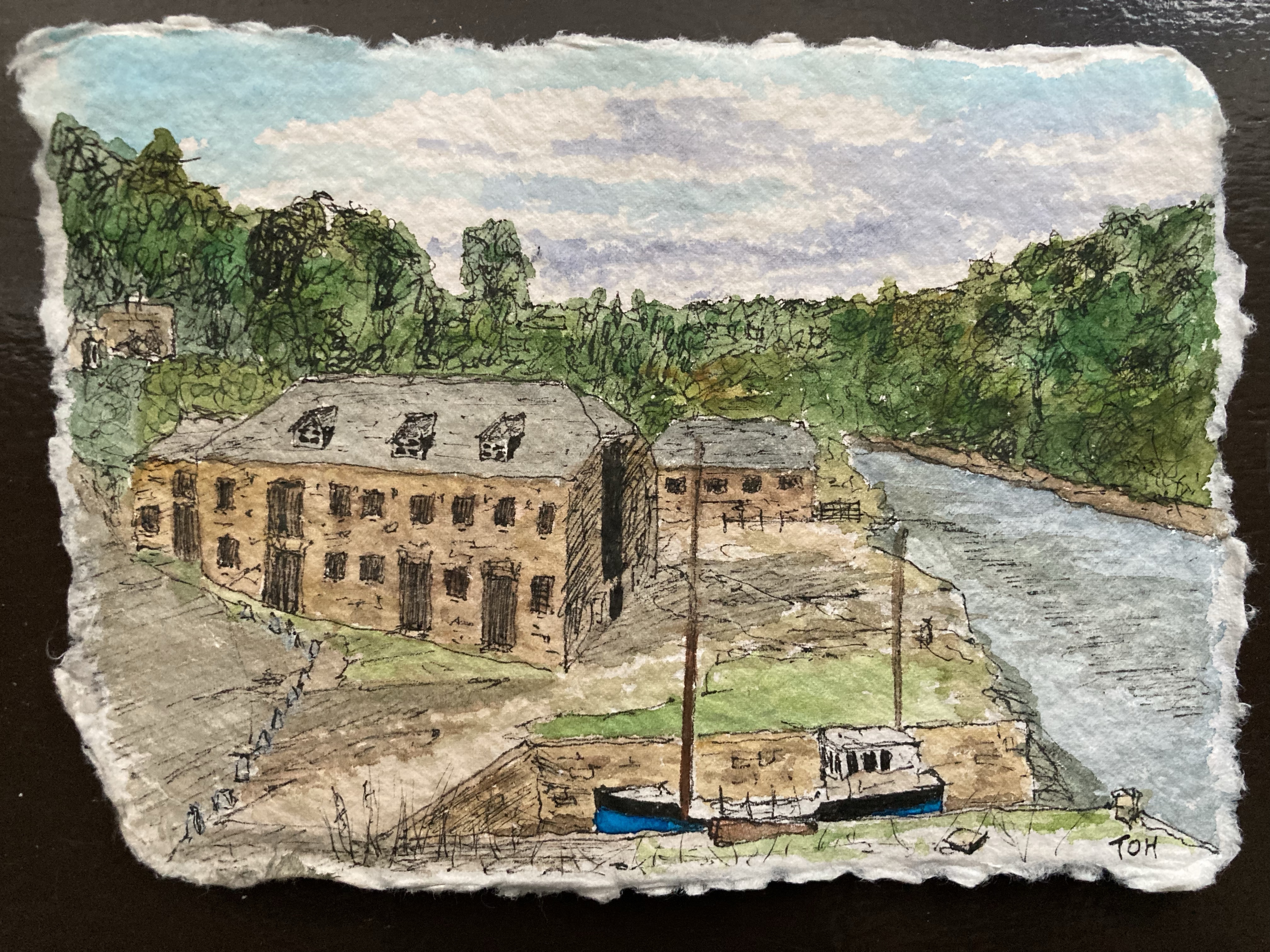
All of which is a very long-winded way of explaining why, one Sunday afternoon towards the end of January, with us unable to go out for a walk anywhere, I drove down to The Box (museum) in Plymouth where I subsequently sat with a coffee and some of my drawing and painting gear while my wife walked down to meet me and hour or so later. I didn’t have any kind of plan, but after a quick search for interesting images of local places, I selected a photograph of Cotehele Quay on the Cornish side of the River Tamar about ten miles north of where I sat and set to work.

The picture at the start of this entry is the result. I was a bit limited by the range of watercolour pans that I had with me, but it’s a reasonably satisfying little picture with some nice details, and I think it captures the overall feel of the place fairly well. It was certainly an interesting experience to sit painting in a public place (not that I was aware that any of the people around me really noticed what I was doing) and something that I am sure I will do again. It would be better, of course, to be sitting out in nature actually looking at the view I am painting, but for that to happen it seems that I will need to remain patient a little longer…

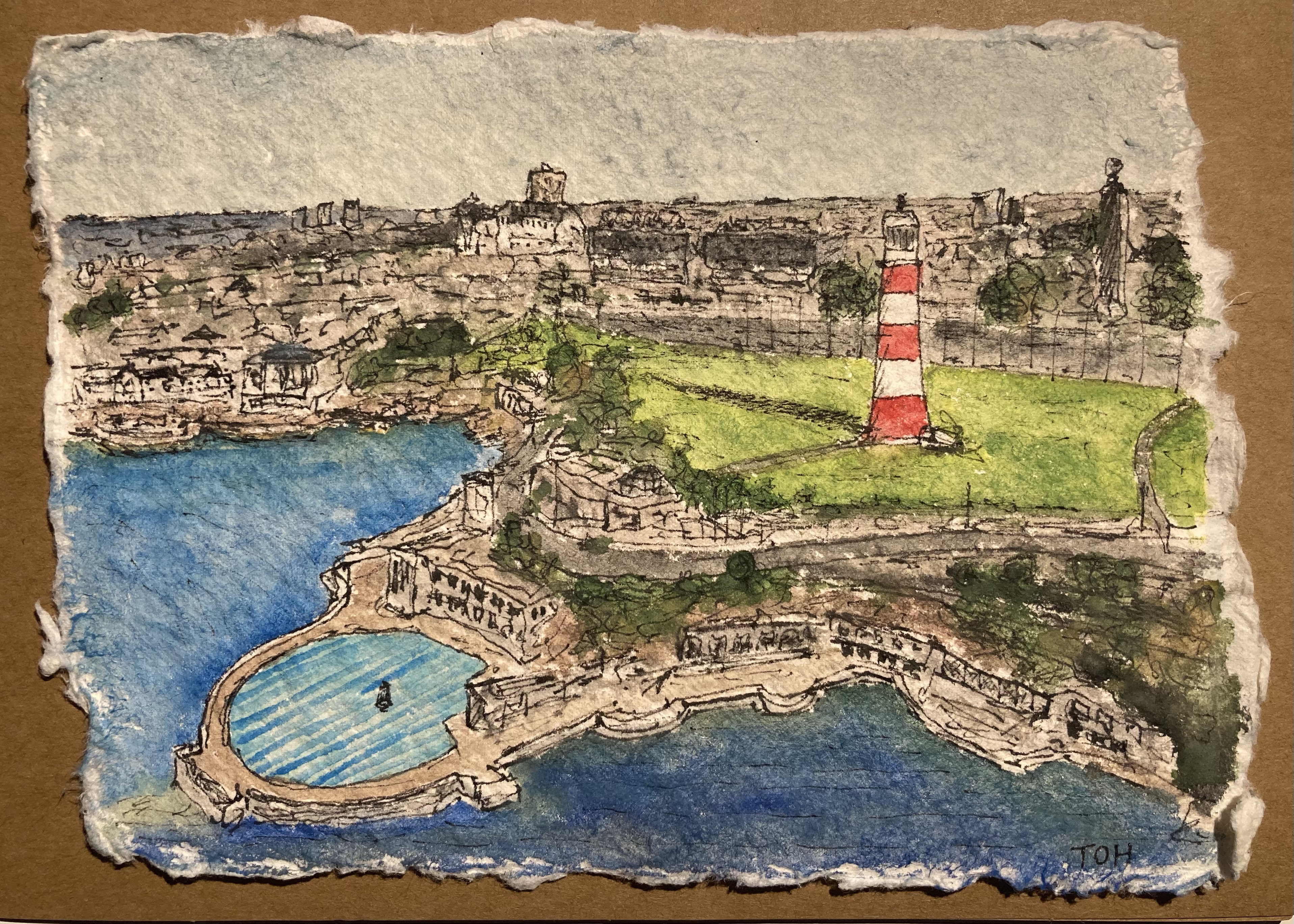
Plymouth Waterfront and Tinside Lido #art

Last summer, we had stayed in a tiny AirBnB in the garden of a house near Hebden Bridge in Yorkshire and loved the red-clay crockery that was provided for us to use so much that when we found out that it was hand-made by the owner, a highly-skilled potter, we asked tentatively asked if she could some like it for us, thinking that it would be way beyond our price-range if she could, and were pleasantly surprised to learn that she could and that it wasn’t. After a delay of a few months, while we waited for our new kitchen to be finally in place and she worked on other jobs, we received a big box of plates, bowls and mugs. Unfortunately, in that first delivery there were two or three breakages and one or two pieces that we were told were not up to standard (but looked fine to us) and so we had to wait a little longer for everything to be made and be with us. A few weeks ago the final package arrived and we were so pleased with our acquisition (apparently it has only been made before for a couple of fancy tapas restaurants somewhere in London) that we wanted to send a card as a thank you for all of the effort that went into fulfilling our order, including making replacement and a few extra pieces as we decided that we did want mugs after all.

So, I sat down to paint a picture to make the card with and was faced with a decision: what to paint? I thought about painting a countryside scene from somewhere near the holiday let or one local to us (e.g. Dartmoor) but in the end I plumped for a view of Plymouth waterfront and found a suitable photograph online to use as a basis. I was really pleased with how the resulting picture ended up – it is the first time that I have tried to capture such a large built-up area in a painting and whilst the size of the picture (~10 x 15cm) means (deliberately) that there is little scope for lots of detail, I’m happy with the extent to which I have worked in sufficient detail to capture the main features of the buildings in the foreground and enough of their sense in the background.

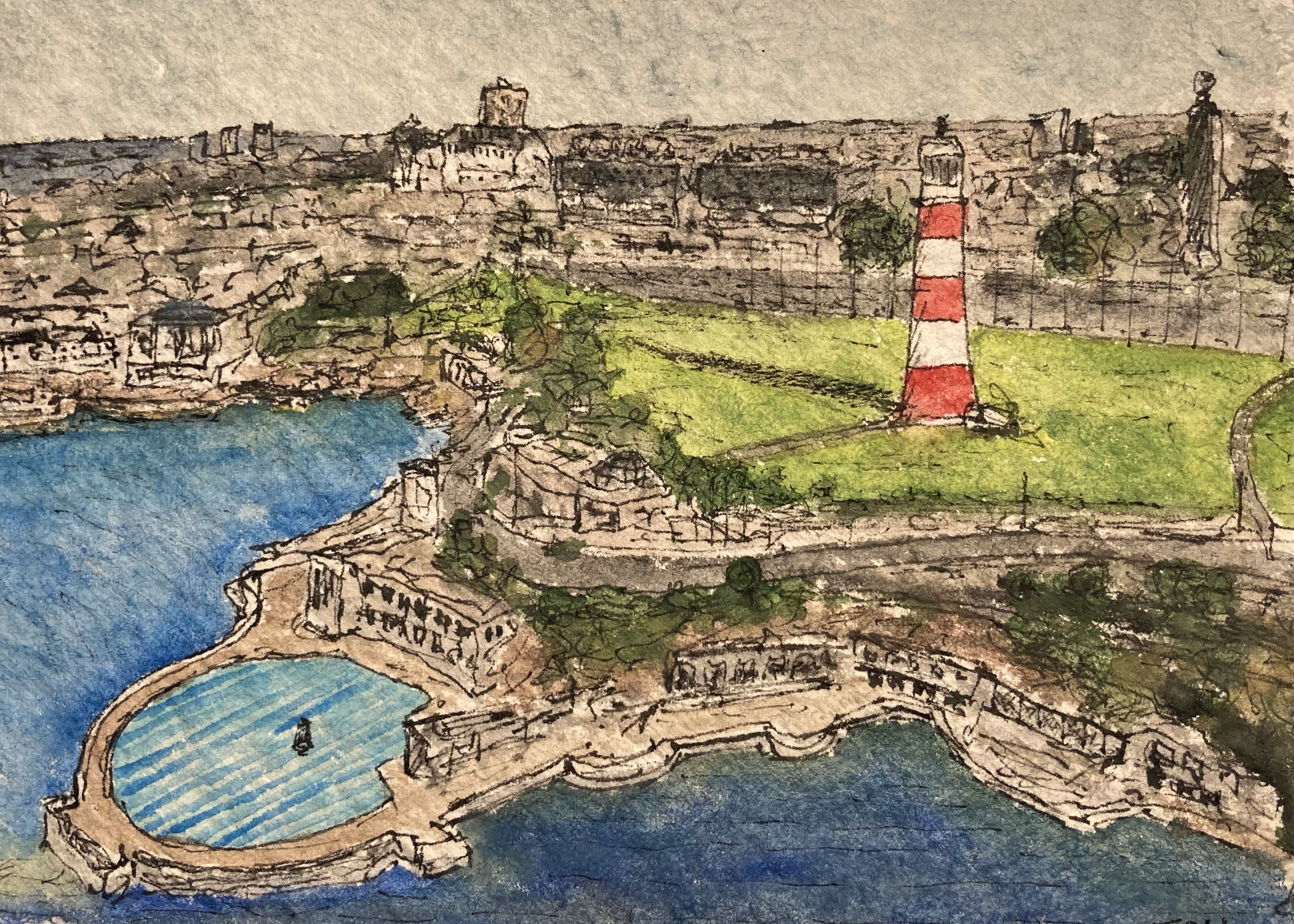
Subsequently, I have been exploring getting some of my artwork printed with a view to seeing whether anyone might part with a little of their hard-earned cash for any of it in the future, and as a test piece I got my Plymouth Waterfront picture printed as an A6 postcard using the cropped version shown below. I’m really please with how the postcards have come out and I now have a staggeringly large number of them that I will, at some point, either sell or give away!