Blockchain, Bitcoin and Cryptocurrency… I haven’t got a clue

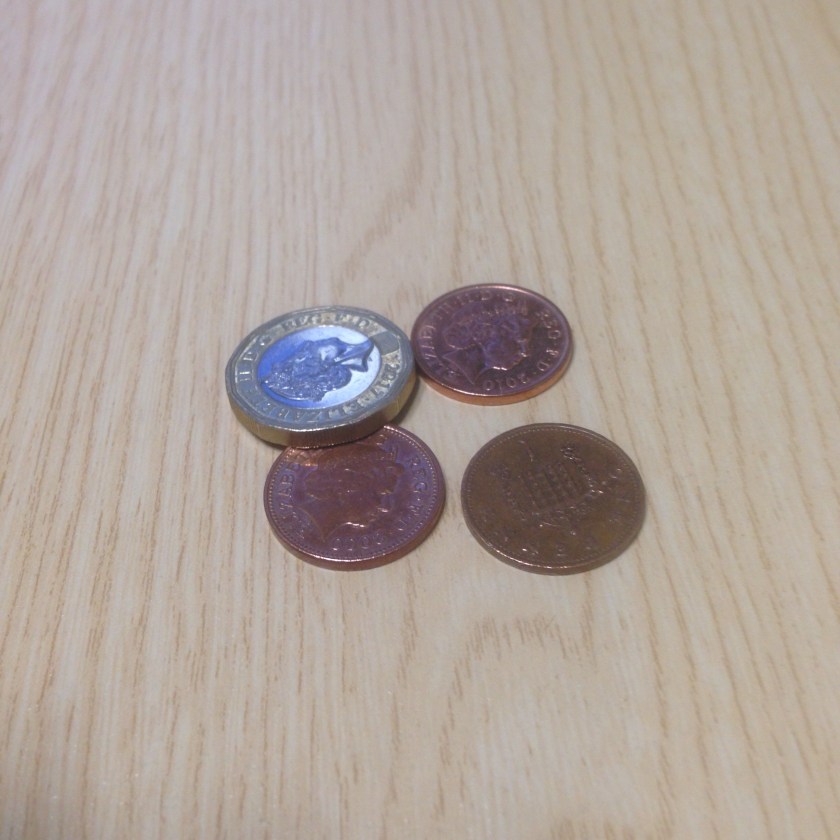
I like to think of myself as a reasonably intelligent individual capable of understanding complex scientific ideas but I have just read 18 pages of articles in the January edition of Scientific American about Blockchain, Bitcoin and Cryptocurrency and I will freely admit that I am left wondering what on Earth it was all about. It was one of those rather odd experiences where you read and understand most of the words but don’t get a grasp of the overall meaning. For example, I now know that a blockchain is a ‘distributed ledger’ and that Bitcoin is a cryptocurrency that uses blockchain technology. I know that there are multiple cryptocurrencies and that Bitcoin involves people ‘mining’ to securely add new blocks of transactions to a blockchain. But I still don’t really have the foggiest idea what Bitcoin actually is and how one would go about using it (or even why really). I had hoped that the articles would give me just enough knowledge that I would understand the basics so that all of the media references to this emerging field might actually mean something to me but, alas, it seems that I still have a lot more work to do if I want to achieve this goal. Anyway, it probably doesn’t matter much. It is not as if understanding with Bitcoin is will increase the amount of wealth I have judging by the amount of cash I currently have in my pocket…

(and I’ll spending £1 of this at my Running Club tonight to pay my weekly fee!)

Back in Work

Today is my first day back in work after the Christmas/New Year break. I am allowing myself the luxury of a ‘slow’ day to ease back into things – dealing with emails that have come in over the last week and a half (thankfully not too many and nothing particularly complicated), processing a few bits and pieces that I carried over from December and getting my head around the more significant tasks that I have to do over the next two or three weeks. These include marking some reflective reviews by Final Year students (approximately 55 to do which will take the best part of two days), finalizing the set-up of my first year examination which, this year, is being delivered online, producing and circulating the final version of the School’s Workload Data Collection Form and writing six lectures to be given in the last week of January/first week of February. Put together, this is quite a substantial amount of work but, fortunately, I have a relatively clear schedule so I ought to be able to carve out some good chunks of time to tackle this work efficiently.

I was thinking this morning about how my default ‘position’ at work is to sit at my desk in front of my computer monitor and how this tends to automatically push me towards working on and thinking about email. But I have come back after the break determined to try to only look at email and also only to think about task planning at specific times. I have realized that I need to shift my default position and break the physical link between where I am at work and the tools that I have in front of me. I should try to set things up so that the space in front of me has a notebook for thinking/planning/creating, papers to read etc. and then I should move to my computer only when I need to use it. As long as it is there directly in front of me then I will look at email, shuffle tasks around and do certain types of ‘small stuff’ work as my default activity, which is not what I want. I have taken the first step and collected a new A4 hardback notebook (because above anything else I just love a new notebook) and when I have finished typing this I am going to shove a few things around on my desk space, reducing the space taken up by my computer/tech and increasing the open/free space for other types of work. Then, I suppose, I had better knuckle down to some work…

Turning Things Into THINGS

Yesterday I realised that I have what I suspect is a bad habit. When I think about doing a thing I want to do, like building a model boat, running the south-west coast path or meditating more, I immediately turn the thing into something much more complicated and involved. The thing becomes a THING. For example, I have a model of the RMS Titanic waiting to be built – it is a big model with lots of stages involving cutting and glueing and painting and to do a good job of it will take a long time. Now, instead of simply thinking that I can spend some time making the model, bit by bit, I catch myself wrestling with the idea of completing one step of the model instructions every day and taking a photograph to record my progress. The simple thing of building the model becomes the more complicated THING of building the model every day with the added visual record. Or, I have had the idea of running the entire South West coast path, which is around 630 miles, but instead of just seeing how it goes over a long period of time, I catch myself thinking of setting myself a target of completing it in 5 years, getting sponsored for charity as I go and writing a blog/website about my experience, all of which require quite a lot more planning and turn the simple (on paper) thing of running quite a lot into some kind of crazy complex public challenge complete with time pressure, accompanying subsidiary activities etc. – in other words, a big THING. And obviously, when I think about meditating more or exercising more or writing more I’m not happy just to try to do these things more, I try to convince myself that I have to do them EVERY day and track my progress.

The more I consider this, the more I think that turning things into THINGS is a really bad habit. It adds layers of complexity that means that activities then require planning and oodles of motivation which, of course, renders them less likely to happen. In fact I wonder whether this is why I think this way, as a kind of internal avoidance system which naturally puts the brakes on my initial enthusiasm and holds me back from taking action. I’ve decided this is something I will try to resist. I don’t want to be making lots of big grand plans. I don’t want to be thinking about doing THINGS. I just want to be getting on with doing things.

I would run 1200 miles, and I would run 1200 more…

I have done a lot of running in 2017 – just over 1203 miles in fact (ignoring inaccuracies due to dodgy gps signal). A lot of those miles came in the early part of the year when I was training for my first (and so far only) 50 mile ultra-marathon in May. The monthly totals go like this: 96, 165, 154, 177, 130, 64, 96, 103, 56, 44, 69, 51. Over the year I have run 3 x 10k races (Ivybridge in May, Muddy Duck in July and Plymouth in October), the 6 Moor Miles race (6.4 miles in July), 1 x Half Marathon (Reading in March), The Grizzly (19.4 miles in March), 3 x Marathons (Taunton and Southampton in April, New Forest in September) and two ultra marathons (Somerset Flat 50 Miler in May and Mendip Marauder 30 Miler in August).

My highlights have to be the two ultra marathons, but marathon PBs at Taunton and then at Southampton when I broke the 4 hour mark for the first time are also up there along with the cheeky 10k PB I got at Ivybridge when, on the back of my distance training, I had no idea whether I could still run ‘fast’ over short distances but just went for it anyway. Here are a few pictures to commemorate some of these achievements…


Crossing the line at the Taunton Marathon.

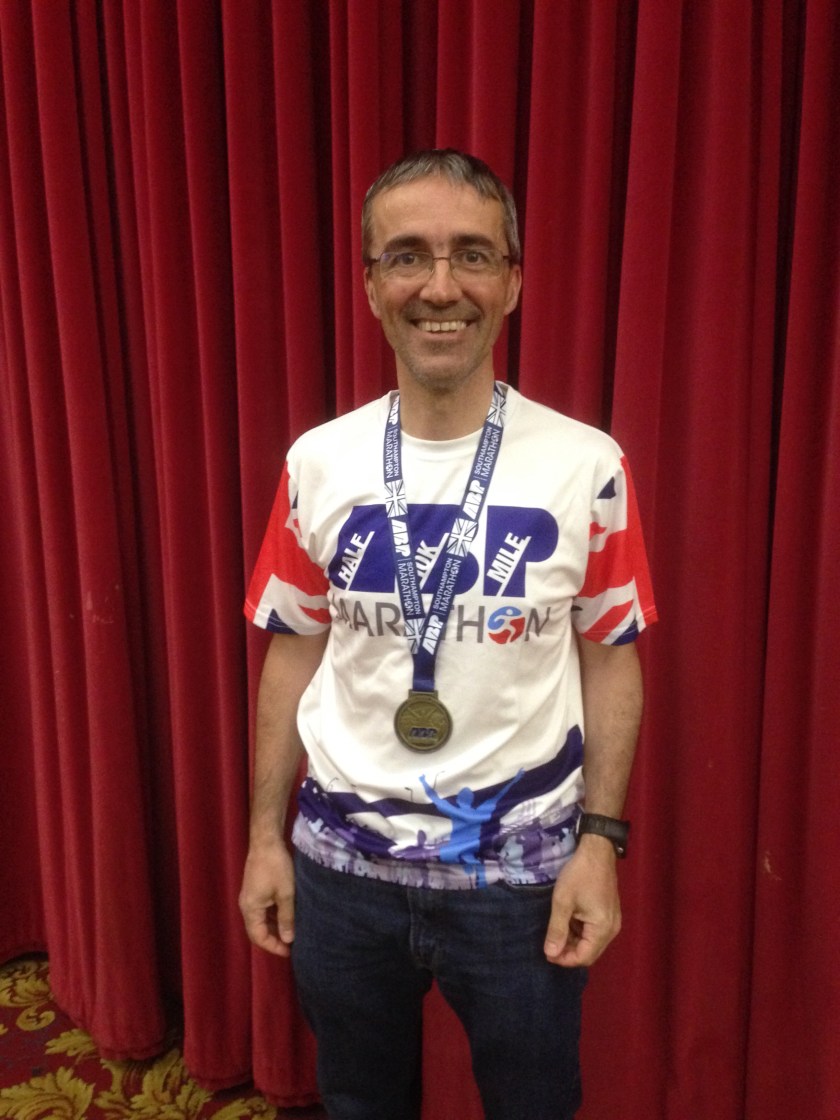
Post-Southampton Marathon with a new sub-4 hour marathon PB in the bag!

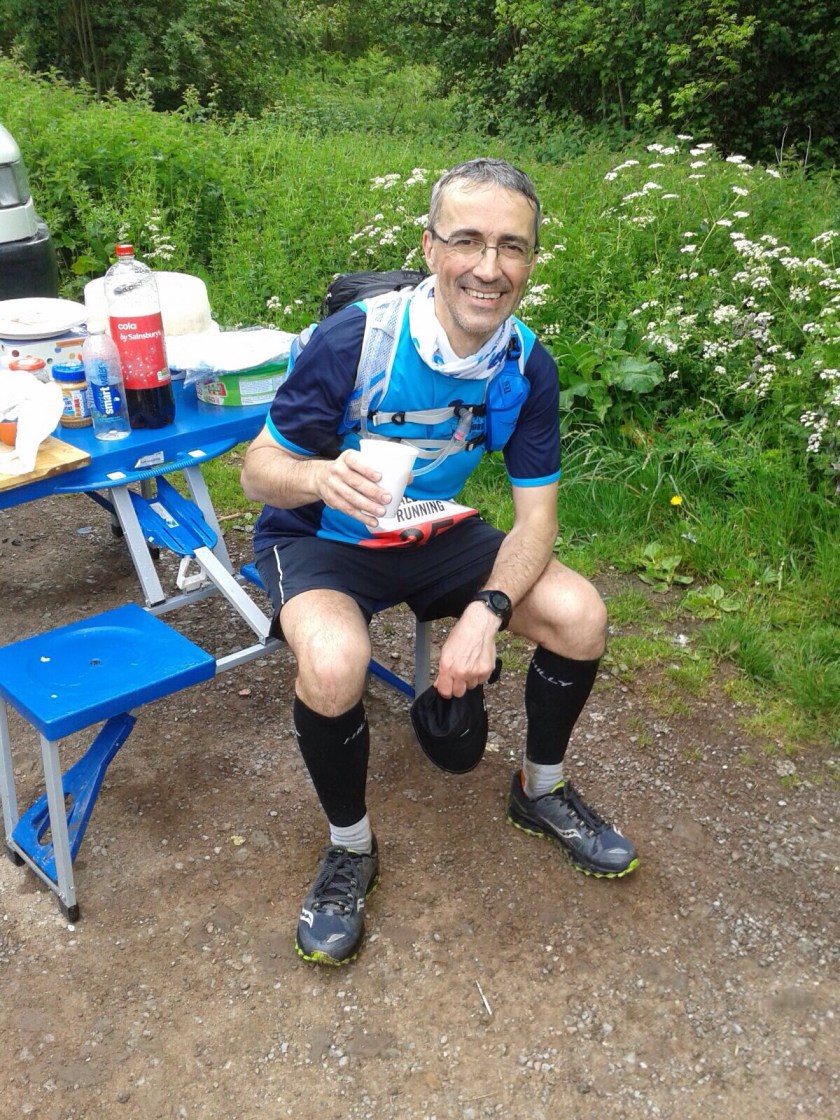
Looking a bit ill (and certainly not feeling so good) at about 32 miles into the Somerset Flat 50 Miler – a cup of tea and a good amount of food perked me up here.

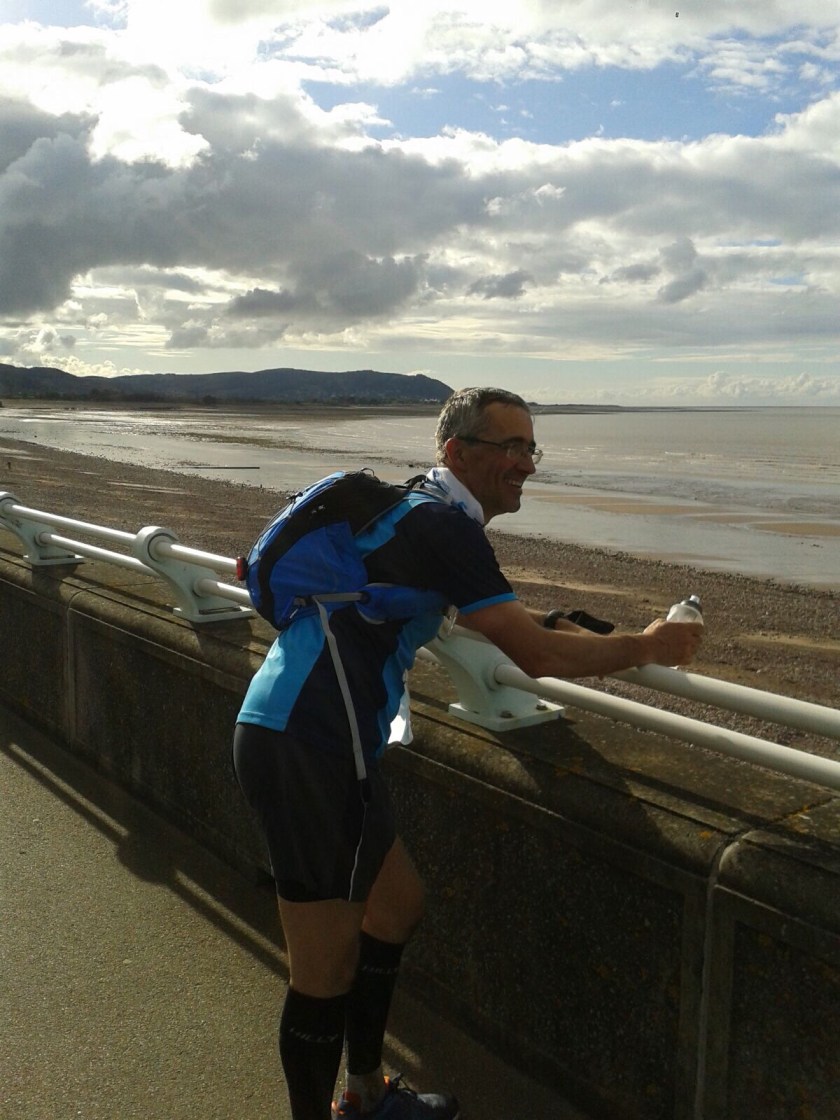
With just 5-6 miles to go of the 50 Miler at Blue Anchor – this is one of my favourite pictures of the year.

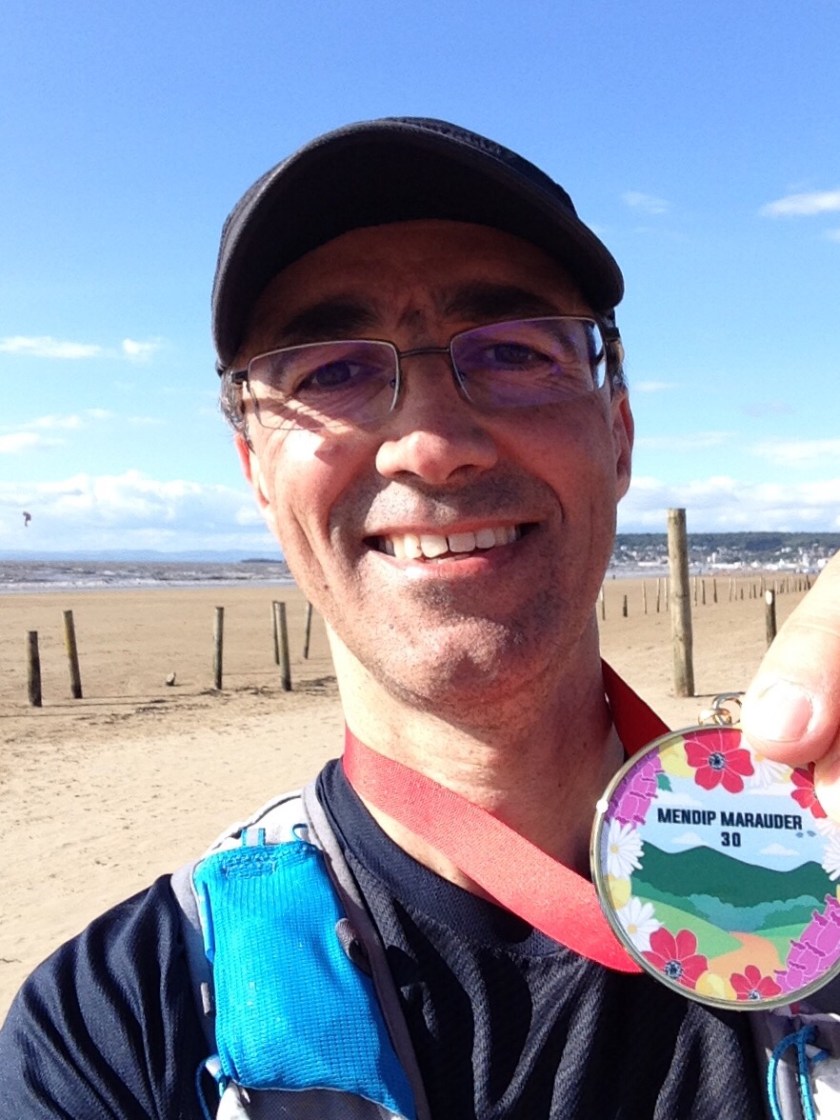
On Uphill Beach at the end of the Mendip Marauder.

What does 2018 hold? As far as specific events are concerned, I’m not entirely sure. I am booked into the Grizzly in March again and have a hotel booked ahead of the Southampton Marathon in April (or maybe the Half Marathon depending on other events). I ought to have a crack at a really good time for the marathon (3:45 ought to be in reach) but I do also want to go longer again, and once I have fixed on an event (which is proving tricky) then the training for that will dominate and influence everything else. I’d like to try to run more consistently through the year – 100 miles in each calendar month seems like a good target but to achieve this I will have to be better at getting going again after a long event than I was this year. I suspect I would also have to do a little less in the early part of the year to avoid the general, creeping fatigue that I found had kicked in by September this year and which left me doing very little through the autumn. Perhaps a good plan would be to focus on the Southampton Marathon in April, then find a 35ish mile ultra-marathon in June/early July and then find another one or two marathon plus events for the early autumn (Eden Marathon in October?). We’ll see!

Something > Nothing

Over the last couple of weeks my running has tailed off quite dramatically. I had been in a phase when, despite having no specific races in the pipeline to prepare for, I was trying to keep to a routine of three runs a week – a short one (30-40 minutes) on Tuesday evening, a slightly longer one (about one hour) at my running club on Thursday evening and then a longer one again (something like 7-10 miles) at the weekend. My overall goal was to stick with that kind of plan through December, gradually lengthening the weekend run before launching into a more intensive training plan, along the lines that I followed at the start of 2017, in January ahead of a major (ultramarathon) event in May/June. Sadly, even my modest plan for December hit the rails – I ended up prioritizing the marking I had to do a couple of times which killed off the Tuesday run and twice in a row I missed the Thursday run because it was cold or wet or I was tired, i.e. for no particularly good reason other than general self-preservation through what is probably my busiest time of year at work.

With this in mind I have been particularly pleased that, even though I have not really felt like it, I HAVE managed to get out for a run on both of the last two Saturdays. Admittedly, on each occasion my runs were shorter than my target (they were just 4.3 miles and 5 miles) BUT I am pleased that I did SOMETHING. In this context, something is definitely better than nothing – it has kept me moving and given me some sense that I am still a runner and, surprisingly, both runs felt good once I had got myself going. These two shortish runs have helped to build a running bridge over the last couple of weeks and as I approach the new year, when my training must ramp up several notches if I am going to get to where I want/need to be in the spring, it’s now time to step off that bridge and get back into things properly.

Stealing From/Gifting To Future Me

This week I have been catching up with recent episodes of Todd Henry’s Accidental Creative Podcast. One particular episode (this one: Accidental Creative Podcast) resonated with me more than most, highlighting the idea that many of the things that we do now are either stealing from our future self or gifting something to our future self. For example, if we procrastinate now while we are supposed to be doing something else (or at least trying to do something else) then we are stealing time from our future self because the task will have to be done sometime if it is not done now. Or, if we exercise now we are gifting a stronger/fitter body to our future self. The thing that might be stolen could be time, money, energy, health etc. and the thing that might be gifted could be confidence, resilience, courage, money, time, strength etc. This is an obvious idea, but like many obvious ideas, it is really handy to have a simple and memorable way to be reminded of it.

When this idea is combined with the knowledge that the way our brains relate to our future self is much the same as the way that they relate to a complete stranger, it becomes particularly powerful and important to remember it. This means that our default tendency tends to be to take the easiest, most comfortable, most straightforward approach to the present moment. But if we do this then we run a huge risk that we will become a thief or miss out on an opportunity to give a gift. I don’t think anyone would choose to be a thief (in an ideal world at least) and I am certain that all of us like to receive gifts. So, I am now trying to catch myself as often as I can and ask myself am I stealing or am I giving? Simple.

Battling the Cracks in Time

Over the last couple of weeks I have been working my way through a huge (virtual) pile of marking – 161 pieces of first year coursework about the circulation of water into and out of the Mediterranean Sea, each one taking me approximately 15 minutes to mark (which equates to a little over 40 hours over a two week period during which all of the rest of my work also had to happen). It was a mammoth task and not one I want to repeat again next year so I will have to make sure that I re-design the work into a more manageable form. To make matters worse, I absolutely hate marking (I suspect everyone does) – it is repetitive, physically and mentally tiring, boring and often quite disheartening. It is a job where it is absolutely essential to be efficient and to stick on task.

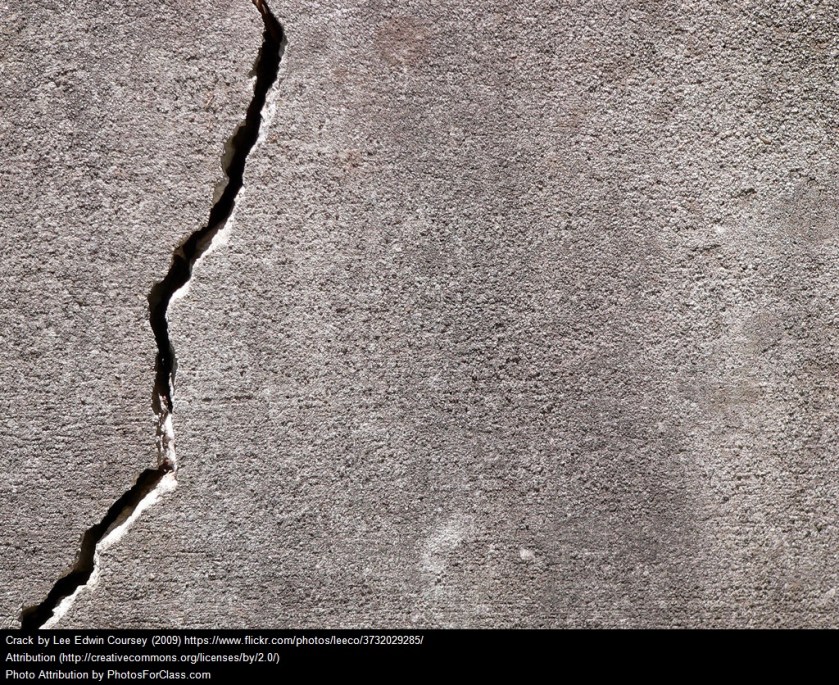
As I was working through the pieces of work and struggling to keep on track and avoid being pulled off to do something else more interesting and enjoyable (i.e. anything else) I got a really strong sense that the secret to being successful against this challenge was to not allow tiny cracks in time to open up. The critical time was always just at the moment when I had completed marking one piece of work but just before I had started on the next one. I came to think of these moments as cracks in time.

At the end of each piece of work I had a strong physical sensation of a tiny crack in time appearing and even the slightest hesitation at that point would result in it opening ever so slightly wider, then wider, then wider still until I had tumbled in (to have got up to make a drink or check something on the internet or anything really). I had to be ready for these cracks; ready to outwit them by stepping over into the next piece of work before the crack could take hold and rip open. As soon as I had completed the final action of processing the piece I had just marked I had to be into the next one, opening up the file ready to start work on it. I found that it mattered much less if I paused a few seconds if I had already opened, and therefore ‘started’, the next piece of work than if I paused before doing so. To do the latter allowed the tiny crack to begin its expansion and immediately that had happened a huge amount of additional willpower was needed to get back on track. Although battling these cracks was obviously really a mental challenge, I cannot really put into words how physical the sensation felt, and I think for that reason the idea of cracks in time and my having to battle against their development has taken hold in my head in a wider context than just marking. I have come to realise that much of my battle to maintain the high level of productivity that I desire is the battle against allowing the cracks in time to open. Knowing this I am starting to train myself to be ready for them, to recognise their appearance at the earliest possible stage and to have in place strategies for leaping over them to leave them behind me before they become too wide.

Just get the job done

Spoiler Alert – If you haven’t watched Series 4 of Game of Thrones yet and think that your might want to, don’t read the rest of this post… [I’m not sure who I am addressing with that comment – almost no-one will ever read this anyway!]

Towards the end of the Series 4 of Game of Thrones (TV series), episode 8 to be exact, there is a classic piece of single-handed combat that nicely captures a really important lesson in life. The fight is a ‘Trial by Combat’ in which the flashy Prince Oberyn of Dorn elects to fight the ruling family’s representative, the huge, heavily armed and aptly named knight ‘The Mountain’. Oberyn has chosen to fight on behalf of the person on trial because he seeks revenge/justice against The Mountain who, previously, had raped and killed Oberyn’s sister. So, essentially, the battle is one of speed, agility and showmanship (Oberyn) versus cumbersome bulk and extreme brute force (The Mountain). Everyone watching expects The Mountain to win easily because that is what he always does, such is his size and power, but Oberyn fancies his chances because he is quick and skillful.

The battle starts and the lightly-armoured Oberyn spins and dances his way around The Mountain wielding only a long spear. It’s very flashy and showy stuff. The spear whirls and twirls through the air as Oberyn leaps under, over and around The Mountain but no particular damage is done. I can’t remember the exact sequence, but The Mountain does take the ascendancy at some point, smashing Oberyn’s spear after, I think, the latter slips or is tripped, but a replacement is immediately thrust into Oberyn’s hand. Oberyn then lands a telling blow, and another and another until The Mountain is put onto the floor, apparently in a near-death state with mortal wounds… This is where Oberyn gets things wrong. He is so bent on seeking vengeance on behalf of his sister that it isn’t enough for him to win the battle and kill her abuser, he feels the need to insist on a confession from his nearly dead adversary. He stands over him yelling at him to confess – to confess for the rape, to confess for the murder, to name the person who gave him orders to do this crimes etc. Over and over he dances over The Mountain’s prone body, screaming for him to own up to his crimes. And then [of course], suddenly, The Mountain grips Oberyn’s leg, twists him round (brute strength comes in handy even when you are practically dead) and lays him on his back. The Mountain rights himself, crouches over Oberyn and thrusts his hands into his head/eyes pushing down with the enormous force that his massive frame gives him. [At this point I began to stop paying much attention to what was happening on the screen – I am a pretty squeamish person and I could tell it wasn’t going to be pretty. Unfortunately, not only was the resulting scene visually one of the most gross things I have witnessed but, also, the popping sound as Oberyn’s skull bursts open was also pretty horrendous (shudder)]. So, despite being taken to the brink of death by Oberyn, The Mountain wins the fight.

But the thing is, Oberyn COULD have won. In fact, Oberyn SHOULD have won. All he needed to do was to take his spear and finish The Mountain off. He had the time and he had the opportunity. But oh no, these flashy types simply cannot resist the temptation to make a point, to play to the crowd or to try to finish things in style. You would think they would learn.

So the lesson here is that when you are given the opportunity to get the job done, don’t lark about, don’t show off, don’t try to make a point or get extra value/credit or anything similar, learn a lesson from Oberyn’s mistake and just get the job done.

Slipping

A few weeks ago I decided to make an effort to keep adding content to this site and set myself a daily reminder to write a blog entry. It didn’t matter what I wrote about as long as I wrote something most days (weekdays at least). For a while I did fairly well, sometimes writing about something I had done or thought about at work, other times about some random topic that had come to mind or about an book I had read or a podcast I had listened to. It didn’t matter that no-one (well, almost no-one) looks at this site – that wasn’t the point. Really, I am writing for myself just as a practice/ regular discipline. I was feeling pretty pleased with myself.

Unfortunately, it looks like I have slipped off the track. The last entry before this one was a week and a half ago. This means that I have ignored 10 days of daily reminders when they pop up on my phone. Actually it is worse than that. I haven’t simply ignored, or not noticed, them. I have clicked a button to confirm that they have been completed so that they have each gone away (only to come back again the next day). I don’t want this to happen. I want to try to maintain a close-to-daily discipline of writing something. Hence this post. Slipping off the track is something that I have always been fairly good at, although perhaps it would be fairer to say that I am pretty good at switching off one track onto another as I am always busy and always trying to accomplish something like this.

I have a few possible topics for upcoming entries. I have just about finished reading another book and will write about that. I want to put down a few thoughts about Aristotle’s ideas on ‘flourishing’, I could reflect on my latest (there I go again) method of trying to get fitter/stronger each morning and I am sure I could write something about where my running is at at the moment. It’s just a matter of sticking with it. I always think that having ideas isn’t too difficult, the difficult part is turning them into action. That’s really what this writing discipline is all about – action, action, action.