Just when you think marking is finished, it isn’t

There is always an immensely satisfying moment that occurs on completion of a big pile of marking because, make no mistake about it, marking student work is pretty much always a hard, somewhat depressing, slog. It is a repetitive task and, sadly, often serves to highlight what students don’t know, don’t understand and what they don’t know howt to do rather than being a celebration of creativity, insight and high level performance. It also lays bare any slight ambiguities or uncertainties in the assessment brief and potentially exposes areas of content that perhaps were not taught as well as you hoped or thought they were.

So it was when I recently finished marking my Year 2 Meteorology coursework. There were not too many scripts (18), but each piece of work comprised three quite significant separate elements, and going through each piece of work, writing feedback and grading the work took me the best part of two full days. But then it was done – cue the ‘immensely satisfying moment’. Only that moment of completion was a false dawn… because completing marking of a piece of work is not the same thing as completing the whole process of assessment for a piece of work, as there is a second component of the process – independent internal scrutiny – that has to be done before the marks can be finalised.

Independent Internal Scrutiny can take a number of different forms but in many cases (including this one) it involves finding a colleague who was not associated with the assessment and getting them to look through the set of marked scripts to check that the marks awarded are appropriate and the quality of feedback given is sufficiently high. This has to be done before the work can be returned to students and so almost always it is a process that has to be completed quickly in the brief gap between finishing the marking and returning the work within the University’s agreed timescale. There is a significant challenge here, namely to find a colleague who, although already extremely busy, is willing to give up some of their time at short notice to scrutinise your work. For me, today, during the Easter vacation and with almost all of my colleagues on leave and the work due to be returned to students in two working days time, this challenge could have been impossible, so it was with great relief that my tentative request to my colleague Jill Schwarz produced a rapid ‘yes’ and, better still, a pile of scrutinised marking within the space of a couple of hours.

It is tempting now to breathe the big sigh of relief and savour the ‘immensely satisfying moment’ – the marking is done, the independent internal scrutiny is done, the assessment process is done… but wait, there is still more to do; one final piece of assessment-related torture to carry out. Before I can hand the work back to students I have the joyous task of standing over a hot photocopier, producing copies of a sample of the work to put in a cardboard box so that the External Examiner can (if they choose) scrutinise the assessment and be satisfied that academic standards are being upheld and that the assessment process was carried out in a fair and appropriate manner. And this photocopying process is in itself a major task – removing staples/plastic wallets, selecting the appropriate choice of single or double-sided copying (often both within the same document), unfolding any oversized pages, feeding everything through the copier using every special technique known to humankind to avoid paper jams and then, inevitably, cursing very, very loudly when the photocopier does jam, the paper supply is used up or the toner runs out…

… but that’s a job for tomorrow.

My Running Week 2014 #15

We were away from home (mostly near Newcastle) so my running was a little different from usual this week, although as has been the pattern for quite a few recent weeks, my running consisted of just two runs again.

On Thursday morning I did a slow (10:18 pace) 7 mile run along the Tyne Valley from Newburn to Wylam and back along a section of the Hadrian Cycleway. This was all very flat and on a good surface. I had spent quite a bit of the previous three days either sitting in a car or pounding around shopping centres so it was great to get a lot of tiredness out of my legs and get moving again.

On the way back home from Newcastle we split the journey, stopping on Friday night at Droitwich so that on Saturday morning I did the Worcester Woods Parkrun (5k). This was my first piece of Parkrun tourism. The course was certainly flatter than the Plym Valley Parkrun but it was tricky at times. First, with over 350 runners the start was very congested and I had to work hard to move myself through the pack so that I could run freely. The route then did two loops skirting around and through a patch of woodland on a path that was very windy, rather narrow for the number of runners and not without the occasional hazard underfoot (e.g. tree-roots). The first half of each loop was more downhill such that the second half was quite a stiff climb. On emerging from the woods for the last time the finish was a downhill sprint across a field for a couple of hundred metres. I ran hard all the way round, looking for a new 5k PB, and so I was pleased to come in at 23m08s (7:29 pace), 46 seconds under my best time for the Plym Valley Parkrun. One interesting statistic was that I completed the two loops of the woods in almost identical times – 10:08m and 10:09m – so I was obviously running very consistently throughout the race which is pleasing.

My Running Week 2014 #14

I completed just two runs again this week, the Plymouth Musketeers group run on Thursday evening (Central Park route with the 9 minute/mile group covering a whopping 6.6 miles in total) and a second longer run on Saturday afternoon after returning from work at an Applicant Day.

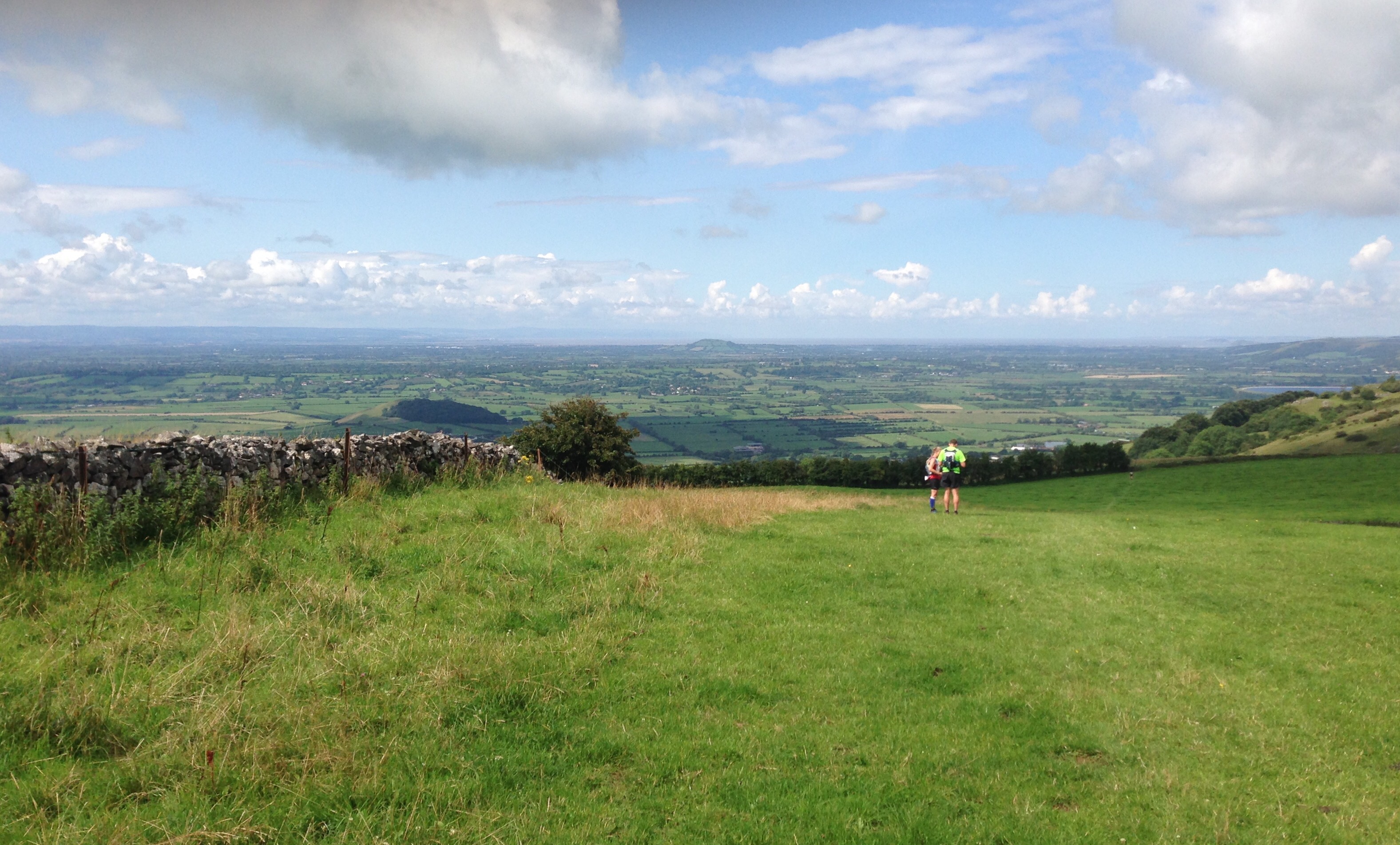
The Saturday run was a 10 mile up and back run along the Plym Valley trail. I set off thinking I would do a mile or two at a slow pace and then try to do 10 miles at 8 minute 30 second pace but quickly decided that I would do 10 miles in total and, having done a slow first mile (9:17 pace), try to get my average pace for the run down to 8:30. As the route took me higher I rapidly found myself running in low cloud which added a nice ethereal quality to the run. I turned around just before the Leighbeer tunnel. It was a good run and I easily managed to get my average pace down to the target level. It was not as quick as I hope to go in the upcoming Plymouth Half Marathon (my first run at that distance) but it was a good average pace on a route that is definitely uphill to the turn.

Into the land of micro-projects

Today I gave myself a bit of a luxury day, choosing to stay at home and think about doing work more than actually getting on and doing work. That might sound as if I was bunking off work completely, but by removing myself from the mundane churn of everyday work tasks and the myriad distractions of my normal working environment, I was actually able to think about a bunch of more creative projects that I have had in my head for ages but which never quite managed to translate into action. And whilst I still haven’t made a real start on any of them today, I was able to re-define each one as a smaller ‘micro-project’ which, being smaller, less ambitious and not the whole darned big deal of a final output can now actually stand a chance of getting done.

For a while now I have been thinking that one reason my big creative projects don’t get done (don’t even get started) is that they are just too big, too daunting, too unachievable. It’s not so much that I don’t have any time to work on them, but rather that I don’t have enough time to contemplate completing a big project when my confidence of a high quality outcome is low (added to which there is always a long list of more mundane tasks that can quite easily expand to utilise all of my time and energy). I figured that if I could somehow ignore, or forget, the bigger, longer-term goal of the project and instead identify just one small self-contained piece, then that piece might get done. Importantly, these small self-contained pieces couldn’t just be single tasks, they had to be small projects requiring quite a few steps and quite a bit of thought and, therefore, feeling like worthwhile projects in their own right. I have decided to name these ‘micro-projects’ and now I have a list of half a dozen or so of these (it’s not a complete list yet) which I actually feel confident about tackling and want to tackle because they seem worth doing in their own right and are not just incomplete attempts at the larger projects.

Interestingly, quite a few of this first set of micro-projects involve bringing together large amounts of data from separate data files into single coherent data files that can then be explored further – for example, I have three sets of meteorological data for Plymouth and a set of lightning data for the UK that each currently sit in multiple files in Excel or text format. I want to combine the separate files for each data set and make them properly MATLAB compatible. Only once I have done this can I think about the next micro-project in each case – the first steps in analysing the data to find something out. Other micro-projects I have defined include producing a single trial piece of video-based maths support using an iPad app called ‘ShowMe’ and a test version of the online encyclopaedia I mentioned a couple of days ago populated with a small number of sample entries.

Anyway, although there is nothing particularly novel about this approach but I do feel quite refreshed by the steps I have taken today and think it was time well spent. Watch out for future entries here to see how my entry to the land of micro-projects goes.

Busyness blocks business

Today has been a day spent mostly doing a bunch of odds and ends jobs – collating coursework marks, notifying students of their marks, writing a reference for a student applying for an MSc course, tidying up email loose ends and participating in a meeting to discuss subject group’s implementation of the University’s Performance Development Review process. None of this was particularly taxing, but all of it consumed time and meant that the day was filled with ‘busyness’ but no progress was made on any more creative projects.

Along the way, I had an interesting conversation with a colleague/friend who I have not crossed paths with for a while in which we chatted about how much stuff there is to do and how difficult it is to settle down to become immersed in more challenging, creative and personally satisfying projects. The result is a deep sense of frustration because ultimately it is these creative projects (research, development of learning resources or support materials, designing new courses/modules etc.) which bring most enjoyment and value. Creative projects are what drive things (people and organisations) forwards so it is deeply unhelpful when it is such a struggle to get into them. They are really at the heart of business in a university, so it is sad that all of our busyness prevents us from getting on with the real business.

No more hydrothermal vents please

Today I finished marking my Year 1 Online Encyclopaedia Entry assessments. There were 51 submissions in total and the whole lot took me about one and a half days to get through.

The assessment asks students to produce an entry on an oceanography or meteorology related topic of their choice for an online encyclopaedia targeted at members of the public with an interest in these subjects and, in particular, school/college pupils who might be interested in studying Ocean Science at university. Each entry consists of 150-200 words of text, an accompanying image (suitably checked for copyright and other use age issues) and three links to websites that provide an interested reader with additional information on the topic. I get a big range of topics and this year I had everything from snowflakes to thunderstorms to El Niño to the Gulf Stream to asphalt volcanoes. But every year I seem to get one topic that becomes strangely popular – in the past this has tended to be either hurricanes or tornadoes and so I verbally discouraged students from picking these topics when I set the work. This year the hot topic was ‘hydrothermal vents’ and so I have now read plenty enough basic descriptions of these systems to last me a few years and will have to remember to add this to my list of topics to avoid next time around.

Every year I think about actually creating the encyclopaedia by turning the best submissions into entries but every year time passes and the project remains just an idea. I now have 4 or 5 years worth of entries so there ought to be enough half decent ones built up to enable me to generate something fairly easily. Maybe this year will be the year that the idea finally bears fruit, and in amongst my store of entries I would hope that one of the entries on ‘hydrothermal vents’ will be good enough to make the cut…

Birth of a new module

In the midst of a full day marking Year 1 ‘online encyclopaedia entry’ assessments I took a break this afternoon for an impromptu meeting with a couple of colleagues to discuss plans for our new Ocean Science degrees (starting in September 2015). After a long, fairly rambling discussion of module names and potential staffing we came to the tricky topic of what we could offer as a so-called Plymouth Plus module. These modules are to be taken by Year 1 students in a four week intensive format at the start of Semester 2 (so in February). The idea is that the students should study something outside their main subject area and the Plymouth Plus module is the only thing they will take at that time throughout the four week period.

My view is that these modules are going to be really challenging to deliver because it will be necessary to occupy the students continuously and the module delivery will have to be a very rich mix of activities and not simply a series of lectures.

Anyway, after quite a lot of to-ing and fro-ing we came to the idea that I would run a ‘Weather and a Climate’ module. This is an idea I have already given some thought to and have a few ideas about it in mind, and the more I think about the idea the more exciting the prospect becomes. Make no mistake, designing and running this module will be a major challenge, but I’m already coming to love the idea of having my own intensive module on this topic into which I can throw all kinds of creative ideas and learning activities. I think it could be a vehicle through which I can actually regain some academic identity. It’s a great project to get my creative juices flowing and for the first time in a while, it’s a project that I am really rather excited about.

My Running Week 2014 #13

I completed just two runs this week. The first was the Thursday evening group run with the Plymouth Musketeers: the Barne Barton route (5.5 miles) which I completed with the 9 minute/mile group. It was a pretty uneventful run – even the infamous Bridwell Hill is starting to lose a lot of its fear factor these days.

Then, on Sunday morning, I went over to Siblyback Lake for the Dig Deep 10k race. I ran the previous Siblyback 10k in September in a time of 51 minutes 35 seconds and with a recent 10k PB of 49 minutes 13 seconds in the Mad March Hare 10k at Saltram just a few weeks ago I was looking for an even better time on what is a mostly flat course. The route has a fast downhill start on a road and then two loops around the lake mostly on a gravel track (not the quickest surface to run on). Towards the end of each loop there is a short but rather nasty rise up to the car park and the race ends with a wicked short climb to the finish line. I struck out quickly from the start and simply tried to maintain my pace as best as I could for as long as I could. It was difficult; I found my legs tiring and feeling heavy quite soon and had several moments when I wondered whether I really wanted to keep going. I was helped for much of the second half of the race by the presence of another runner just a few metres behind me. I could hear his footsteps and breathing loud and clear and was mentally preparing for him to pass me from about the 6k mark onwards, but his presence obviously spurred me on and helped me to keep going because he never did pass me and, in fact, as we took the last rise to the car park I pulled ahead a little. I finished up with a time of 47 minutes 47 seconds which is a new 10k Personal Best by a margin of 1 minute 26s. It is interesting to compare this time with my time on the Plymouth 10k in early November (just a few seconds under 50 minutes) – a 2+ minute improvement which could, perhaps, be even greater on the same, flatter, course.

My Running Week 2014 #12

On Thursday I did the Plymouth Musketeers group run – a Fartlek run with my usual 9 minute mile group. ‘Fartlek’ is a Swedish word meaning ‘speed play’ and the Fartlek run involves successive periods (a few minutes in duration) running consistently at various different paces. We do the run around a loop of about 1 mile which, as always, involves a decent hill. I have only done this type of run twice now but it is definitely one of the harder ones we do.

On Saturday morning I did the Plym Valley 5k Park Run and was pleased with a time that was not too much below my best for this route despite considerably wetter conditions again.

On Sunday morning I got myself up early and did a long run starting from Coypool going through the Saltram estate, up Billacombe Road in Plymstock then heading back to Saltram. This part of the run included a good chunk of the Plymouth Half Marathon route and so I was really pleased to discover that the Billacombe Road climb really isn’t anything to be concerned about. I completed 9 reasonably fast miles (sub 9 minute mile pace). Having returned to Coypool, I then decided to head up and back the Plym Valley trail to get the overall distance up to half marathon distance (my first time running that far). Unsurprisingly, I slowed a bit in the last 4 miles (particularly the first two uphill ones) but I was really pleased to complete the HM distance in 1 hour 55 minutes 30 seconds. This has given me confidence that I will complete the Plymouth Half in under 2 hours and has me seriously wondering whether 1 hour 50 minutes is a possibility.

My Running Week 2014 #11

I managed three runs again this week with the last two providing me with a fantastic double Personal Best weekend!

The first run was the Plymouth Musketeers group run on Thursday evening. It was the Weston Mill route, run in the 9 minute mile group, a 5.5 mile route that contains the infamous Bridwell Road climb.

On Saturday morning, I completed the Plym Valley 5k Park Run. I intended just to run hard with no particular expectation of a great time, but with somewhat drier than normal conditions underfoot I ended up pushing myself all the way to a new Personal Best (by just 4 seconds) of 23 minutes 54 seconds.

Then, on Sunday morning I ran the Mad March Hare 10k race. This 10k was the same route as the January Jaunt 10k, from Coypool through to Saltram House up the hill to Stag Lodge and back again. In January I ran the race in 52 minutes 11 seconds just after having a bad cold so this time I set out to beat this time comfortably and to get close to my 10k PB (just under 50 minutes at the Plymouth 10k in November). I ran consistently hard throughout and was delighted with my time of 49 minutes 11 seconds – a new PB on a much more difficult route.