‘Early’ morning run

This morning, for the first time in ages, I managed to get myself straight up and out for a run. Earlier in the year, when I was training more rigorously for the Somerset Flat 50 Miler, I was fairly regularly out running before breakfast, but since then I have become rather useless at getting out early.

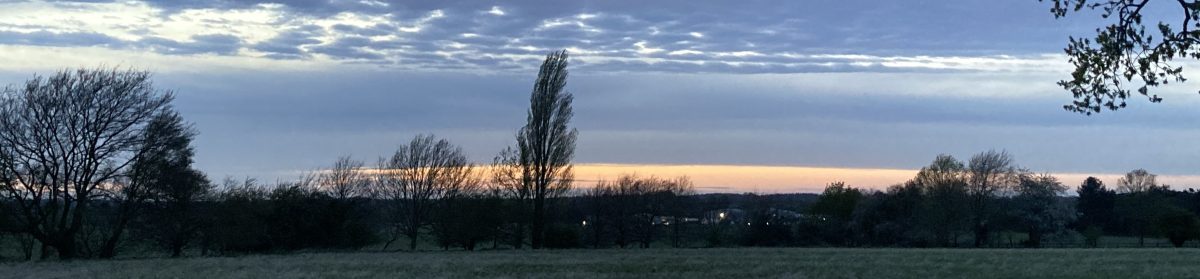
Today I was out at about 7:25am and ran for just over 4 miles – a loop around the estate, across to Central Park, along the upper path towards the city centre, down and around into the trees and back to the football ground and then home again. It was a crisp, clear day with the low sun providing some warmth and sparkle. I was surprised that there were so few people around. Actually, that is not entirely true, there were a lot of people sitting in cars in queues of traffic along the main road, but there were relatively few people out in the park, walking dogs and heading to work. There is something quite invigorating in being out and about exercising before most people are moving. I hasten to say it, because it’s perhaps not really the best feeling to have, but it always makes me feel a little smug…

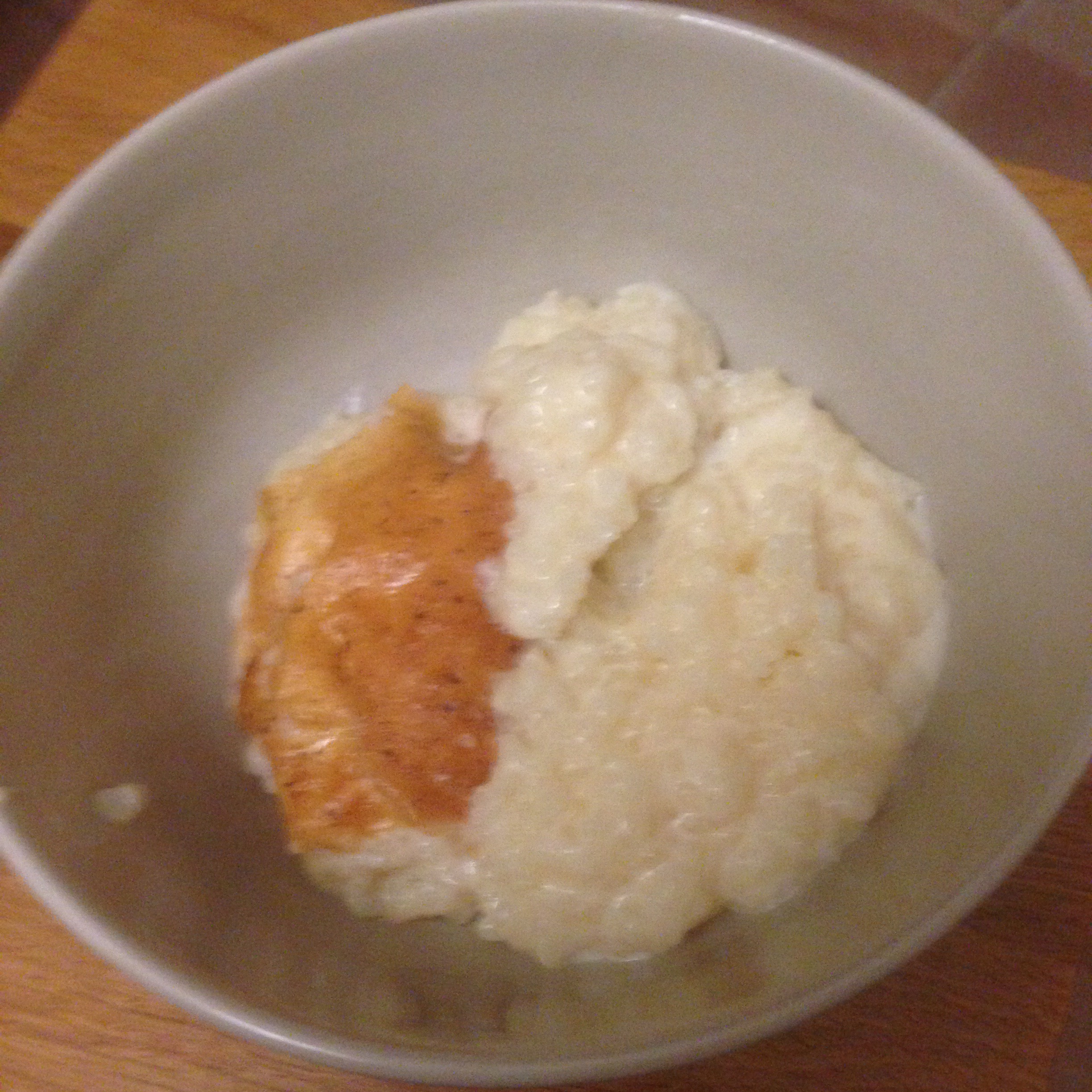
I got home, did some stretching (boy is my left glute stiff/sore at the moment) showered and, in a nod towards the imminent arrival of winter, opted to make porridge for my breakfast, topped with chopped banana and a slice of honeycomb from a local bee-keeper. All of this meant that I am a little late into work (deliberately) but it has to be said I’m feeling pretty good right now!

Out with the old and in with the new (office plants)

I have had a set of three plants in my office that I bought from IKEA at least 5 years ago (perhaps as many as 7). Although they were chosen for their resilient nature (being varieties of cacti/succulent type plants – yes, I know, I’m no expert), for the past few years these plants have been dead, as a result of my complete lack of care for them. To begin with I watered them regularly (weekly) and they did okay but at some point I stuck them behind a sliding internal glazing panel and from then on neglect set is as I was seemingly incapable of sliding the panel open and walking a few metres to the office kitchen to get some water for them. This was the result:

Finally, on Saturday, after having it on my list of things to do for many months I bought some replacements (also from IKEA) and then this morning I removed the old plants and put the new ones in their place. I had measured the size of the previous plant pots as being 10cm and the new ones were a little smaller than this with the result that the news ones look a little hidden in the pots. However, I think they will be fine and if I can be organised enough I might get some gravel to form a base for them to stand on and to raise them up within the outer pots. So, my latest attempt at introducing a little greenery into my office isn’t perfect, but it’s defintelty an improvement on the dead ones:

and they look quite smart on the window-sill:

It remains to be seen how long these ones will survive, but I can confirm that they have been watered so they should make it through a week or two at least!

Everything takes longer to do than it should do

Today, after a two hour lecture first thing in the morning, I have been trying to drive my way through a fairly long list of tasks, many of which are somewhat overdue. I set aside separate, discrete periods of time (~2 hours each) for tasks related to my management role as Deputy Head of School and for those related to my teaching. Now, as I reach the end of the afternoon and look back on how things have gone, two main thoughts/feelings come to mind. First, I feel fairly pleased with myself for not giving in to distraction and sticking to my plan. Secondly, I can see that whilst I got a lot done, I got nowhere near as much done as I would like…

The problem, on reflection, is that every single task that I set out to do took longer than I hoped it would. This was for a variety of reasons including things like clunky documents that I had to work with and delays in being able to access a printer, but mostly it was simply a case of tasks being more complicated than I hoped they would be. Actually, I am not sure that they were REALLY more complicated – it might just have been that they took me longer than I wanted them to because I was over-ambitious about what I hoped to achieve in the limited time I had available. I am not going to beat myself up about this – I can only do what I have time to do – but it is frustrating that I haven’t been able to clear the backlog as much as I had hoped. I will just have to get my head down some more tomorrow and make whatever inroads into things that I can.

One thing certainly did seem to work, namely splitting my available time into sections for tasks associated with different roles or aspects of my work. I think I will experiment with this idea some more. It seems like a good idea to decide, before I settle down to work at a particular time, which of my multiple hats I am going to wear – educator, manager, scientist etc. and then to not allow tasks from one domain to bleed across into time set aside for another domain. This ought to reduce distractions and help me to maintain a singular focus on what I am trying to achieve.

Essentialism and the 7 Habits of Highly Effective People

This morning, on my walk into work, I listened to an episode of the Art of Manliness podcast called ‘The Difference Between Essentialists and Non-Essentialists‘. It was an interview with Geoff McKeown, author of a book called ‘Essentialism’ that was published about three years ago. In very basic terms, Essentialism is a mindset which involves identifying areas of activity in life that have the most meaning/value when viewed from a long-term perspective and then using these as a filter to help manage decisions on activity and effort on an ongoing basis. Rather than mindlessly saying yes to things or simply committing yourself to try to do everything as best as you can, an Essentialist would know the key goal that they are trying to achieve in life (potentially taking a 100+ year timeframe as a means for deciding this) and then focus attention on actions that contribute to achieving this overarching goal. The idea is not new, but I felt that McKeown had an exceptionally clear way of expressing it, to the point that I am certainly going to read or listen to the book sometime soon. In the interview, reference was made to the famous quote from author Steven Covey’s that “the main thing is to keep the main thing the main thing” which obviously captures the same idea in a nutshell. Listening to this section of the podcast I was reminded of Covey’s classic book ‘The 7 Habits of Highly Effective People’. I read this way back in early 2001 and so it would have been one of the first books on productivity, self-management that I ever read. I recall that it contained much of value. At that time I was also experimenting with mind-mapping and produced a mind-map summary of the complete book. Amazingly, I have just managed to find a rather fuzzy scanned image of it..


Apart from anything else, I rather like this mind-map as a piece of ‘art’.

One of the things I recall from my reading of ‘The 7 Habits’ was the development of a personal ‘mission statement’ based around the different roles that one plays in life (for me it was things like, father, husband, teacher, manager, researcher etc.) and the same idea is picked up by McKeown through the idea of an ‘Intention’ (The Main Thing). It seems to me that Covey probably has the edge here because I don’t think I could have a single Intention in life but I certainly could have a single Intention for each of my main roles. I think this is certainly something that I will give some further thought to.

Anyway, from that podcast I now have a mind that is filled with curiosity to pursue the idea of Essentialism further, both through McKeown’s book but also by going back to Covey. Annoyingly, I gave my copy of ‘The 7 Habits’ to a charity shop years ago and even bought a second-hand copy more recently but gave that one away too. So, one of my first tasks here is going to be to hunt down another copy of it.

Watch this space for further thoughts on Essentialism then, as and when I have followed up on these sources.

On The Road (Jack Kerouac)

I finished reading Jack Kerouac’s novel ‘On The Road’ last night. I read it because it was a that kept cropping up in podcasts that I listened to, I guess because it is very much an ‘in-the-moment’ description of a series of random incidents. The novel is written from the perspective of Sal Paradise, a youngish American man in the late 1940s/early 1950s who criss-crosses the USA, sometimes alone and sometimes with traveling companions (planned or otherwise). Basically, Sal has a series of adventures, none of which are especially dramatic or meaningful but which, nevertheless, add together into a journey of self-discovery. Sal comes across as a relatively level-headed guy which is more than can be said for his frequent companion Dean who seems to be a complete hot-head and totally out-of-control (marrying two women and having several children, leaving them multiple times, driving at incredible speeds, never sleeping, always partying etc). Dean clearly represents freedom and spontaneity and is a balance to the more measured and thoughtful Sal who is an observer of life and people (also a writer).

It’s an interesting book but also quite an odd one. I would say that I enjoyed it although I also found myself wanting to get it finished. It was almost as if I knew that being on the journey with Sal and Dean was never going to take me to an end destination and that the only way to escape was to jump off the pages.

One thing that particularly intrigues me is that my younger daughter (19) has told me that this is her favourite book, She is not a particularly avid reader and so I find it interesting that this particular title resonates with her. She has also read a few of Kerouac’s other novels (Big Sur, The Dharma Bums, The Town and The City) so there is obviously something about his style/message that catches her mind. Kerouac’s writing IS richly descriptive and somewhat hypnotic at times and ‘On The Road’ certainly captures a sense of youthful spirit and experiencing existence for it’s own sake.

On the Shortness of Life (Seneca)

On Sunday I finished reading Seneca’s ‘On the Shortness of Life’. It’s only a slim volume and I completed it in two chunks a few days apart. I have to say that I was hoping/expecting a little more from it. My disappointment could be because I read it relatively quickly and certainly not studiously but I think the rather drawn out and prosaic writing had something to do with this too, although it has to be borne in mind that it was written about 2000 years ago so perhaps that is understandable! Actually, writing the last sentence brings to mind that it really is quite remarkable that something written so long ago can still speak to a modern reader (of course the translator and editor of the edition I was reading are not quite so ancient).

Having skipped through the book I came away with three take-away messages. First, Seneca argues that life isn’t really short and that, in fact, it is plenty long enough if used correctly. Secondly, he is particularly critical of people who allow others to control their actions through their choice of work. Finally, he makes a case that the most worthy activity that you can indulge in is to learn to philosophize. Now, I may have missed the point a bit, but to my mind the last two are not especially helpful pieces of advice, which is why, overall, I ended up a little disappointed by the apparent lack of profundity from a book that I think is generally regarded as something of a classic.eneca

New Music (Ane Brun | Agnes Obel)

This morning I listened to two albums from artists who were entirely new to me. I pick up potential new listening from the i newspaper each day and particularly each Friday when there is an extended Arts section. I glance through the reviews and if I see any that sound interesting and/or get positive comments then I take a note of them for future reference. When I do this I try not to be biased by what I already like and whether I have heard of the artist or band before. In fact, I try to actively look for artists that I haven’t heard of much before. Two such finds were Norwegian songwriter Ane Brun (specifically her 2015 album When I’m Free and Danish singer-song write Agnes Obel (and her 2016 album Citizen of Glass) – clearly I must have a new music sensor set to a ‘Scandinavian female singer-songwriter’ setting!

I quite liked both albums but definitely preferred the Agnes Obel one – it was a little cleaner sounding with hints of Kate Bush. Parts of it felt slightly familiar, as if they were used as a soundtrack for some drama programme I have watched on TV (I don’t think they were). I’d probably listen to this album again and/or explore her other work. I wasn’t so sold on the Ane Brun album – it just seemed to lack any particular impact and so I didn’t particularly notice that I was listening to it (if that makes sense). However, I saw in the paper this morning that Brun has a new album out very soon (which is what prompted me to try When I’m Free today) so I will probably give that one a go if I can get hold of it.

As One Wave Breaks…

Working in a University, today is the day that we properly make the pivot from one academic year to the next. Usually things don’t line up quite so nicely but this year, today, I have attended the Awards Ceremony for our graduating students (who mostly started in September 2014) this morning and then this afternoon I have met our new First Year undergraduate students and taken a large group of them around the campus for a tour. So, on the very day that we wave goodbye to one group we say welcome to another. It has been a really strong marker of the regular annual rhythm of my work. It has also been a very odd day because it is one of the very few days on which I have put on a suit. This drew comment from colleagues who, ironically, were also unusually smartly attired that I ‘looked very smart’, that they didn’t recognize me and, in one case, that ‘it makes you look like a Headmaster’. I can cope with the former comments; I am not at all sure what to make of the latter one!

As I reflect on this example of ‘out with the old and in with the new’, and given that my field of work is marine science, I am drawn to thinking of today’s changes as being like waves rolling in towards the shore. As one wave breaks a new wave travels into the surf zone and shoals (grows) rapidly on its way shore wards. At any time there are then a couple of waves in between, one almost at the point of breaking and one a bit further out towards the edge of the surf zone growing all the time (mostly our courses are three years long). Student cohorts as surf zone waves? I think maybe it has been a long and tiring day…

1000 miles run

12 miles into the New Forest Marathon last Sunday I passed the 1000 mile mark for this calendar year. This is the second time I have reached that total, having completed a total of 1008 miles in 2015. In that case I think it was pretty much the last day of the year that I hit four figures so I am really quite astonished to have reached the same total (actually I have now run 1014 miles this year) by mid-September. With 3.5 months of the year still to go I will probably get my total annual mileage up towards 1200 miles taking into account the fact that as the nights draw in and I become less focused on training for events my mileage per week is bound to drop a bit. Looking back at my monthly totals it is obvious that it was my main training months in the early part of the year, ahead of the Somerset Flat 50 Miler in May, that have boosted my annual total. I tailed off a lot in June and July (post-ultra) but picked up a bit in August. For the record I ran 946 miles in 2016, 691 in 2014 (my first full year running) and 372 in 2013 although I only started running in April that year.

I think I’d like to try and hit 1200 miles next year by completing at least 100 miles each calendar month. That seems like an achievable but challenging target to me.

Walking to School

On my way into work I pass two primary schools. The first is a private school (fee paying), tucked away off a cul-de-sac off a suburban backstreet, the second is a large state school (actually the one my kids went to) on a fairly busy route into the city. This morning, as I went to cross the road by the first school I found myself having to dodge multiple cars that were pulling up in random places, driven by smartly-dressed professional parents and packed with uniformed children. I have to admit that I got a little annoyed. Clearly, THE most important thing in the world was getting the car as close as possible to the school with minimal regard for anyone else trying to occupy the same physical space. It set me thinking about children being driven to school versus my own experience, and the experience of my children, of walking to school.

In my opinion, children ought to go to their local (nearest) school and, in a city/town such as Plymouth, for most people this should mean that they can walk there. Walking to school provides all kinds of benefits including improving physical health through some daily, low-stress exercise, improving mental health through exposure to the environment, potentially improving family relations by encouraging conversation between parents and children etc. Shutting kids up in metal boxes and delivering them door-to-door, perhaps to a location that is outside of their local community area, just seems like a BAD IDEA to me. So what if it rains a little (like it did this morning) or is a bit cold (or even hot)? Surely exposure to the elements is mostly a good thing?

Thinking back to my own experience, at primary school age I used to walk a good mile or so to school along a lane and a canal tow-path (quite rural despite being in a town). At secondary school age I had a similar length walk, including a pretty decent uphill section, through a housing estate. It didn’t do me any harm… [unless anyone wants to try to argue that it made me into a grouchy old man who goes off on rants about trivial things occasionally…].

Passing the second school on my way in it was noticeable that a lot more people were walking their kids to school. It was much more how I think things should be. I think it is entirely possible that the difference was due to the fact that the first school was fee paying and the second wasn’t but I am going to resist the temptation to try to argue this case and leave it just as an observation.