Language of the Spirit – Jan Swafford #reading

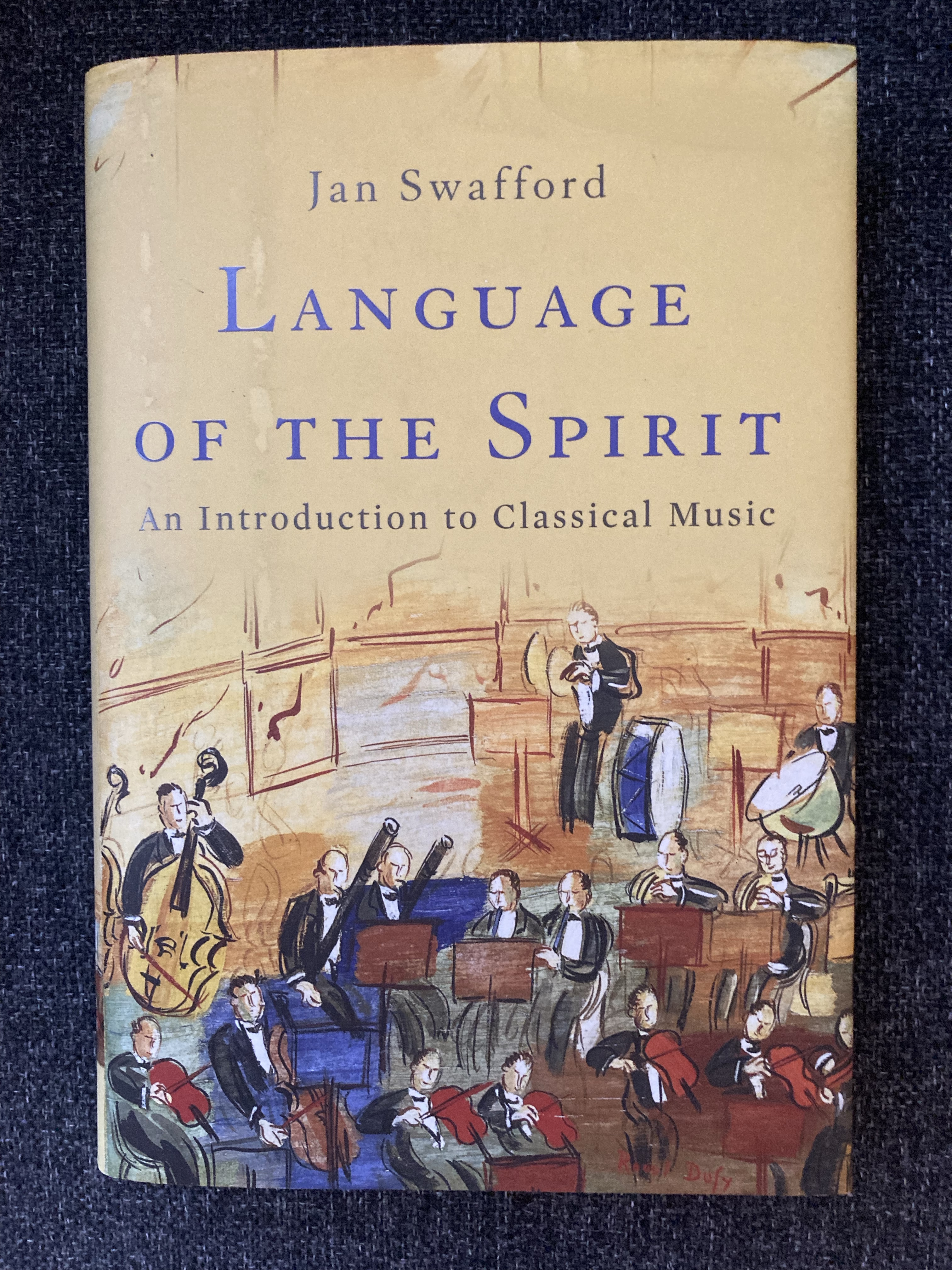
I started reading Jan Swafford’s Language of the Spirit – An Introduction to Classical Music back in June 2023 and finally completed just a fortnight ago. It would be tempting to conclude from this that it was a book that I struggled through but, in fact, nothing could be further from the truth.

I grew up in a household that was full of classical music, from the long, purpose-made shelf unit in the living room that was stuffed full of vinyl records, to the assortment of musical instruments that my father acquired and dabbled with (flute, trumpet, clarinet, mandolin, violin). Apparently, when my brother and sister and I were very young, we would be accompanied on our way to bed by our personal favourite pieces of music, presumably each one being some piece that we had reacted to positively at some point. I don’t recall what my sister’s piece was, but I do know that my (older) brother’s piece was a movement from Schubert’s ‘Trout’ Quintet and mine was the rather stirring ‘March Slav’ by Tchaikovsky (so it is probably no coincidence that Tchaikovsky later became one of my absolute favourites).

I had piano lessons from the age of about six and then at around nine years old I began to learn the ‘cello (because apparently I had shown an interest in learning it, although I can’t say that I remember that and I suspect it was more because it was an instrument that my father wished he had been able to learn). I was never that great at the piano, and stopped after passing my Grade 6 exam, but playing the ‘cello certainly became a big part of my life all the way through my teens and well into my 20s. Over the years, I played in various ensembles and orchestras, in particular leading the ‘cello section in the Somerset Youth Orchestra, the Somerset County Orchestra, Oxford Sinfonietta and Bangor University Orchestra and being on the first desk of the ‘cello section for the annual summer gatherings of the Somerset Chamber Ensemble/Orchestra. It’s fair to say that I was a pretty good ‘cellist – although better known, I think, for my expressive playing than for a robust technique (or any kind of technique at all really – practice and I have never really been comfortable bedfellows in any area of activity…).

I always enjoyed orchestral music the most, especially music composed from around 1850 through to perhaps 1930 – the romantic and late-romantic periods – music full of emotion, passion and angst. My mother used to call the kind of music I liked best ‘troubled music’, which I guess is fair: Brahms, Tchaikovsky (and assorted other Russian composers of that time), Wagner, Sibelius, Richard Strauss, Mahler – that kind of thing. Unlike a lot of musicians, I never went much for some of the classical greats like Bach and Mozart, especially the latter, whose music (am I allowed to write this?) I tend to find rather boring.

In Language of the Spirit, Jan Swafford, a US-composer and music academic, provides a wonderful journey through the classical music canon, from early single-line chants, through all of the great names, and right up to the present day and the post-modernists. The book is mostly written on a one-composer-per-chapter basis, with most chapters being perhaps six to eight pages in length. In each case, Swafford outlines what makes each composer’s work distinctive, and provides a little detail of about their life, their influences and their major works, which brings me to the reason why it has taken me the best part of two years to finish the book…

Just for fun, I decided at the outset that I would listen to every piece of music that Swafford had picked out as being important or a good example of some aspect of a composer’s works. This meant that for each chapter I created a playlist with something like 8-15 pieces requiring multiple (many in some cases) hours of listening – Spotify was my friend! In the end, I managed to listen to every single piece that was highlighted or recommended (including several full operas) except for one piece by Stockhausen that I couldn’t find (but based on the Stockhausen works that I did listen to I can’t say I am too upset about that).

I listened to lots of music that I already knew well, lots of music that I thought that I knew well, and even more music that I didn’t know at all, some of it major works by major composers. I had a few surprises, particularly enjoying the music of Schumann (who I have never paid that much attention to in the past) and Grieg (who I always thought was a bit lightweight), and despite not really enjoying most of the noise that was described as atonal and/or post-modern, there was something about the work of Philip Glass that I enjoyed more than I feel I should have done.

Having now finished reading the book, and having listened to the last piece (John Adams’ Shaker Loops), I was spurred on to re-arrange the furniture in the small bedroom that I use as a kind of home office/personal den so that I could fit in some nice wooden CD shelves that we have struggled to find a good home for recently, and I unboxed all of the CDs (not just classical) that have sat out of sight since we packed them up last summer before having our kitchen re-modeled.

If you don’t know much about classical music but want to know more then I thoroughly recommend Swafford’s book. It is written for a general reader and gives a lot of interesting background and insight into a huge range of music. Alternatively, if you are like me, and know (or think you know) a lot about classical music already, then Language of the Spirit is a great stimulus to rediscovering old favourites and discovering new ones (and also discovering ‘music’ that you will never want to hear again for that matter – but each to their own of course!). Reading Language of the Spirit didn’t convert me into a Mozart-lover – I’m still very much in the ‘troubled music’ camp – but it did broaden my knowledge and has given me a number of composers to explore further. I also discovered that rather than being the somewhat over-sentimental ‘slush-fest’, that I recalled it being from when I played it with the Somerset Youth Orchestra over 40 years ago, Rachmaninoff’s Second Piano Concerto is indeed a rather special piece of music.

New Music… The Low Anthem and Glen Hansard

I listened to a couple of new musicians/bands today with somewhat mixed outcomes.

First, this morning in the I newspaper I read a review of a new album ‘The Salt Doll Went to Measure the Depths of the Sea’ by a band called The Low Anthem. It is a ‘concept album’ that follows an old folk tale about a salt doll who gradually explores the sea. Each time the doll enters the water a little more of its body melts away (the third track is called ‘Give My Body Back’ and is when the doll dips her toe in the water only to find she loses it). It got four stars in the review and sounded intriguing (I really liked the idea of the story which, basically, says that the more you explore and try to discover yourself the more you slip away – I’ve not done it justice here and ought to re-read the review and follow-up on the story itself) so I thought I should listen to it not really having any idea what sort of music it was. It was okay – soft tones, percussion, piano – not especially memorable, not unpleasant at all but not something I think I will rush back to for another listen.

Secondly, I discovered that I had previously saved an album called ‘Didn’t He Ramble’ by Glen Hansard on Spotify, presumably as something I thought I might want to listen to at some point sometime and probably on the basis of another review in the newspaper. With no idea what I was about to let myself in for I hit play and rather liked the soft, folky, lilting tones – voice and guitar – with some tracks that made me stop and take notice from a lyrical perspective (‘Winning Streak’). This album is definitely one that I will return to and I think I will also explore anything else Glen Hansard has produced.

Big Little Lies… and a Banging Soundtrack

Over the last week or so we have watched the HBO drama Big Little Lies on TV. My wife had already read the book that the series of based on (by Lianne Moriarty) so she was watching it with the benefit of knowing what happened in the end whereas I was able to enjoy trying to second guess the plot (which I have to say I pretty much did after 2-3 of the 7 episodes). Anyway, it was an enjoyable series to watch but the best part about it was the soundtrack which, to use a phrase that my younger daughter would use, was packed with absolute bangers (i.e. great tracks), almost all of which were by artists that I didn’t know (apart from a couple of really excellent covers of Elvis songs). The result has been that I am now exploring some of these artists further, starting with Leon Bridges, then moving on to Agnes Obel (who I had heard of but had not listened to her hauntingly beautiful album Aventine). Now I am listening to Michael Kiwanuka (who provides the track that opens each episode). Next on the list will be the Villagers.

So far I have been really enjoying the music, particularly the Agnes Obel album which is one I think I might listen to a lot. There is obviously something about the laid back vibe of the music chosen to accompany the coastal California locations and lifestyles in the series that I like. What I find interesting is that whilst the music all seems to resonate with me, it comes from all over the place – Bridges is American, Obel is Danish, Kiwanuka English and the Villagers are from Ireland – and the styles are quite different. Someone did a really smart job putting together the music for the series.

Listening to Music

I have a problem. I pay out money every month (to the music-streaming service Spotify) so that I can listen to (more or less) whatever music I want whenever I want because I love the idea of listening to music but when it comes to it, I almost never do so. Consequently, not only am I not doing something that I think I want to do but I am paying money (approximately £120 per year) for the pleasure of not doing it! Why? And what is the solution?

The obvious thing for me to do is to cancel my Spotify subscription and save myself some money. I could still listen to a wide range of music (CDs, CDs saved as mp3 files, online radio, free Spotify with adverts etc.) but obviously I wouldn’t be able to listen to almost anything at anytime (assuming I had downloaded tracks to my phone say). This latter point makes me resist cancelling because I feel that it reduces the chance that I will listen to music. But that is crazy: I already listen to music approximately 0% of the time so I cannot really reduce that even further. What I really mean is that if I cancel my Spotify subscription I feel that it will reduce the chance that I will somehow change my behaviour and start listening to music. This means that I am paying for the privilege of being able to dump on myself more effectively for not doing something I supposedly want to do.

All of which leaves me looking towards other resolutions which, clearly, have to involve me listening to music. It really is simple – I have to answer one question: Do I want to listen to music? And if my answer to that question is ‘yes’, and I think it is, then I have to make some decisions about when and where and how I will do this. I could listen on my way to and from work – but I already use that time to listen to podcasts and audiobooks and I don’t want to lose that. I could listen to music at home – but I think the opportunities to do this are pretty limited because i) other people are around and would probably not want to listen to the same things that I would, ii) I would probably be doing other stuff and moving around at the same time and so wouldn’t really be able to listen properly and iii) I don’t want to be hooked up to headphones all the time. I could listen to music at work in my office – but I think that maybe I would find it hard to concentrate properly if I was actively trying to listen to music at the same time. Added to this, I find I struggle a bit to decide what I want to listen. All of which means I am a bit stuck.

To try to resolve all of this (and if you are reading this you are probably really struggling to get your head around how someone can turn something so simple into something so utterly complicated) I am going to experiment a bit. I am going to try putting on Classic FM at work just to get used to the idea of having ‘noise’ going on as I work. Initially, I will probably only do this when I am not engaged in deeper work that requires high levels of focus. By choosing online radio I remove the need to decide what to listen to (apart from choosing the station of course) which helps to solve one of the associated issues.

The curious thing is that I used to listen to music all of the time, but I suppose back then all of my ‘space’ was my own and although I thought I was busy all the time probably I wasn’t and music was something that helped to fill the world around me. I’ve had Classic FM on as I have been typing this and quite enjoyed having a layer of sound there in the background although I could hardly tell you what pieces have been played (Rossini’s ‘The Silken Ladder’ Overture [?] was one and some music from Jurassic Park films was also on earlier I think, music from Tchaikovsky’s ‘Swan Lake’ is on now). So far so good. I will try to remember to report back on my progress at some point in the not too distant future, and for now Spotify will continue to receive my money, just in case this flicker of aural inspiration catches light into a full-blown fire again.

New Music (Ane Brun | Agnes Obel)

This morning I listened to two albums from artists who were entirely new to me. I pick up potential new listening from the i newspaper each day and particularly each Friday when there is an extended Arts section. I glance through the reviews and if I see any that sound interesting and/or get positive comments then I take a note of them for future reference. When I do this I try not to be biased by what I already like and whether I have heard of the artist or band before. In fact, I try to actively look for artists that I haven’t heard of much before. Two such finds were Norwegian songwriter Ane Brun (specifically her 2015 album When I’m Free and Danish singer-song write Agnes Obel (and her 2016 album Citizen of Glass) – clearly I must have a new music sensor set to a ‘Scandinavian female singer-songwriter’ setting!

I quite liked both albums but definitely preferred the Agnes Obel one – it was a little cleaner sounding with hints of Kate Bush. Parts of it felt slightly familiar, as if they were used as a soundtrack for some drama programme I have watched on TV (I don’t think they were). I’d probably listen to this album again and/or explore her other work. I wasn’t so sold on the Ane Brun album – it just seemed to lack any particular impact and so I didn’t particularly notice that I was listening to it (if that makes sense). However, I saw in the paper this morning that Brun has a new album out very soon (which is what prompted me to try When I’m Free today) so I will probably give that one a go if I can get hold of it.

The Language of Spirit

Inspired by a recommendation from Austin Kleon (e.g. see this blog post) I ordered a copy of The Language of Spirit by Jan Swafford and when I got home yesterday evening it was waiting for me to open.

IMG_0167

As I think I mentioned in an entry last week, I grew up on a diet of Classical music both as a listener and as a performer and throughout my teens and well into my 20s I routinely listened to Classical works, mainly from the period 1830 through to 1930. I was (am) a particular fan of the Romantic period – Brahms, Dvorak, Tchaikovsky, Mahler, Richard Strauss, Borodin, Rachmaninov, Sibelius, Nielsen and a host of other – pieces that my mother often referred to as ‘troubled’ music. But in the last 25 years or so I have not listened to Classical music much. In fact I have not listened to any music much (properly).

Looking through the book I find myself ridiculously excited to reconnected with so many old favourites and, I am sure, to discover some new ones. The book is arranged as short chapters each giving a brief overview of the life and works of a different composer and presented in essentially chronological order. In each chapter there are recommendations for works to listen to and glancing through I could see a lot that I knew but also a lot that I didn’t. I am pondering the idea of reading the book slowly, progressing through the composers in date order and listening to each and every work that is highlighted. This is a project that could take a long time and I might get frustrated by the time it takes me to get through to my (currently) preferred era, but it seems to me that if I want to give myself a really thorough re-grounding in this musical world it makes sense to follow its development in a logical fashion. Also, if I don’t adopt some kind of methodical/disciplined approach then I think I will just cherry-pick works I know well and then I will potentially miss out on a lot of what this journey might have to offer. We will see.

Brahms Symphony #1

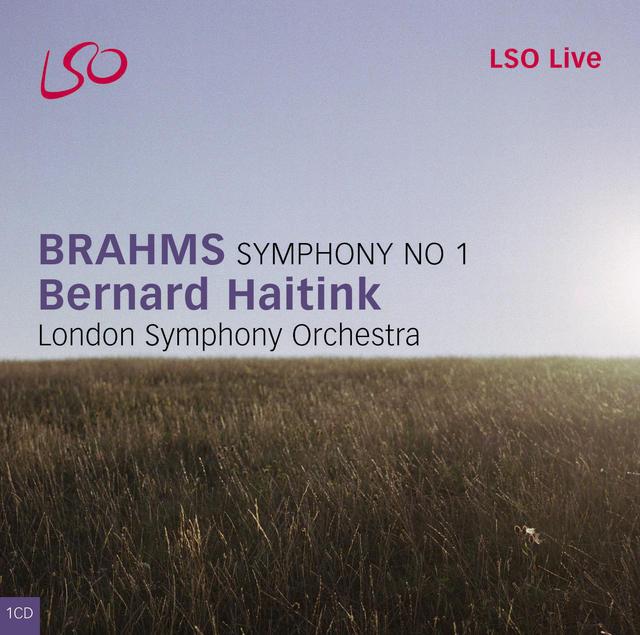
Usually I listen to podcasts or audiobooks on my walk to and from work each day. Today I decided to do something different and listen to music. I have been thinking for a long time that I really ought to listen to classical music more (I was brought up on classical music but have hardly listened to any in the last 25-30 years). Over recent days I have had a few moments when snippets of music from Brahms symphonies have popped into my head and so it seemed logical to start my walking listening with Brahms Symphony #1 in C minor. I listened via Spotify and chose this version by the London Symphony Orchestra conducted by Bernard Haitink:

IMG_0163

I very much enjoyed my listening. The Brahms symphonies have always been particular favorites of mine – a great mixture of grandeur, soaring themes playful interaction between different motifs and parts of the orchestra. Music seems to me to be something close to magic. It is not at all obvious to me what it is, beyond a collection of sounds, and how it can affect us so much. It is like there is some deeper truth going on behind the scenes that we can barely glimpse but which we know is there.

As I hope this will be the start of a significant amount of deliberate music listening I have decided to add a new list to this website to join my existing lists of books read, films watched, races run and football grounds visited. I don’t intended to record everything I listen to but I will try to note the music I have listened to deliberately and with full focus (so not background listening).