Gratitude

Over the last two or three years I have read/heard many times that keeping some kind of ‘gratitude journal’ is supposed to deliver a boost to your happiness/contentedness. The basic idea is to spend a few minutes at the end of each day reflecting on the hours just gone and identifying a small number of things (e.g. three) that you are grateful for. It makes sense that by reminding yourself of such things on a regular basis you will end up with a generally more positive attitude – highlighting and acknowledging the good stuff that has happened or reasons to be cheerful.

I already keep a small journal of sorts. Each night before I go to sleep I make a note of the key events of the day by just writing one or two words to describe the event and drawing a little symbol or icon to represent it. For example, I have different icons for work (two gears meshed together), reading (an open book), watching a film (movie camera), watching TV (TV set), drinking coffee (cup), walking (stick man), listening to a podcast or music (head with earphones). I should add photos of a page or two to this post sometime to illiustrate what I mean (more likely I will write a separate entry about my notebook habits).

For the last week, I have been adding an extra section at the bottom of each day of this journal headed “Grateful for” with a three item list below populated by things I am grateful for from that day. I thought this would be easy. It hasn’t been. When I reflect back on my day each evening I find it surprisingly difficult to come up with items for my ‘grateful for’ list. It is NOT because everything is bad or because I am ungrateful wretch, at least I hope it is not. Rather, I am just finding it hard to identify anything significant or different each day. For example, if I look back on today’s activity so far (I am writing this at work before I leave for home) I can only come up with things like the fact that my schedule hasn’t been too hectic today or that I had egg sandwiches at lunchtime. Things like this just seem too trivial to acknowledge, but try as I might, I can’t pull out anything more significant. I am not sure what to make of this. Perhaps the whole point of keeping a gratitude journal is to focus the mind on small things that would otherwise go unnoticed; to remind yourself that even on a mundane, ordinary day, small and unspectacular things happen that provide a boost to life. I hope so.

1+1=0 leading to chicken curry (or something)

No, I don’t have a clue what the title of this post means either. It’s based on the scribbles on a flipchart left in the classroom I was teaching in this morning. Here is a photo of the actual flipchart page, just in case you think I am simply going insane…

Presumably this means something to somebody but I’m darned if I can work out what, or who. Bear in mind this is from a university classroom. Any thoughts? Have I missed something obvious?

Today I saw a weasel

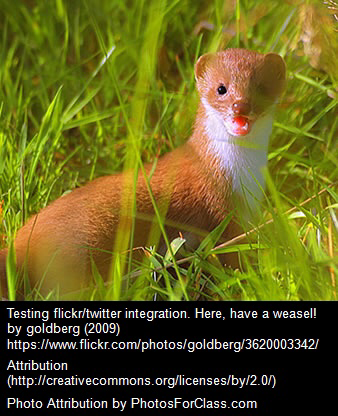
Today was an odd day. It ought to have been an ordinary day at work, but instead, I had to drive my younger daughter back to her University house in Southampton after she had a spell at home recovering from a nasty bout of illness. This meant a drive of 3.5-4 hours each way including rest/coffee breaks with a short spell tag the house helping her settle back in (and buying some food in the supermarket). Now I am home, replenished by a microwave chicken jal frezi curry, but feeling a bit zonked out and looking forward to an evening of mindless television watching (‘Eat Well For Less’, ‘The Apprentice’). However, the day had one really great element – on the way to Southampton, somewhere in the middle of the journey, in Dorset, one of these little fellows (or fellowesses) sprinted across the road in front of us, fortunately making it all the way to the other side intact:

I am wracking my brain, and can only recall one clear memory of having seen a weasel before, years and years ago whilst cycle touring. On that occasion I got a better view as I was closer and moving more slowly but I still got a real thrill from seeing today’s sprinting weasel flash across the road in front of me. Sadly, I have no way of knowing whether he/she went ‘pop’!

“I am a Crazy, Stupid Person”

On my walk into work this morning, as I passed a mum and her young son (presumably) coming the other way, I heard the lad, who must have been about 5 years old, proudly and loudly say: “I am a crazy, stupid person”. To my ears, he didn’t say this in a negative way implying that being crazy was bad or that he was stupid in the sense of being ‘thick’ but, rather, he seemed to say it in an excited and celebratory way. The message I heard was more like “I’m a bit bonkers and isn’t that fun?!”.

Now isn’t “I’m a bit bonkers and isn’t that fun?!” a great philosophy of life for a 5 year old? In fact, isn’t it a great philosophy of life for all of us? Go forth and be crazy, stupid, bonkers or a little mad at times. I think the world will be a better place for it…

Out with the old and in with the new (office plants)

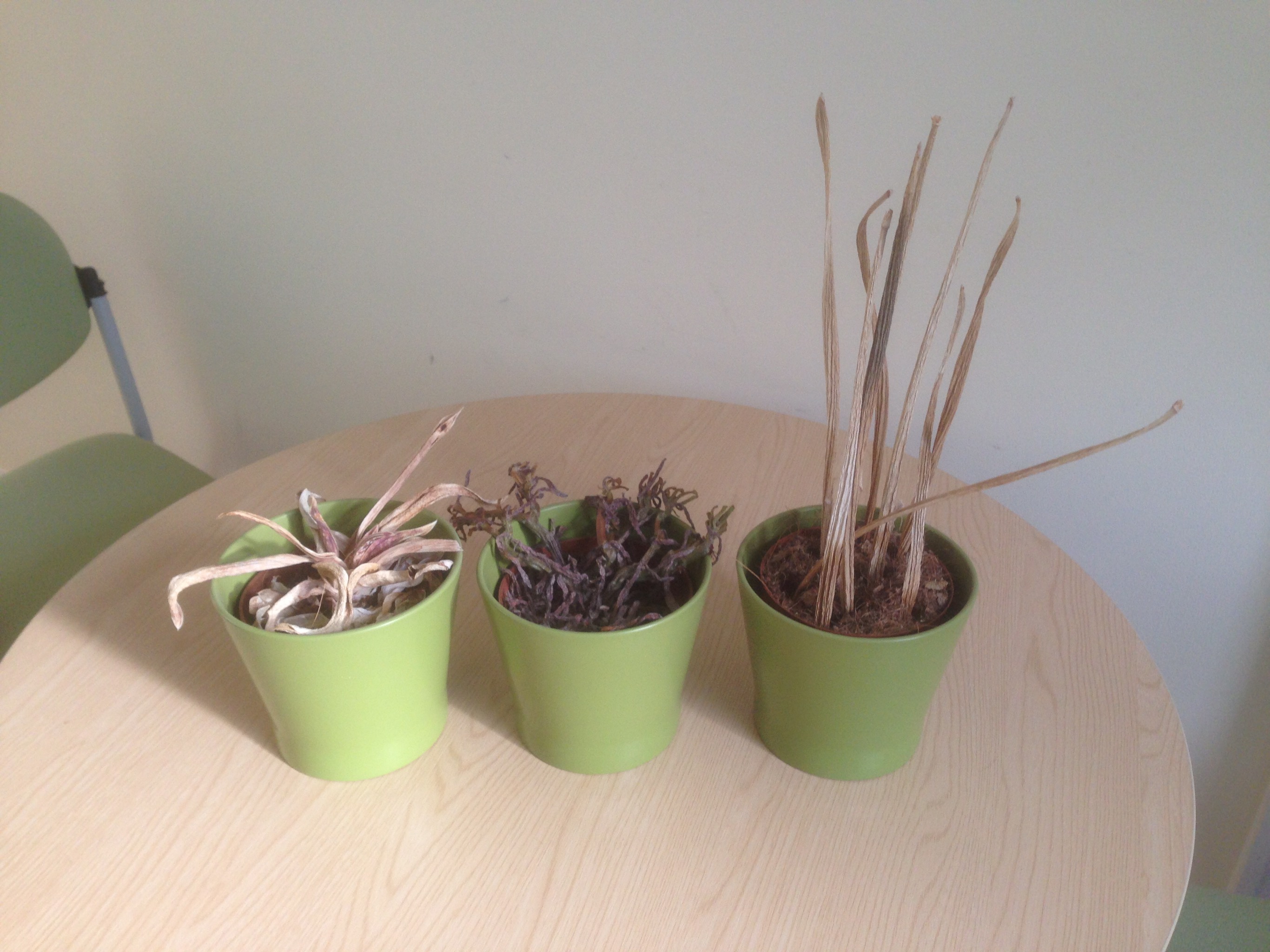
I have had a set of three plants in my office that I bought from IKEA at least 5 years ago (perhaps as many as 7). Although they were chosen for their resilient nature (being varieties of cacti/succulent type plants – yes, I know, I’m no expert), for the past few years these plants have been dead, as a result of my complete lack of care for them. To begin with I watered them regularly (weekly) and they did okay but at some point I stuck them behind a sliding internal glazing panel and from then on neglect set is as I was seemingly incapable of sliding the panel open and walking a few metres to the office kitchen to get some water for them. This was the result:

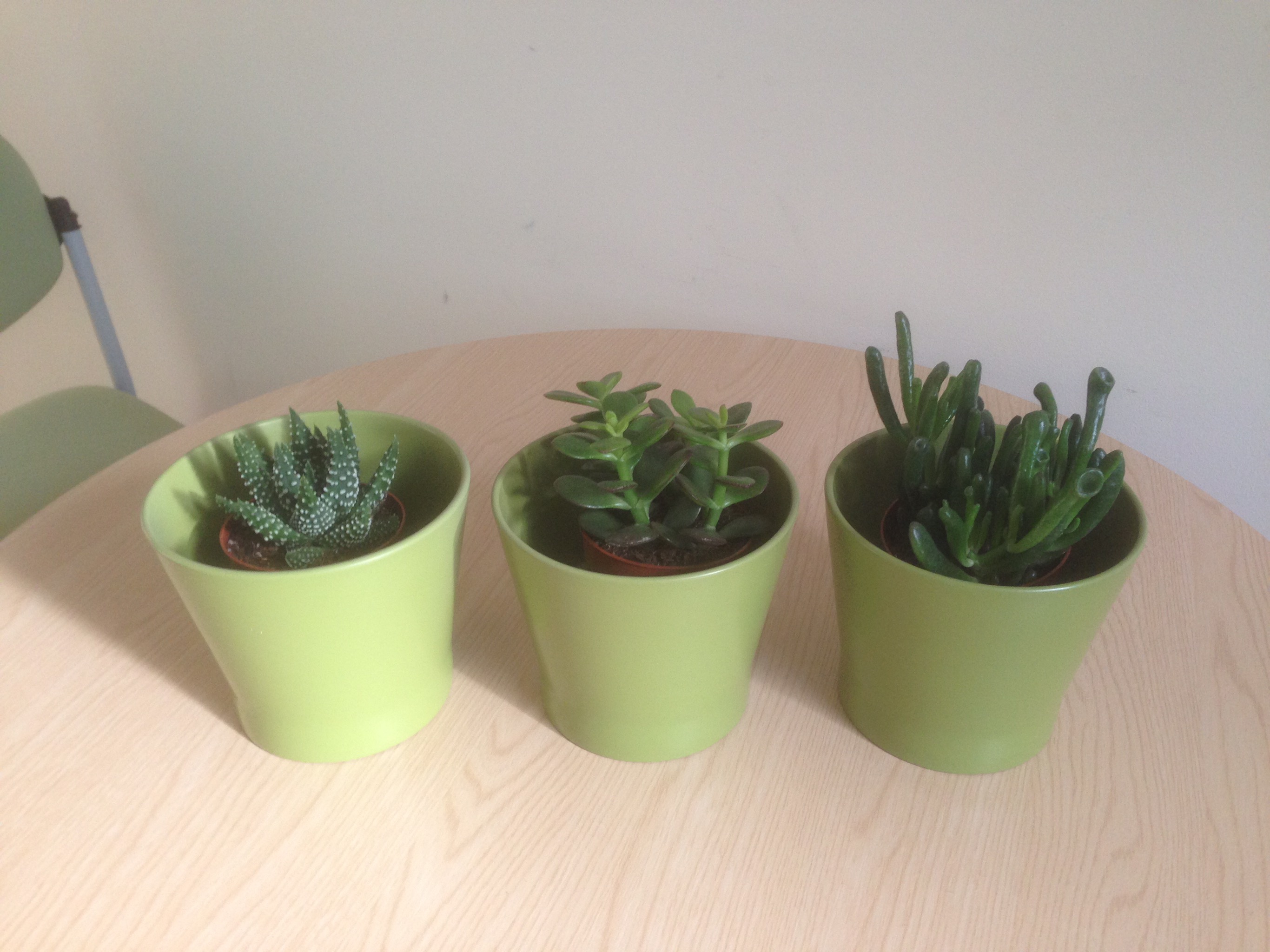
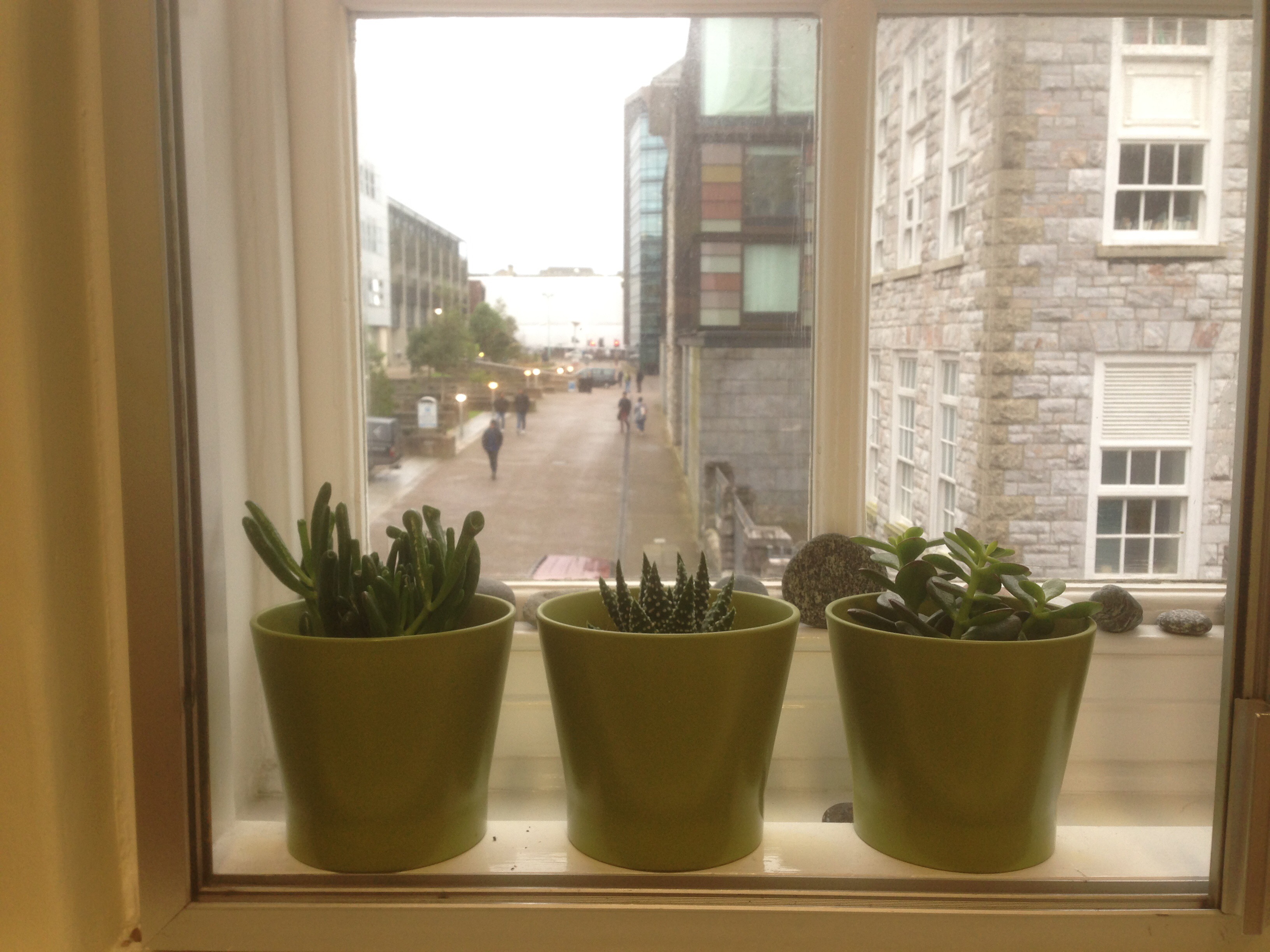
Finally, on Saturday, after having it on my list of things to do for many months I bought some replacements (also from IKEA) and then this morning I removed the old plants and put the new ones in their place. I had measured the size of the previous plant pots as being 10cm and the new ones were a little smaller than this with the result that the news ones look a little hidden in the pots. However, I think they will be fine and if I can be organised enough I might get some gravel to form a base for them to stand on and to raise them up within the outer pots. So, my latest attempt at introducing a little greenery into my office isn’t perfect, but it’s defintelty an improvement on the dead ones:

and they look quite smart on the window-sill:

It remains to be seen how long these ones will survive, but I can confirm that they have been watered so they should make it through a week or two at least!

Essentialism and the 7 Habits of Highly Effective People

This morning, on my walk into work, I listened to an episode of the Art of Manliness podcast called ‘The Difference Between Essentialists and Non-Essentialists‘. It was an interview with Geoff McKeown, author of a book called ‘Essentialism’ that was published about three years ago. In very basic terms, Essentialism is a mindset which involves identifying areas of activity in life that have the most meaning/value when viewed from a long-term perspective and then using these as a filter to help manage decisions on activity and effort on an ongoing basis. Rather than mindlessly saying yes to things or simply committing yourself to try to do everything as best as you can, an Essentialist would know the key goal that they are trying to achieve in life (potentially taking a 100+ year timeframe as a means for deciding this) and then focus attention on actions that contribute to achieving this overarching goal. The idea is not new, but I felt that McKeown had an exceptionally clear way of expressing it, to the point that I am certainly going to read or listen to the book sometime soon. In the interview, reference was made to the famous quote from author Steven Covey’s that “the main thing is to keep the main thing the main thing” which obviously captures the same idea in a nutshell. Listening to this section of the podcast I was reminded of Covey’s classic book ‘The 7 Habits of Highly Effective People’. I read this way back in early 2001 and so it would have been one of the first books on productivity, self-management that I ever read. I recall that it contained much of value. At that time I was also experimenting with mind-mapping and produced a mind-map summary of the complete book. Amazingly, I have just managed to find a rather fuzzy scanned image of it..


Apart from anything else, I rather like this mind-map as a piece of ‘art’.

One of the things I recall from my reading of ‘The 7 Habits’ was the development of a personal ‘mission statement’ based around the different roles that one plays in life (for me it was things like, father, husband, teacher, manager, researcher etc.) and the same idea is picked up by McKeown through the idea of an ‘Intention’ (The Main Thing). It seems to me that Covey probably has the edge here because I don’t think I could have a single Intention in life but I certainly could have a single Intention for each of my main roles. I think this is certainly something that I will give some further thought to.

Anyway, from that podcast I now have a mind that is filled with curiosity to pursue the idea of Essentialism further, both through McKeown’s book but also by going back to Covey. Annoyingly, I gave my copy of ‘The 7 Habits’ to a charity shop years ago and even bought a second-hand copy more recently but gave that one away too. So, one of my first tasks here is going to be to hunt down another copy of it.

Watch this space for further thoughts on Essentialism then, as and when I have followed up on these sources.

Walking to School

On my way into work I pass two primary schools. The first is a private school (fee paying), tucked away off a cul-de-sac off a suburban backstreet, the second is a large state school (actually the one my kids went to) on a fairly busy route into the city. This morning, as I went to cross the road by the first school I found myself having to dodge multiple cars that were pulling up in random places, driven by smartly-dressed professional parents and packed with uniformed children. I have to admit that I got a little annoyed. Clearly, THE most important thing in the world was getting the car as close as possible to the school with minimal regard for anyone else trying to occupy the same physical space. It set me thinking about children being driven to school versus my own experience, and the experience of my children, of walking to school.

In my opinion, children ought to go to their local (nearest) school and, in a city/town such as Plymouth, for most people this should mean that they can walk there. Walking to school provides all kinds of benefits including improving physical health through some daily, low-stress exercise, improving mental health through exposure to the environment, potentially improving family relations by encouraging conversation between parents and children etc. Shutting kids up in metal boxes and delivering them door-to-door, perhaps to a location that is outside of their local community area, just seems like a BAD IDEA to me. So what if it rains a little (like it did this morning) or is a bit cold (or even hot)? Surely exposure to the elements is mostly a good thing?

Thinking back to my own experience, at primary school age I used to walk a good mile or so to school along a lane and a canal tow-path (quite rural despite being in a town). At secondary school age I had a similar length walk, including a pretty decent uphill section, through a housing estate. It didn’t do me any harm… [unless anyone wants to try to argue that it made me into a grouchy old man who goes off on rants about trivial things occasionally…].

Passing the second school on my way in it was noticeable that a lot more people were walking their kids to school. It was much more how I think things should be. I think it is entirely possible that the difference was due to the fact that the first school was fee paying and the second wasn’t but I am going to resist the temptation to try to argue this case and leave it just as an observation.

My Intentions Manifesto

Over the last few years I have been absorbing content from various books and podcasts which has gradually been re-shaping the way that I try to live my life. Amongst this reading and listening has been quite a lot on aspects of productivity, Stoic and eastern philosophy, mindfulness and creativity (to list just the broad topics that come to mind immediately). Recently, I took the step of trying to boil this down to a series of short, simple principles that provide a kind of manifesto for my life. I can’t say that I necessarily always manage to live by these principles, but I have them written down and have them easily accessible so that I can glance through them and remind myself how I want to be. Initially, they changed quite a bit as I iterated them towards a state that I was happy with but the list seemed to settle down at 9 items which I think capture everything I want captured for now. I thought I would share them here. They are expressed not as instructions to myself but as intentions and so I am calling this list my Intentions Manifesto. It goes like this:

I intend to…

… be PRESENT

… be DELIBERATE [1]

… be PLAYFUL [2]

… focus on SINGLE STEPS

… take ACTION

… take the STAIRS [3]

… act with KINDNESS

… keep moving FORWARDS [4]

… leave things BETTER [5]

Notes:
[1] I often come back to the idea that whatever you do you should do it deliberately rather than accidentally.
[2] I loved Mark Rowlands exposition of the importance of play and being playful in his book ‘Running with the Pack’. He (sort of) defined play as being when you deliberately choose to do a task in a manner that makes it harder than it needs to be for no reason other than because you can. I liked that idea.
[3] This comes from Rory Vaden’s book ‘Take the Stairs’ and captures the/his idea that if you tackle the hard stuff now, what follows becomes easier but if you take the easy route now what follows is harder (‘Short-term easy = long-term difficult, short-term difficult = long-term easy’)
[4] I mean keep things/stuff moving forwards at all times not keep physically moving forwards although the latter is also good advice when running a long way!
[5] This comes from a podcast (it might have been The Unmistakable Creative interview with Jim Bunch but I can’t be sure without going back and listening again). Anyway, expressed in a slightly fuller form I mean that it is a good idea to always leave environments in a better state than you find them in. An environment could be the world around me generally but it might also be something small like the bathroom, my office or even my bag.

Captain Ultra and the See-Saw of Vulnerability

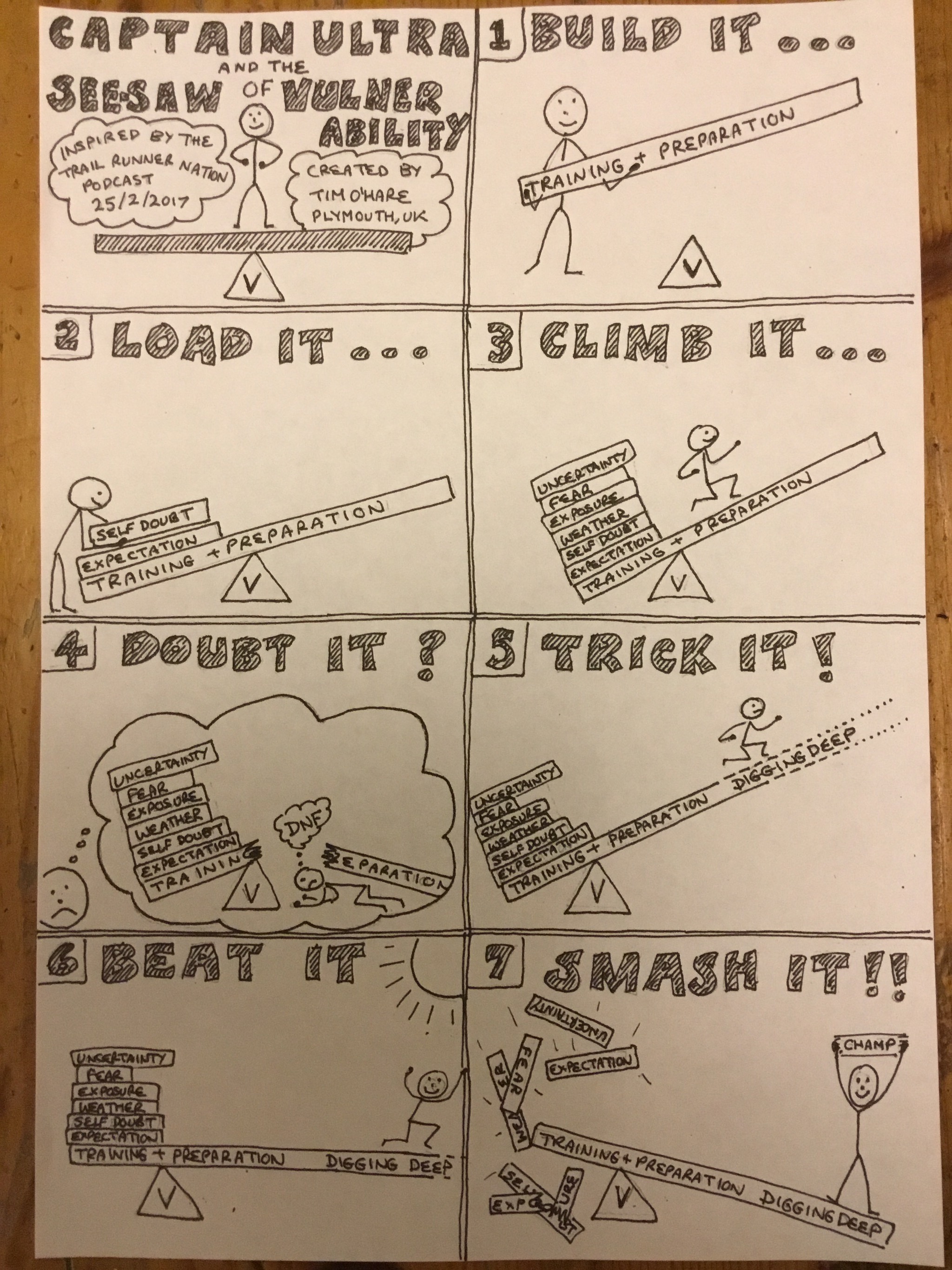
I mentioned in my entry yesterday that I am running the New Forest Marathon on Sunday and with that in mind this seemed like a good time to post a short cartoon strip that I wrote a few months ago, prior to tackling my first 50 mile ultramarathon. The cartoon was inspired by an episode of the Train Runner Nation podcast which discussed how prior to a big event it can seem that you are loading up more and more issues and stresses relating to the run which weigh you down and can make a successful outcome seem impossible. When running the event, if self-doubt creeps in, you may never reach the point where you can overcome this adverse load and a DNF (Did Not Finish) may result. The knack is to keep believing and digging into your inner strength beyond the point that you thought possible until a pivot point is reached when the balance tips and the adverse load smashes down and the race is beaten. As I listened to the podcast on my way home from work, I really liked the visual analogy that was developed, and so I drew out my cartoon almost as soon as I arrived home – it was great fun to produce, and, from my limited experience, does capture the reality of preparing for and completing an endurance event pretty well.

Vendee Sunset

I had a week off from writing on this blog last week because I was on holiday with my family near Saint-Jean-de-Monts in the Vendee region of France. It’s an area that we have visited before and the intention was simply to have a few days away not rushing about visiting places but reading books, relaxing on the beach or by the pool and just doing simple things. When we arrived at 9pm on the Sunday evening after a very smooth ferry crossing from Plymouth to Roscoff and a 4.5 hour drive southwards, the temperature was still over 30 degrees Celsius, but for the rest of the week it was considerably cooler than this with sunny days interspersed with cloudier ones with some rain midweek. We went to the beach a couple of times, swam in the sea (just the once), played on the excellent mini-golf courses near to the site we were staying at, spent quite a lot of time in French supermarkets, did a couple of runs including an 11 mile one and had a few evening trips to wander along the beach/waterfront in various places.

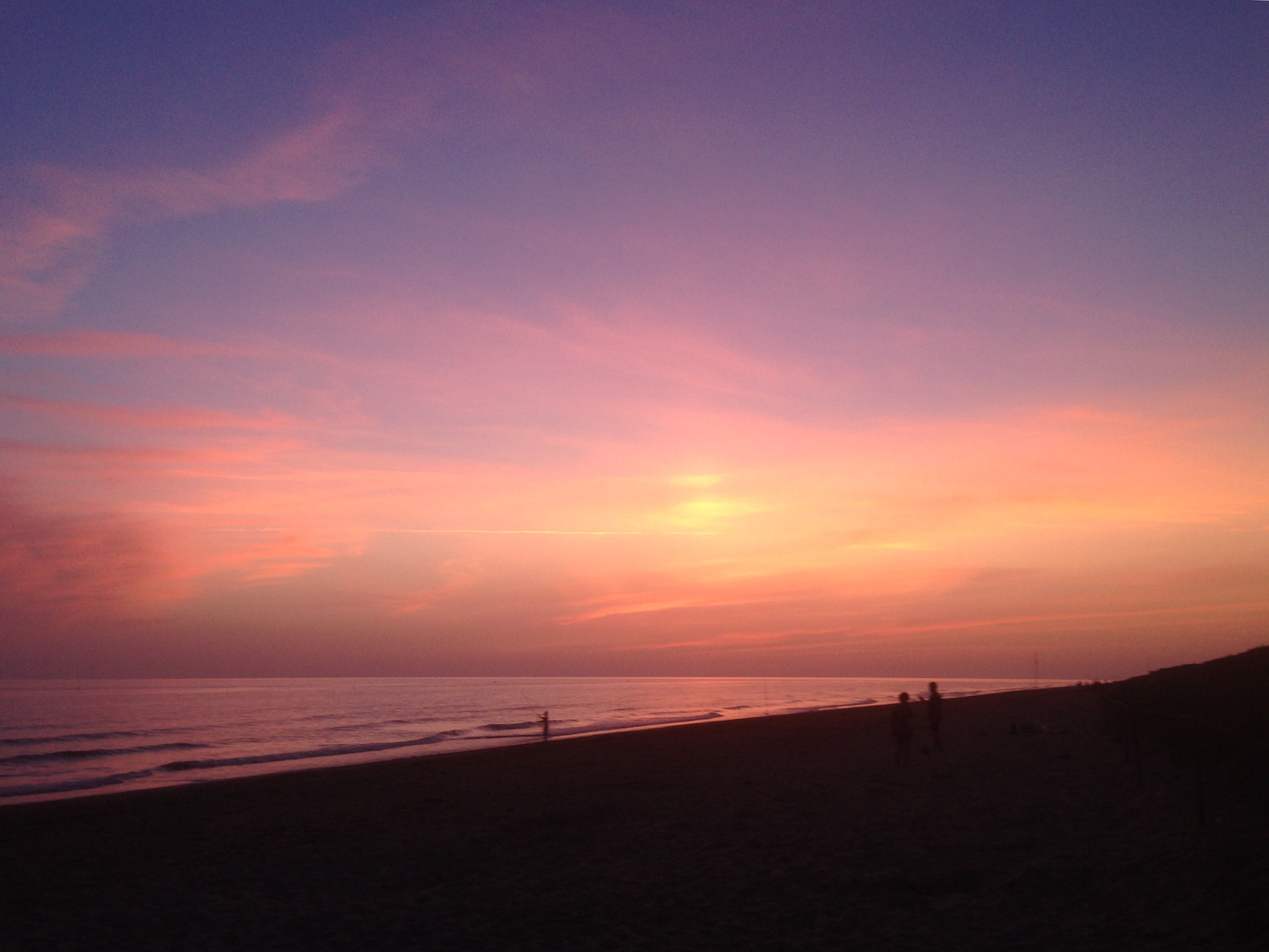
On the Monday night we walked to the local beach (Plage de Paree de Jonc) and caught a most wonderful sunset which I just about managed to capture the glory of. I think I will leave my best picture of it to do the talking here…