Putting Up Barriers… Sticking To The Plan

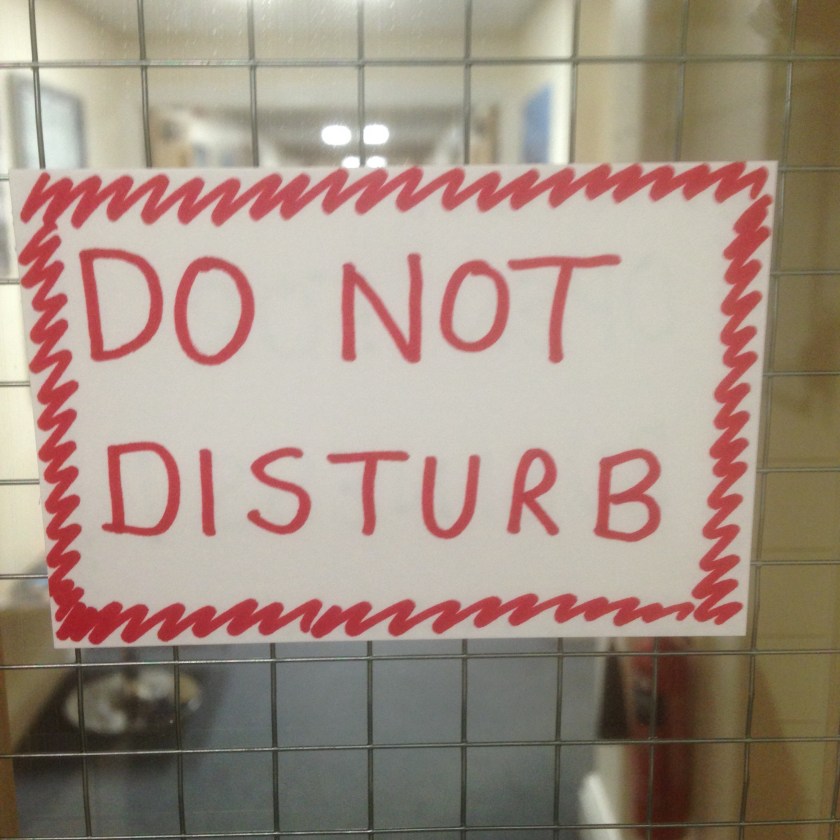
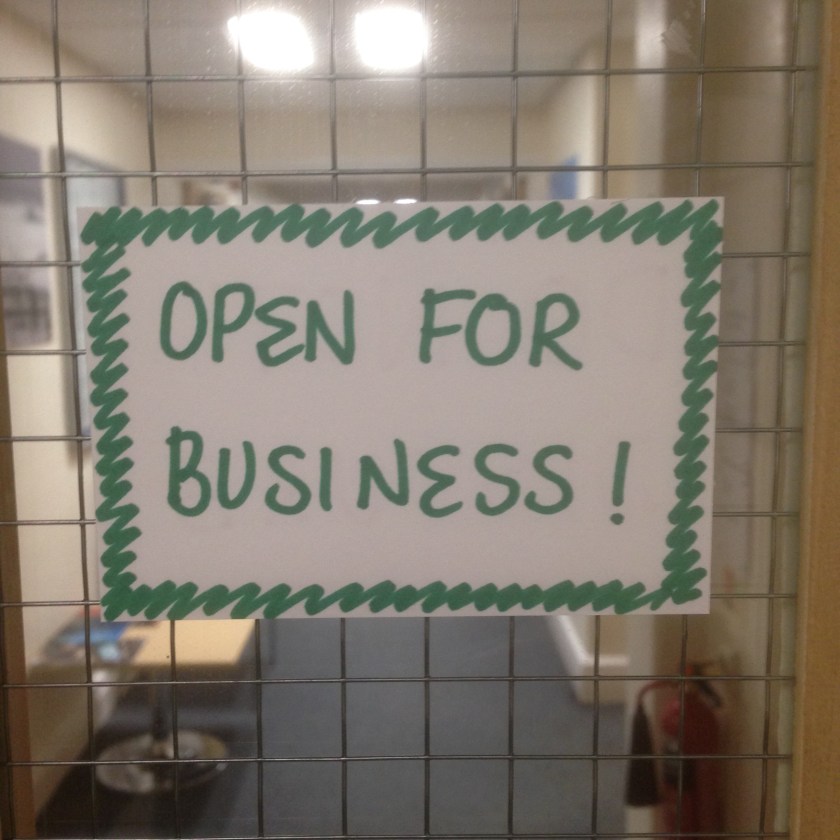
It is Monday today. On Friday last week I determined to try to make two changes to the way I work this week with the overall aim of making better progress on substantial tasks and getting less stuck hacking my way through email-related work and other stuff that comes up. Change number 1 was to schedule specific times to handle work email each day – usually one at the start of the day and one at the end of the day or as close to that as I could get given other commitments – and to switch to offline mode at other times so that I could still work on tasks that required access to emails and attached documents but would not see anything new incoming. Change 2 was to schedule largish blocks of time (minimum two hours) that were pre-allocated to specific substantive tasks. Linked to this I made a new sign for my door that indicated that I was not to be disturbed (to be displayed during these work sessions) and which also showed when I COULD be disturbed at other times.
The result was that for today, I planned to do an email catch-up from 09:00-09:30 followed by a 30 minute buffer of unallocated time, followed by a two hour block to work on a new version of a Workload Data Collection Form, an hour ‘spare’ over lunchtime and then a three hour block for marking some reflective reviews by Final Stage students with a final one hour block for further email catch-up at the end of the day.

It is now almost 5pm and I am somewhat surprised to find that I have more or less stuck to my plan. I found that I needed about 40-45 minutes on my email this morning but I was still able to fit in 10 minutes of meditation and a trip to the kitchen to make a cup of tea into the shortened buffer period. I then did more like two and a half hours concentrated work on the Workload Form before having lunch despite forgetting to switch the sign on my door and being interrupted by a colleague for about 20 minutes (albeit that it was an important interruption). Lunch over-ran a bit due to some interesting conversation with colleagues (who, incidentally, were amused by the sign on my door that said I was ‘Open for Business!’) but I was still hitting the marking by 1.30pm and managed to mark 18 pieces of work (one third of the total amount) before 4pm which represented a rate of progress that I was happy with. I then switched my email back on to find about 12 new incoming messages including one important one that I was expecting which required a fair amount of thought/effort to respond to. Clearly, given that I am writing this now, I managed to do everything email-related that I needed to and still had time to write this entry. I also had time to read a Scientific American article about the search for Dark Matter (axions) in between completing the marking and starting email again this afternoon, which provided a kind of break.
So far so good then. I have set things up with an almost identical structure tomorrow so I ought to be fairly optimistic of another day of success, but Wednesday gets a bit more messy as I (currently) plan to go for a run for an hour or so before work (so will get in a bit late), have a big two hour meeting at the end of the afternoon and have populated the hours in between with some different types of task that I need to get to (bracketed by email sessions again) – an hour for some initial planning for four new lectures I have to prepare and an hour to do some reading relating to a little piece of research I am trying to do at the moment (on atmospheric tides). Then, on Thursday, I have two teaching sessions to complete that will dominate the day and so I have only scheduled one email session that day. Friday is currently left more or less open as I wanted to see how the first part of the week panned out and leave myself plenty of time clear in case something unexpected and important cropped up.

Frankly (Mr Shankly*), I will be pretty amazed if things continue to go as well as they have today but I have had quite a bit of success recently getting unstuck and getting things done so there’s reason to be hopeful.

[* Anyone who is a fan of the music of The Smiths will appreciate that it is virtually impossible to write or say the word ‘Frankly’ without continuing (perhaps internally/silently) with the words ‘Mr Shankly’.]

Back in Work

Today is my first day back in work after the Christmas/New Year break. I am allowing myself the luxury of a ‘slow’ day to ease back into things – dealing with emails that have come in over the last week and a half (thankfully not too many and nothing particularly complicated), processing a few bits and pieces that I carried over from December and getting my head around the more significant tasks that I have to do over the next two or three weeks. These include marking some reflective reviews by Final Year students (approximately 55 to do which will take the best part of two days), finalizing the set-up of my first year examination which, this year, is being delivered online, producing and circulating the final version of the School’s Workload Data Collection Form and writing six lectures to be given in the last week of January/first week of February. Put together, this is quite a substantial amount of work but, fortunately, I have a relatively clear schedule so I ought to be able to carve out some good chunks of time to tackle this work efficiently.

I was thinking this morning about how my default ‘position’ at work is to sit at my desk in front of my computer monitor and how this tends to automatically push me towards working on and thinking about email. But I have come back after the break determined to try to only look at email and also only to think about task planning at specific times. I have realized that I need to shift my default position and break the physical link between where I am at work and the tools that I have in front of me. I should try to set things up so that the space in front of me has a notebook for thinking/planning/creating, papers to read etc. and then I should move to my computer only when I need to use it. As long as it is there directly in front of me then I will look at email, shuffle tasks around and do certain types of ‘small stuff’ work as my default activity, which is not what I want. I have taken the first step and collected a new A4 hardback notebook (because above anything else I just love a new notebook) and when I have finished typing this I am going to shove a few things around on my desk space, reducing the space taken up by my computer/tech and increasing the open/free space for other types of work. Then, I suppose, I had better knuckle down to some work…

Battling the Cracks in Time

Over the last couple of weeks I have been working my way through a huge (virtual) pile of marking – 161 pieces of first year coursework about the circulation of water into and out of the Mediterranean Sea, each one taking me approximately 15 minutes to mark (which equates to a little over 40 hours over a two week period during which all of the rest of my work also had to happen). It was a mammoth task and not one I want to repeat again next year so I will have to make sure that I re-design the work into a more manageable form. To make matters worse, I absolutely hate marking (I suspect everyone does) – it is repetitive, physically and mentally tiring, boring and often quite disheartening. It is a job where it is absolutely essential to be efficient and to stick on task.

As I was working through the pieces of work and struggling to keep on track and avoid being pulled off to do something else more interesting and enjoyable (i.e. anything else) I got a really strong sense that the secret to being successful against this challenge was to not allow tiny cracks in time to open up. The critical time was always just at the moment when I had completed marking one piece of work but just before I had started on the next one. I came to think of these moments as cracks in time.

At the end of each piece of work I had a strong physical sensation of a tiny crack in time appearing and even the slightest hesitation at that point would result in it opening ever so slightly wider, then wider, then wider still until I had tumbled in (to have got up to make a drink or check something on the internet or anything really). I had to be ready for these cracks; ready to outwit them by stepping over into the next piece of work before the crack could take hold and rip open. As soon as I had completed the final action of processing the piece I had just marked I had to be into the next one, opening up the file ready to start work on it. I found that it mattered much less if I paused a few seconds if I had already opened, and therefore ‘started’, the next piece of work than if I paused before doing so. To do the latter allowed the tiny crack to begin its expansion and immediately that had happened a huge amount of additional willpower was needed to get back on track. Although battling these cracks was obviously really a mental challenge, I cannot really put into words how physical the sensation felt, and I think for that reason the idea of cracks in time and my having to battle against their development has taken hold in my head in a wider context than just marking. I have come to realise that much of my battle to maintain the high level of productivity that I desire is the battle against allowing the cracks in time to open. Knowing this I am starting to train myself to be ready for them, to recognise their appearance at the earliest possible stage and to have in place strategies for leaping over them to leave them behind me before they become too wide.
Marking with a positive head on

Today I have been working at home (mostly) marking student coursework. I need to say at the outset that I hate marking. It is a task that never leaves me with a feeling of satisfaction at a job well done. Generally, I find that most of the work I mark is of a fairly mediocre standard, seemingly thrown together with nothing like the care and attention to detail that I think is appropriate. It is like the students simply see pieces of coursework as tasks that have to be got out of the way as quickly as possible, or with the least pain possible, rather than as opportunities to showcase their knowledge, creativity, insight etc. I have told students this on countless occasions, both before and after completing work for me, but the message never seems to get through. I suppose this means that I need to re-examine HOW I am transmitting this message to the students. ‘Something’ always seems to be ‘good enough’.

I suspect that I have a reputation as a hard marker. I suspect that students submitting work for my assignments THINK they deserve better marks. I am pretty sure that I do tend to mark with a somewhat negative mindset, at least in the sense that I notice everything that is wrong or unclear or lacking ahead of noticing things that are right. So I probably could adopt a more positive approach and look much more for the good in pieces of work and/or for the comments I can make to help a student improve rather than pointing out or correcting shortcomings. But this is difficult when so much of the work that is submitted is, to use a ‘word’ that seems to have come into fashion these days, just ‘meh’. This kind of work is not wrong (mostly), it’s just lacking in spark and displaying such a paucity of pride or self-respect. Faced with a sequence of ‘meh’ scripts I find it very difficult not to descend into a negative mindset.

Anyway, today I marked 18 questions, the first of two that students had completed for an assignment on my Year 2 Meteorology module. There was quite a lot of ‘meh’ work in the batch but I THINK I managed to hold on to the line of thought that my role was to offer positive suggestions for improvement whilst still indicating the areas of weakness. Pleasingly, there were a couple of really good pieces of work in the pile, one especially that really showed that the student had taken time to 1) understand everything that they were doing and 2) [importantly in my view] THINK about how to get this across to me. This piece of work was embued with a real sense of the student wanting to display  their best self to me. Fortunately, it came towards the end of the [virtual] pile so it left me with a somewhat positive feeling about the whole day’s work – a fortunate piece of happenstance if ever there was one.

1+1=0 leading to chicken curry (or something)

No, I don’t have a clue what the title of this post means either. It’s based on the scribbles on a flipchart left in the classroom I was teaching in this morning. Here is a photo of the actual flipchart page, just in case you think I am simply going insane…

Presumably this means something to somebody but I’m darned if I can work out what, or who. Bear in mind this is from a university classroom. Any thoughts? Have I missed something obvious?

Out with the old and in with the new (office plants)

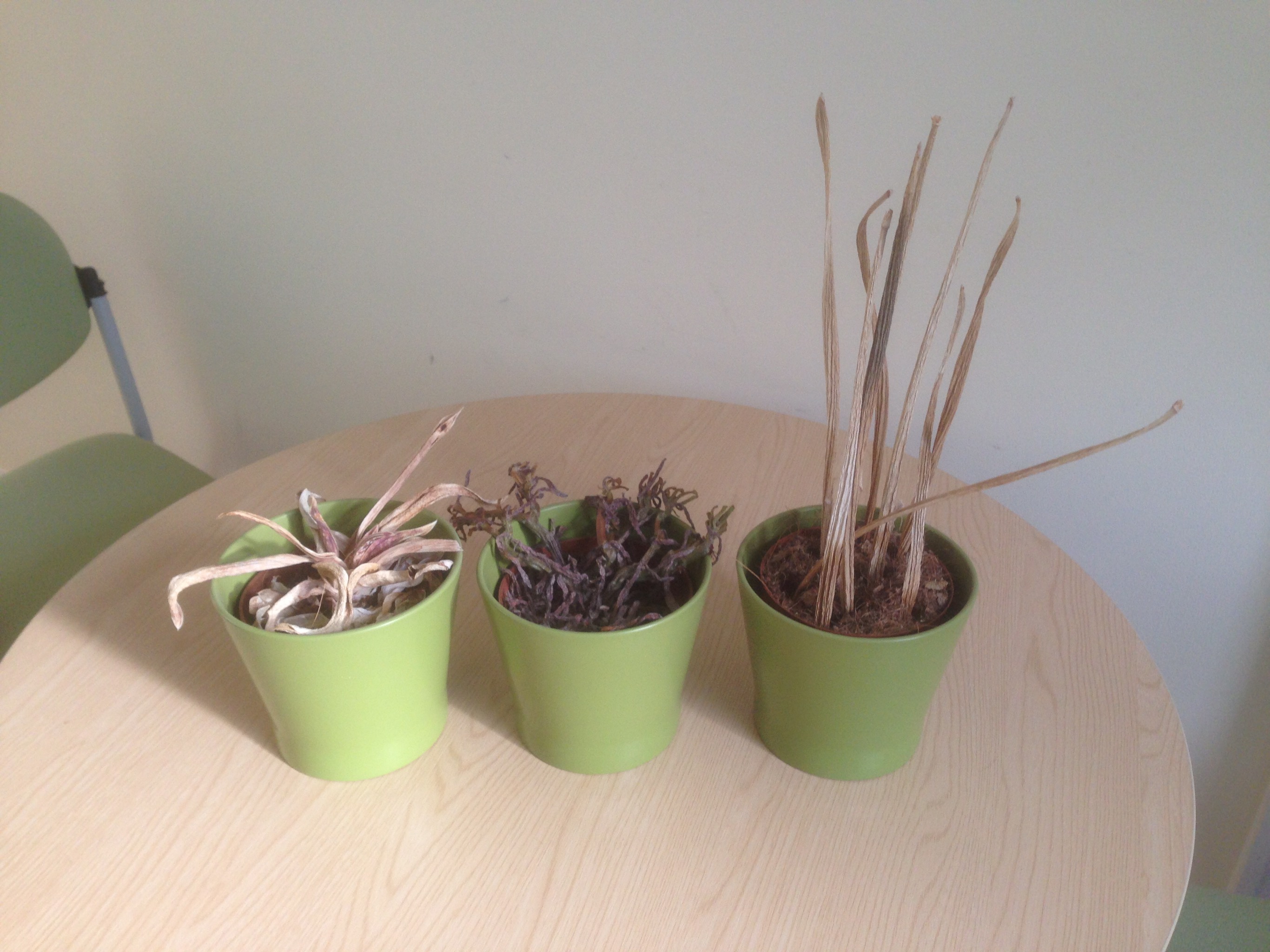
I have had a set of three plants in my office that I bought from IKEA at least 5 years ago (perhaps as many as 7). Although they were chosen for their resilient nature (being varieties of cacti/succulent type plants – yes, I know, I’m no expert), for the past few years these plants have been dead, as a result of my complete lack of care for them. To begin with I watered them regularly (weekly) and they did okay but at some point I stuck them behind a sliding internal glazing panel and from then on neglect set is as I was seemingly incapable of sliding the panel open and walking a few metres to the office kitchen to get some water for them. This was the result:

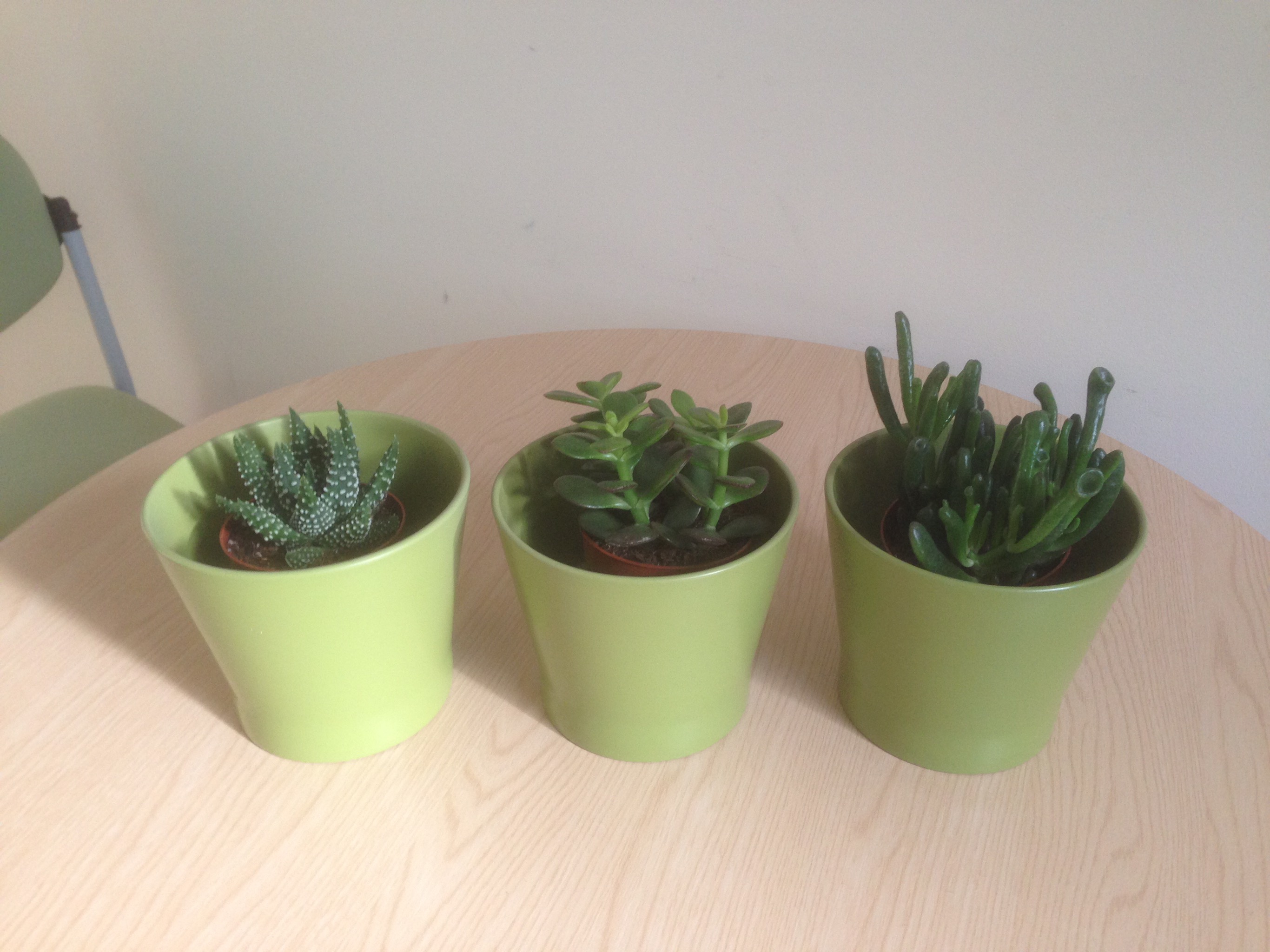
Finally, on Saturday, after having it on my list of things to do for many months I bought some replacements (also from IKEA) and then this morning I removed the old plants and put the new ones in their place. I had measured the size of the previous plant pots as being 10cm and the new ones were a little smaller than this with the result that the news ones look a little hidden in the pots. However, I think they will be fine and if I can be organised enough I might get some gravel to form a base for them to stand on and to raise them up within the outer pots. So, my latest attempt at introducing a little greenery into my office isn’t perfect, but it’s defintelty an improvement on the dead ones:

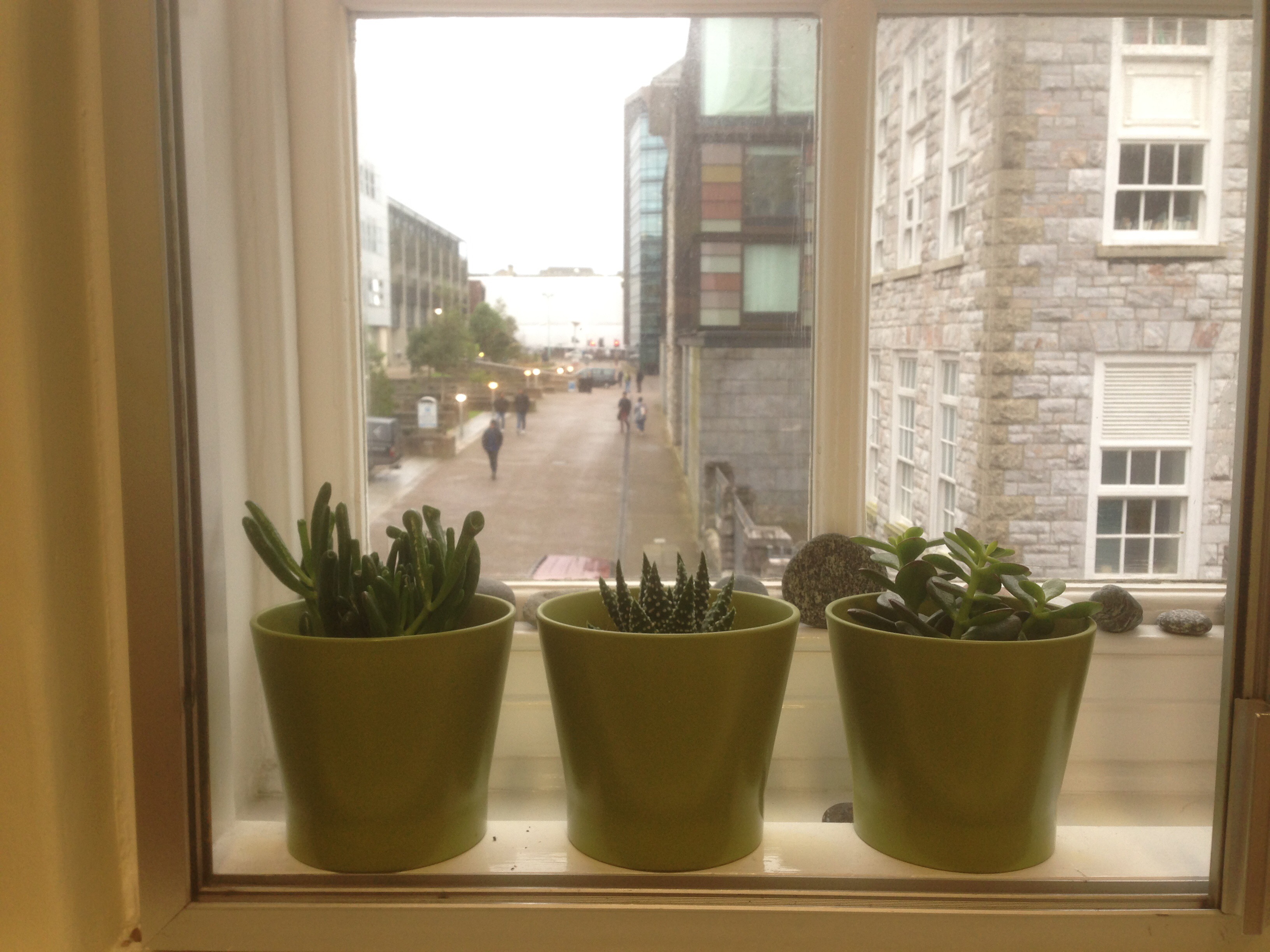
and they look quite smart on the window-sill:

It remains to be seen how long these ones will survive, but I can confirm that they have been watered so they should make it through a week or two at least!

Everything takes longer to do than it should do

Today, after a two hour lecture first thing in the morning, I have been trying to drive my way through a fairly long list of tasks, many of which are somewhat overdue. I set aside separate, discrete periods of time (~2 hours each) for tasks related to my management role as Deputy Head of School and for those related to my teaching. Now, as I reach the end of the afternoon and look back on how things have gone, two main thoughts/feelings come to mind. First, I feel fairly pleased with myself for not giving in to distraction and sticking to my plan. Secondly, I can see that whilst I got a lot done, I got nowhere near as much done as I would like…

The problem, on reflection, is that every single task that I set out to do took longer than I hoped it would. This was for a variety of reasons including things like clunky documents that I had to work with and delays in being able to access a printer, but mostly it was simply a case of tasks being more complicated than I hoped they would be. Actually, I am not sure that they were REALLY more complicated – it might just have been that they took me longer than I wanted them to because I was over-ambitious about what I hoped to achieve in the limited time I had available. I am not going to beat myself up about this – I can only do what I have time to do – but it is frustrating that I haven’t been able to clear the backlog as much as I had hoped. I will just have to get my head down some more tomorrow and make whatever inroads into things that I can.

One thing certainly did seem to work, namely splitting my available time into sections for tasks associated with different roles or aspects of my work. I think I will experiment with this idea some more. It seems like a good idea to decide, before I settle down to work at a particular time, which of my multiple hats I am going to wear – educator, manager, scientist etc. and then to not allow tasks from one domain to bleed across into time set aside for another domain. This ought to reduce distractions and help me to maintain a singular focus on what I am trying to achieve.

As One Wave Breaks…

Working in a University, today is the day that we properly make the pivot from one academic year to the next. Usually things don’t line up quite so nicely but this year, today, I have attended the Awards Ceremony for our graduating students (who mostly started in September 2014) this morning and then this afternoon I have met our new First Year undergraduate students and taken a large group of them around the campus for a tour. So, on the very day that we wave goodbye to one group we say welcome to another. It has been a really strong marker of the regular annual rhythm of my work. It has also been a very odd day because it is one of the very few days on which I have put on a suit. This drew comment from colleagues who, ironically, were also unusually smartly attired that I ‘looked very smart’, that they didn’t recognize me and, in one case, that ‘it makes you look like a Headmaster’. I can cope with the former comments; I am not at all sure what to make of the latter one!

As I reflect on this example of ‘out with the old and in with the new’, and given that my field of work is marine science, I am drawn to thinking of today’s changes as being like waves rolling in towards the shore. As one wave breaks a new wave travels into the surf zone and shoals (grows) rapidly on its way shore wards. At any time there are then a couple of waves in between, one almost at the point of breaking and one a bit further out towards the edge of the surf zone growing all the time (mostly our courses are three years long). Student cohorts as surf zone waves? I think maybe it has been a long and tiring day…

Task Carnage

Last week I was on holiday and, therefore, away from work. In the two preceding weeks I felt that I had worked very efficiently and effectively, pushing forward quite a few projects and starting to establish some interesting ways of structuring some parts of my activity. I spent a good chunk of time before I went away setting things up ready for my return, for example deciding what I was going to do each day this week in what I thought was a sensible, achievable manner.

I returned to work yesterday with ~90 emails to wade through. Some of these were trivial – bits of information that I didn’t need to act on or store anywhere, although even these took a certain amount of time and bandwidth to process. Others required my attention, authorizing payments, forwarding timetabling requests, chasing assessment marks etc. I had one 1 hour meeting scheduled in the afternoon – it became a 1.5 hour meeting. Today I had two meetings scheduled – essentially the whole morning. I have further meetings scheduled for Wednesday (2 hours) and Friday (2 hours plus, now, another 2 hours or so…). I quickly realized that my best laid plans for this week needed to be completely scrapped – there was simply top much ‘stuff’ shouting for my urgent attention to have the luxury of getting on with the work that I planned and wanted (and needed) to do, for example starting to prepare for the new academic year’s teaching in less than 3 weeks’ time… So the plan has been almost entirely erased from my whiteboard, the tasks I had scheduled for myself have been unscheduled, the programme of ‘nudge’ tasks I had laid out (office improvements, alumni database) has been shelved for now.

With a bit of luck I can get my head down tomorrow, work through all of the new ‘stuff’ and emerge on Thursday with a clearer space to set about things afresh. I certainly need to start thinking about next year’s teaching soon. Just to add a little more stress to the current situation, I have an abnormal weekend ahead which involves traveling to and from the New Forest to run the New Forest Marathon on Sunday morning. If the weather is good then it ought to be an enjoyable and uplifting run in some great surroundings. But one thing is certain, it won’t leave me feeling refreshed and full of energy ready for the week ahead!

The Action Grid

On Monday I shared my thoughts about a a new system I had stumbled up (invented?) to become unstuck and get more things done. Now, at the end of a full week at work using it, I thought I would look back on how things have panned out and make an initial judgement on whether the system has actually helped at all.
The first thing I should note is that I don’t recall working so hard (just in case anyone important is reading this I should point out that, obviously, I always work hard). I feel tired and I am looking forward to some downtime this weekend. But I also feel satisfied that I have got a lot done, more than I would have done if I had just come to work and tried to do some stuff. I have also taken less breaks, partly because I want to save money by not buying coffee so much, partly because a lot of colleagues are not in work at the moment so I have eaten lunch on the go, but also because I have had a singular focus on wanting to make progress.

I have named my system the Action Grid. This week it has had 10 columns (projects) which I think is perhaps one or two too many. For each project I planned a next action for each day (either in advance or from one day to the next). I have made progress on all of these projects, just missing a couple of actions on a couple of projects on Monday and finding myself running out of time for three actions today, although I could probably achieve these if I hadn’t also decided to spend the last couple of hours of the week reviewing everything, catching up on email and setting things up for next week instead. Here is a picture of my Action Grid as at the middle of Friday afternoon:

Through the week I have completed quite a lot of tasks that I KNOW I would not have completed if I hadn’t been trialing my Action Grid system. I have written to two old friends, something I have been meaning to do since Christmas in one case and since last summer(!) in the other. I have finished sorting out my research-paper archive in my filing cabinets (which I started doing last summer). I have phoned the media company to cancel my Sky Movies subscription, thereby saving ~£12 per month (so if I had done this a year ago like I could have done I would be almost £150 richer…). I have made substantial progress in completing my database of Marine Science degree alumni (adding 2017, 2008, 2007 and 2006 – just 2005 and 2004 to go now). I have spent at least an hour each day working through some Matlab workshops to brush up my Matlab programming skills. I have moved forward a worthwhile amount on a couple of work (School management) projects.

I think that it was particularly useful to decide on the projects that were going to get my focus this week and to adopt a strategy of trying to nudge each of these forwards a little bit every day. Some days I made a fairly substantial step, other days I just printed a document or sent an email, but every day I moved forwards on each project. One week is not enough to judge the usefulness of this system for me, especially as this is a summer week when there are few distractions in terms of teaching sessions, meetings etc. and when the university is generally pretty quiet. But I know that in previous years I have struggled to be very productive during such weeks so this one has been quite a revelation. Suffice it to say that I will certainly be giving my Action Grid system another go next week.