By far the best, most inspirational, book I had as a kid was ‘Lucky Les’ by E.W. Hildick:
The hero of this book is Les, the youngest member of a family of anthropomorphised cats who, being black, is naturally the luckiest of all his brothers and sisters. In fact, Les is so lucky that he is probably the luckiest cat alive. He always gets the cream on the top of the milk and ALWAYS got the black one in a packet of fruit pastilles (a part of the story that has always lived with me). He was that lucky.
The book is beautifully illustrated with pen drawings like these on the title page: 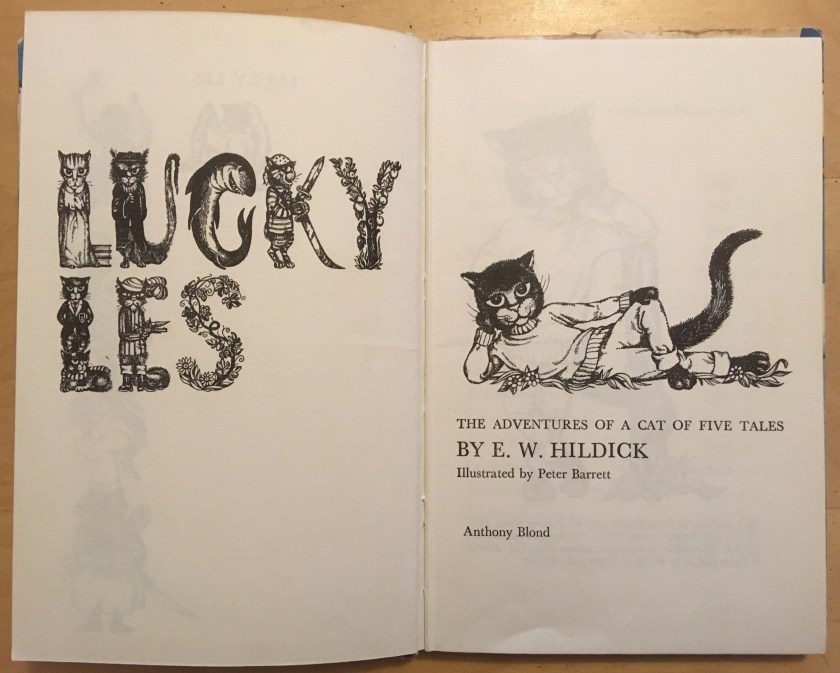
But the main reason that Lucky Les is such a great book is that it is cleverly arranged to provide multiple possible stories. At the end of most chapters the reader can decide what will happen next to Les (one of two choices each time pointing to specific later chapters) such that he can go to one of two schools (Dr Scratch’s Academy or Miss Tabb’s [Dr Scratch is essentially a pirate masquerading as a headteacher whereas Miss Tabb is so soft and caring as to be completely ineffectual at running a school – and guess what, if you put the two of them together you get the perfect school]) and then follow one of two primary career paths (going to sea or becoming a farmer) each of which then leads to various other branches (as a farmer he can grow apples or hops, a choice which ultimately leads him in two different directions). As such, Lucky Les perhaps represents the first piece of career guidance literature that I ever read (and at that time I certainly wanted to be a farmer so it is ironic that I ended up not going to sea but studying it!). There are five possible endings to the book but a couple of parallel branches along the way so in total I think there are about nine permutations – which seems to me like a great way of keeping a young reader interested in a book for an extended period.
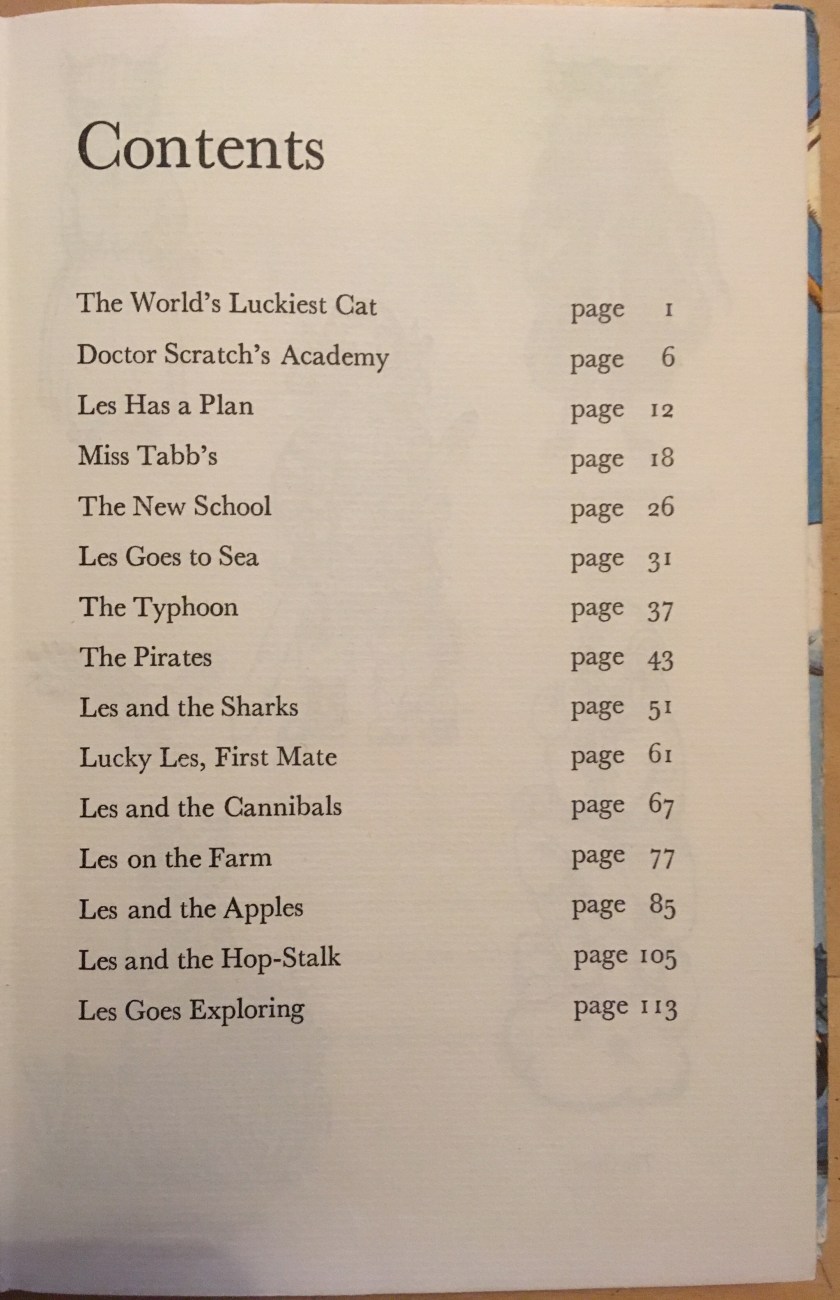
I really loved reading Lucky Les as a child (in the early/mid 1970s I guess) and am so pleased that I still have my original hardback copy. I must read one or two of the permutations again soon.
I have often thought that it is surprising that there are not more branching books of this kind and wondered whether I might one day have a go at writing one. Perhaps there is scope for a follow up, something along the lines of ‘What Lucky Les Did Next’ or, if I allow myself to be really cynical for a moment: ‘Unlucky Les: What Happened When The Luckiest Cat In The World Grew Up’.
 Tim O'Hare